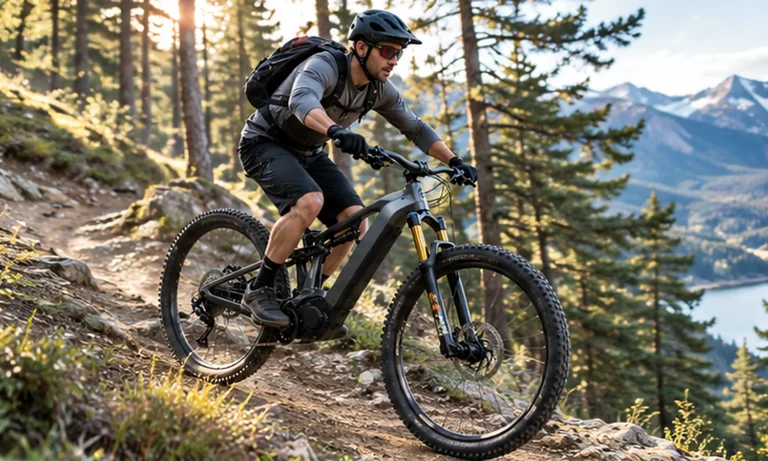
The Honda RN0 e-MTB made its world debut at EICMA in Milan on November 3, 2026, marking Honda’s entrance into the premium electric mountain bike market. Developed with German e-bike specialist ROTWILD, the full-suspension RN0 combines a carbon monocoque frame, mixed-size wheels, and an all-new Shimano drive unit rated at 100 Nm of maximum torque.
Beyond the headline numbers, the key questions concern power delivery, trail handling, and availability.
What Is the Honda RN0 E-MTB?
Honda calls the RN0 its first high-end electric-assist mountain bike. Its design brings together Honda’s engineering background and ROTWILD’s experience in performance e-MTBs. According to the official Honda RN0 announcement, the bike is designed for all-mountain use, including steep climbs, technical trail sections, and challenging descents.
Honda also draws on its RN01 downhill racing heritage, which included a 2005 UCI Downhill World Cup overall title.
Honda RN0 Specifications at a Glance
| Component | Announced specification |
|---|---|
| Motor | New Shimano mid-drive unit; 100 Nm maximum torque, 750 W maximum output |
| Motor weight | Approximately 2.3 kg |
| Battery | 720 Wh |
| Bike weight | Approximately 24 kg |
| Frame | Carbon monocoque with gull-arm rear swingarm |
| Fork | FOX 36 FLOAT Factory Kashima, 160 mm travel |
| Rear suspension | FOX FLOAT X Factory Kashima, linkage-driven single-pivot design |
| Wheels | 29-inch front, 27.5-inch rear; DT Swiss H1900 SPLINE |
| Brakes | Shimano DEORE XT four-piston disc brakes |
| Display | Integrated 2.2-inch color display with USB-C charging |
| Frame sizes | Small, medium, large |
These are announced specifications, not independently measured test results. Honda has not provided a final, universally applicable retail price or a detailed country-by-country sales schedule.
How Powerful Is the New Shimano Motor?
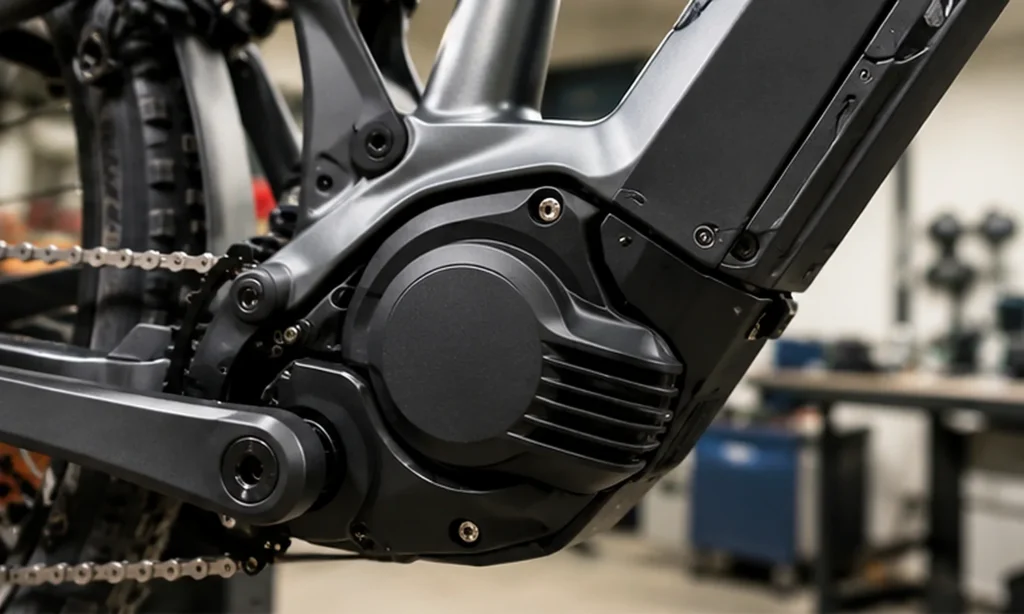
The new Shimano drive unit is the RN0’s headline technology. Honda quotes 100 Nm of peak torque, 750 W of maximum output, and a motor weight of 2.3 kg. Torque matters for steep climbs, but neither torque nor peak power guarantees smooth assistance.
On loose trails, a powerful motor can be helpful or frustrating depending on how it responds. An abrupt surge may spin the rear tire, while carefully managed assistance can help a rider maintain momentum over roots or ledges. Our guide to rider-intent e-bike motors explains why modern motor control increasingly considers more than basic pedaling force.
Early reporting from Pinkbike’s RN0 launch coverage suggests the drive unit belongs to a forthcoming Shimano generation. Honda has not announced a complete public motor designation or performance curve.
What Do AUTO ASSIST, AUTO SHIFT, and Assist Carryover Do?
Honda describes three electronic functions intended to reduce the work of managing power and gears during technical riding.
AUTO ASSIST: Power That Responds to the Trail
AUTO ASSIST adjusts motor support in response to terrain gradient and rider pedaling effort. Rather than selecting a fixed assistance setting for every climb and descent, riders can benefit from support that adapts as conditions change. Its real-world responsiveness remains untested independently.
AUTO SHIFT: Letting the Bike Choose a Gear
AUTO SHIFT selects gears to help maintain a useful cadence. Shimano’s AUTO SHIFT technology guide explains how its compatible electronic drivetrains use riding data to make automatic shifting decisions.
Assist Carryover: Maintaining Momentum Briefly
Assist Carryover keeps power flowing briefly after pedaling stops. Imagine pausing your pedal stroke to clear a rock or reposition your feet while moving over uneven terrain. A short, controlled continuation of assistance could help the rear wheel keep rolling. Riders should understand the feature before tackling obstacles.
For context on grip and power delivery, see iBikeBlog’s article about e-MTB traction control and connected components.
Carbon Monocoque Frame and Motorcycle-Inspired Suspension
Instead of a conventional-looking e-bike chassis, the RN0 uses a broad carbon monocoque structure and a distinctive gull-arm swingarm. Honda says the design draws on its motorcycle engineering experience, with a balance of rigidity, feedback, and carefully controlled flexibility.
The rear suspension uses a linkage-driven single-pivot layout. Honda says this setup is intended to limit unnecessary movement while pedaling and still absorb trail impacts. The announced FOX 36 FLOAT Factory fork provides 160 mm of front travel, with a FOX FLOAT X Factory shock at the rear. Specialist coverage, including Top Gear Philippines’ launch report, describes 145 mm of rear-wheel travel.
That combination places the RN0 squarely in all-mountain territory on paper. It promises more descending capability than a short-travel cross-country bike, while its pedal-assist system should make long climbs less exhausting. Real-world handling still needs independent testing.
Why the RN0 Uses Different Wheel Sizes
The RN0 has a 29-inch front wheel and a 27.5-inch rear wheel, a combination often called a mullet setup. The larger front wheel can help smooth the path over roots and rocks, while the smaller rear wheel may improve clearance and help the bike feel easier to maneuver through tight turns.
Honda specifies DT Swiss H1900 SPLINE wheels, Schwalbe Albert EVO Trail tires, and four-piston Shimano XT brakes. DT Swiss describes its H1900 SPLINE family as wheelsets built for the demands of assisted off-road riding, including the combined force of rider and motor.
Four-piston brakes are useful on a 24 kg bike, but regular maintenance still matters.
720 Wh Battery: How Far Could the Honda RN0 Go?
Honda confirms a 720 Wh battery, but it has not published a standardized real-world range figure for every riding condition.
A rider using high support on steep climbs will generally consume energy faster than someone using lower support on smoother paths. Rider weight, tire pressure, temperature, wind, trail conditions, and climbing elevation all affect energy use.
Ask whether the battery is removable, what replacement packs cost, and which chargers are supported once Honda publishes the final owner’s documentation. Our article on e-bike battery passports and ownership information offers a broader look at transparency and long-term battery support.
Display, App Controls, and Everyday Usability
A 2.2-inch color display sits within the RN0’s top tube. Honda says it can show speed, estimated remaining range, assist mode, and other ride information. A USB-C port supports charging a device, while Shimano app connectivity provides motor setting customization and electronic-system locking functions.
Shimano’s E-TUBE PROJECT Cyclist app documentation gives a useful introduction to tuning supported assistance profiles and shift behavior. Functions vary by component combination and firmware, so not every feature described for Shimano systems should automatically be assumed on the RN0.
Before purchasing, check local dealer support, diagnostic access, software updates, replacement control units, and battery service arrangements.
Who Is the Honda RN0 For?
The RN0 appears best suited to riders seeking a premium, full-power e-MTB for steep climbs, rough natural trails, and demanding descending terrain. Its high-end suspension, carbon chassis, and electronic controls may appeal to experienced trail riders who value technology and adjustability.
Motor assistance cannot replace braking, balance, or line-choice skills. Before choosing any full-power e-MTB, check where assisted bicycles are legally permitted to ride.
For a wider comparison of current technology, see our 2026 e-mountain bike motor innovations guide.
Honda RN0 Price and Availability: What Is Confirmed?
Honda introduced the RN0 at EICMA 2026, and early cycling publications have discussed a possible 2027 market arrival. However, the official announcement does not provide a complete retail price list, availability by country, or a confirmed distribution network. Some reports cite an approximate European price, but it should not be treated as a finalized global MSRP.
Check local warranty, dealer support, and applicable e-bike regulations before ordering.
Final Thoughts
The Honda RN0 is a significant new entrant because it connects Honda’s off-road engineering history with Shimano’s latest electronic e-bike technology. Its 100 Nm drive unit, 720 Wh battery, carbon chassis, 160 mm fork, and automatic assistance features form a convincing premium specification on paper.
Independent tests, final pricing, and local service details will determine whether it fulfills that promise.