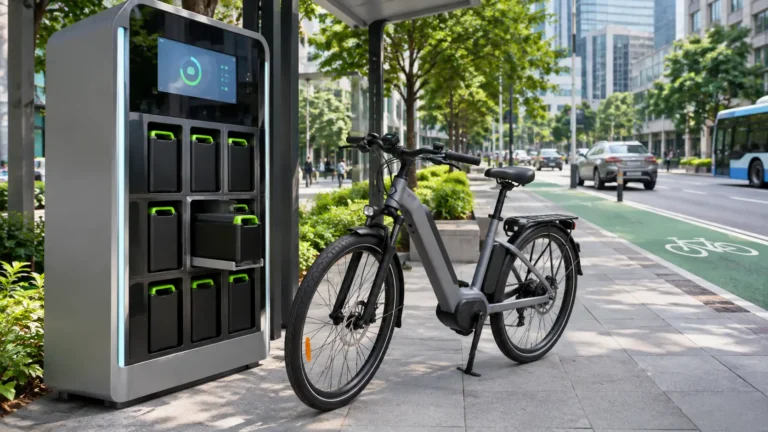
Yamaha ENYRING battery swapping is moving into a real-world pilot. Announced on November 10, 2026, the Berlin trial combines electric-assist bicycles, removable batteries, public swap stations, fleet software, and support services. Partners in delivery, employee mobility, and bike rental are testing the system after the pilot began at the end of October.
This guide explains how the service works, who it is designed for, and what still needs to be proven before battery swapping becomes a practical commuting option. It is an industry overview, not a hands-on review.
What Is Yamaha ENYRING?
ENYRING, a Yamaha Motor subsidiary established in Berlin in 2023, separates the bicycle from its battery. Customers buy an ENYRING e-bike, while batteries are supplied through a subscription and exchanged at dedicated stations. The operator manages pack availability, monitoring, replacements, and recycling.
Yamaha’s November 10 announcement confirms that the pilot tests bikes, stations, software, and support together. ENYRING’s official website explains its battery subscription model.
How Does an E-Bike Battery Swap Work?
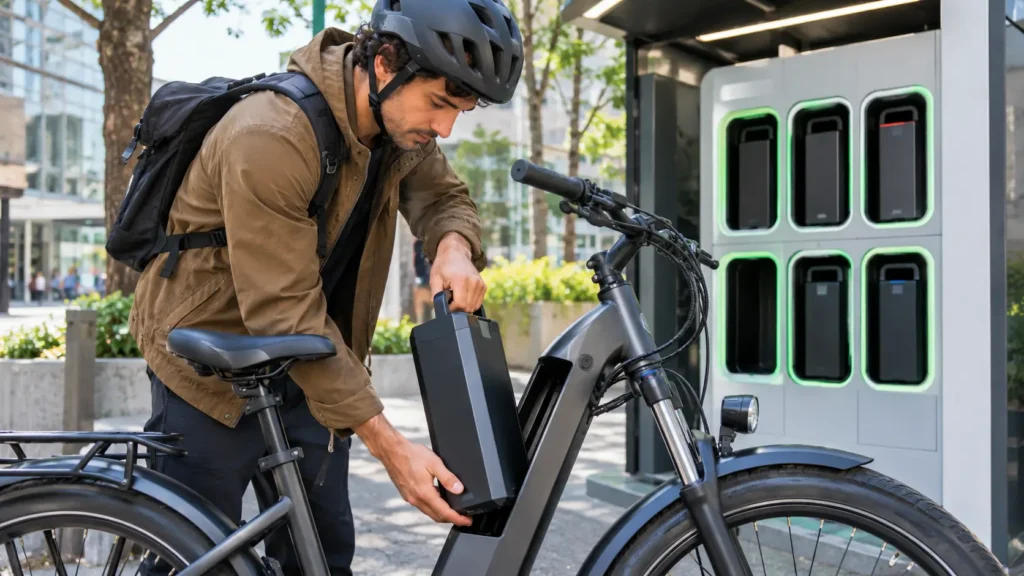
A rider visits a station, follows the instructions, removes the depleted pack, and inserts a charged replacement. ENYRING says the process should take less than a minute, with its fleet page describing a 30-second target. These are company estimates, not independent averages.
Behind the quick exchange, software must identify compatible packs, track battery health, manage inventory, and make sure a charged unit is available. The stations and service team are as important as the removable battery itself.
What Is Being Tested in Berlin?
The trial includes delivery services, employee mobility programs, and bike rentals. Yamaha will collect data on vehicle use and operational efficiency. Trade reporting from VISION Mobility and Micromobility.io says the test may run for up to three months, with seven of 20 planned pilot stations installed in early November. ENYRING’s public site describes a larger planned Berlin network, so rollout figures may change. See also Bike Europe’s industry news.
Why Battery Swapping Could Help Delivery Fleets
Delivery fleets lose productive time when bikes sit idle during charging. Spare batteries and shift planning can help, but they add storage and management costs. A shared swap network could keep bikes working while a central operator monitors packs and schedules replacements.
ENYRING’s service description says fleets buy the bicycle and receive batteries, unlimited swaps, health monitoring, replacements, and recycling through a monthly subscription. Pricing and contract terms have not been published in the cited materials.
Could Everyday Commuters Benefit Too?
For commuters, swapping could help when a long workday or multiple trips exceed one battery’s range. But it only works if stations sit along the rider’s route, the bike is compatible, and the subscription is worth the convenience. A short-distance rider with home charging may not benefit.
The current pilot is aimed at business fleets, not every private e-bike owner. ENYRING’s early-access page points to a broader launch in 2027. Our guide to urban e-bike commuting trends explores the wider role of electric bicycles in cities.
Battery Subscription: Who Owns the Battery?
With battery-as-a-service, the operator manages inventory, health monitoring, replacement, and recycling. This can make costs more predictable, but fleets should check subscription limits, service guarantees, damage policies, and what happens if they leave the network or a station is unavailable.
Battery records and service history are becoming more important. Read our guide to e-bike battery passports for more on tracking pack condition and end-of-life handling.
Safety, Monitoring, and Battery Life
Centralized management can track charge cycles, identify declining packs, and remove batteries that fail service standards. ENYRING says its packs are monitored and retired before they become unsafe; independent pilot data will be needed to verify how well this works in daily use.
Stations still need safe installation, maintenance, weather protection, and procedures for damaged packs. Yamaha’s 2023 ENYRING announcement describes the earlier battery-as-a-service concept, including reuse and recycling.
Battery Swapping vs. Charging at Home
| Consideration | Home or workplace charging | Battery swapping |
|---|---|---|
| Waiting time | Bike or spare battery remains unavailable while charging | Designed to replace the depleted pack in under a minute |
| Infrastructure | Charger and safe charging location | Compatible e-bike, swap station network, software, and service support |
| Battery responsibility | Owner or fleet manages pack condition and replacement | Service operator manages subscribed batteries |
| Compatibility | Depends on the bike and charger system | Requires a compatible bike and battery format |
| Best fit | Private riders and fleets with predictable charging windows | High-use fleets and riders with convenient station access |
Home charging is simple when riders have a secure charging location and time between trips. Swapping makes more sense when a bike is used for repeated shifts, and downtime has a measurable cost.
What Could Stop Battery Swapping From Becoming Mainstream?
Network density is the main challenge: stations must be close enough, and charged packs must be available when riders need them. The system also needs secure software, reliable locks, enough battery inventory, and compatible bikes.
Economics and compatibility matter too. Subscriptions may suit busy fleets but not occasional riders. A proprietary battery format can make the service convenient inside the network while tying customers to one provider.
What ENYRING’s Berlin Pilot Needs to Prove
The trial needs to show station availability, swap reliability, battery communication, and the amount of downtime actually avoided. Rider feedback will also reveal whether the process works during bad weather and busy shifts. For related reading, see our guides to smart e-bike energy management, off-grid charging, and self-charging e-bikes.
Station Placement Is as Important as Battery Capacity
A battery-swap network succeeds only when stations are positioned around real journeys. Delivery riders need access near restaurants, warehouses, and busy customer zones. Employee mobility users need stations close to workplaces or transit connections. Rental operators need a location where bikes can be collected, returned, and serviced. A station map that looks impressive on paper may still leave gaps in the places riders need most.
Availability matters as much as distance. A station needs enough charged batteries during morning and evening peaks, plus a process for handling empty inventory or a technical fault. If a rider reaches a station and no compatible pack is ready, the time-saving advantage disappears. The Berlin pilot should therefore measure failed swaps, station uptime, and the distance riders travel to reach a working location.
Battery Reuse and the Circular-Economy Question
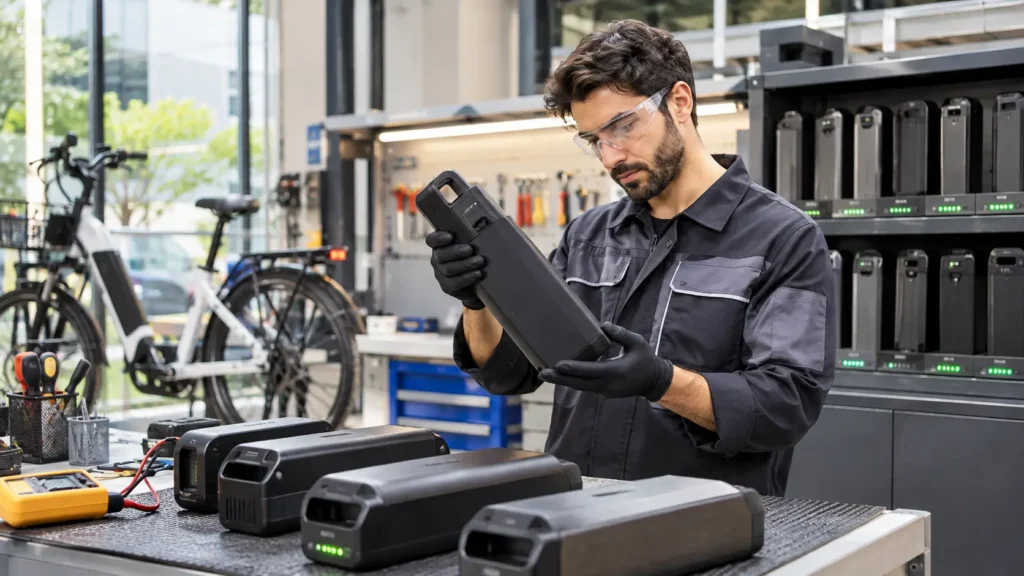
Shared batteries may allow an operator to monitor packs centrally, rotate them according to demand, and identify units that are losing capacity. A service provider can also manage repair, refurbishment, and recycling rather than leaving each customer to find a replacement route. ENYRING says it intends to extend battery life through shared use, monitoring, refurbishment, and end-of-life management.
Those environmental benefits depend on actual operating data. A swapping network requires stations, transport for battery inventory, electricity, software, and maintenance. The environmental result will depend on how long packs remain useful, how much energy is used to move and charge them, and whether retired batteries are recovered responsibly. A circular model should be judged by the full battery lifecycle, not by the speed of the exchange alone.
What Fleet Managers Should Check Before Joining
- Service coverage: Confirm station locations against actual delivery zones and shift patterns.
- Battery availability: Ask how the operator handles peak demand, low inventory, and station outages.
- Contract terms: Review subscription pricing, swap limits, deposits, damage rules, and exit conditions.
- Bike compatibility: Confirm which models and battery formats can use the network.
- Maintenance responsibility: Clarify who services the bicycle, battery, station, and software.
- Data and privacy: Understand what ride, location, battery, and fleet-use information is collected.
For a small fleet, a few spare batteries and a secure charging room may remain more economical. For a large operation with high daily mileage, predictable battery service and less downtime may justify a subscription. The right answer depends on utilization, geography, electricity costs, and the total cost of keeping each bike in service.
Final Thoughts: A Promising Fleet Solution, Not Yet a Universal Standard
Yamaha ENYRING’s Berlin pilot will test whether battery swapping can reduce downtime for delivery fleets, rentals, and employee mobility programs. For private commuters, the value will depend on station access, compatible bikes, subscription cost, and reliability. Battery swapping is promising, but it has not replaced ordinary charging for most riders.