Gravel bikes in 2026 are no longer just road-bike hybrids. Manufacturers are redesigning geometry to balance speed, stability, and off-road endurance. These changes are reshaping how riders approach long-distance adventure cycling.
What Is Changing in Gravel Geometry?
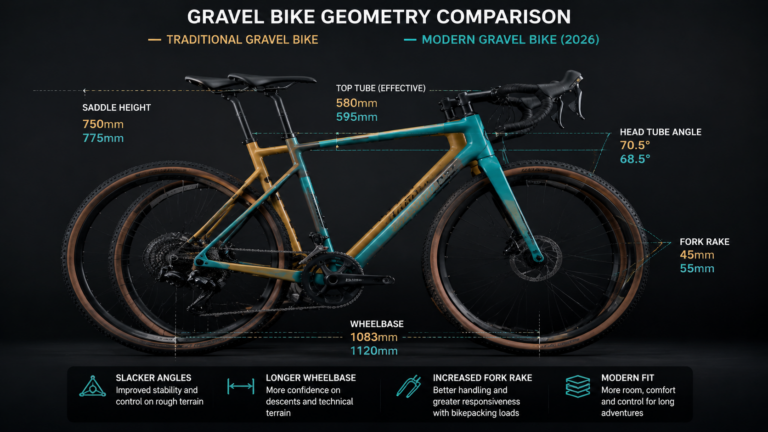
Modern gravel bikes now feature longer wheelbases, slacker head tube angles, and increased tire clearance. These adjustments improve control on rough terrain while maintaining efficiency on paved roads.
Many new models also incorporate shorter stems and lower bottom brackets to enhance stability during technical descents.
Why Geometry Matters
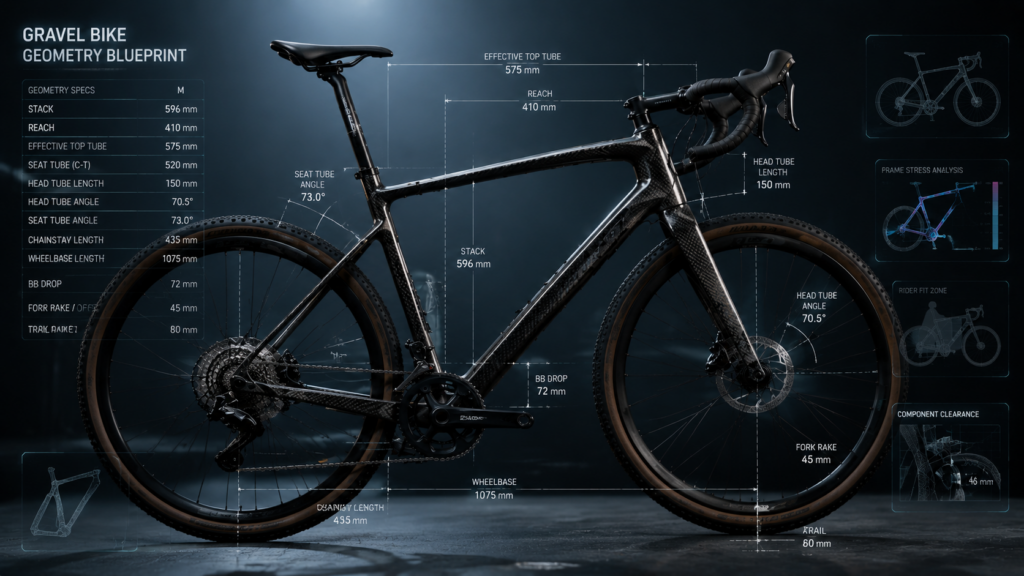
Bike geometry directly impacts handling. A stable geometry helps riders maintain control on loose gravel, while a more aggressive setup improves climbing speed and responsiveness.
Brands like Specialized and Canyon are leading innovation in this space.
Key 2026 Trends
- Increased tire clearance up to 50mm
- More relaxed endurance-focused frame angles
- Integration of vibration damping materials
- Optimized aerodynamics for gravel racing
Impact on Rider Performance
Riders benefit from reduced fatigue, better traction, and improved descending confidence. These updates make gravel cycling more accessible to long-distance endurance athletes.
For more riding strategy insights, check our guide on gravel training techniques.

Future of Gravel Bikes
Expect continued blending of mountain bike stability and road bike efficiency. Manufacturers are also experimenting with AI-assisted frame tuning and modular geometry systems.