The Evolution of Bike Fit and Geometry Optimization in 2026
Cycling performance is no longer just about pushing harder on the pedals. In 2026, the intersection of human biomechanics and bicycle engineering has reached unprecedented levels of precision. Proper cycling posture and core strength are foundational, but they must be paired with a machine that perfectly matches your body. Bike fit and geometry optimization have evolved from simple tape measure adjustments to sophisticated 3D motion capture analysis. This technological leap ensures that every watt of power generated is efficiently transferred to the road, while simultaneously minimizing the risk of injury.
Understanding the nuances of frame geometry is crucial for any cyclist looking to upgrade their ride or improve their current setup. The days of simply choosing a “medium” or “large” frame are long gone. Today, riders must navigate a complex matrix of measurements, including stack, reach, head tube angle, and seat tube angle. These metrics dictate how a bike handles, how aerodynamic you can get, and how comfortable you will be during a five-hour endurance epic. Let us dive deep into the science of bike fit and geometry optimization for 2026.
Decoding Stack and Reach
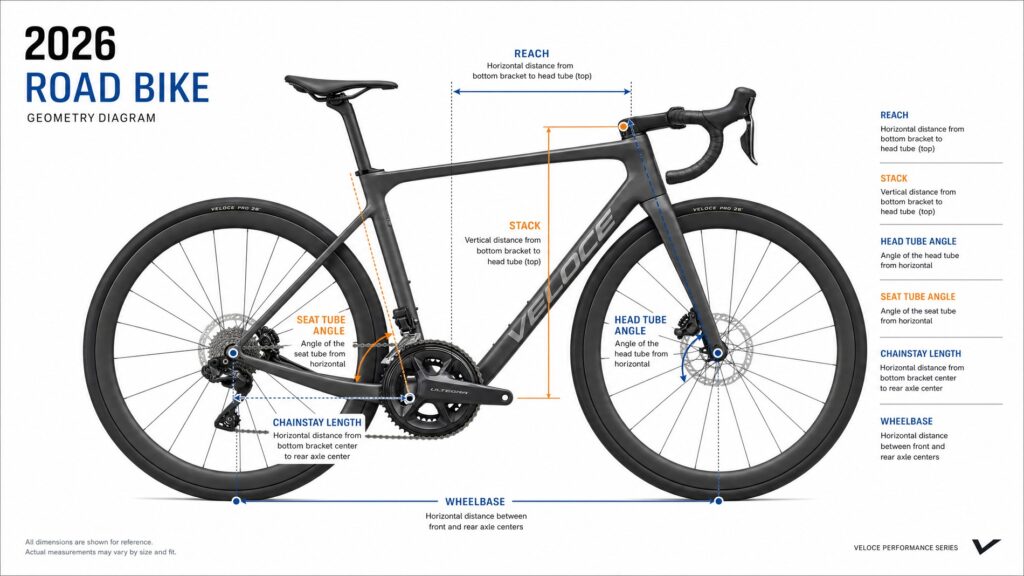
The two most critical measurements in modern bike geometry are stack and reach. According to Rydecruz’s 2026 Geometry Guide, stack is the vertical distance from the center of the bottom bracket to the center of the top of the head tube. Reach is the horizontal distance between those same two points. These measurements are absolute, meaning they can be directly compared across different brands and frame designs, unlike traditional seat tube lengths which vary wildly based on sloping top tubes.
A higher stack measurement results in a more upright riding position. This is typically found on endurance road bikes and gravel machines, prioritizing comfort over absolute aerodynamics. Conversely, a lower stack demands a flatter, more aggressive posture, which is the hallmark of dedicated aero race bikes. Reach determines how stretched out you will be. A longer reach pulls your torso forward, shifting weight onto the front wheel for aggressive cornering. A shorter reach keeps you centered and relaxed. Balancing these two metrics is the first step in achieving a highly aerodynamic yet sustainable position.
The Rise of 3D Motion Capture Analysis
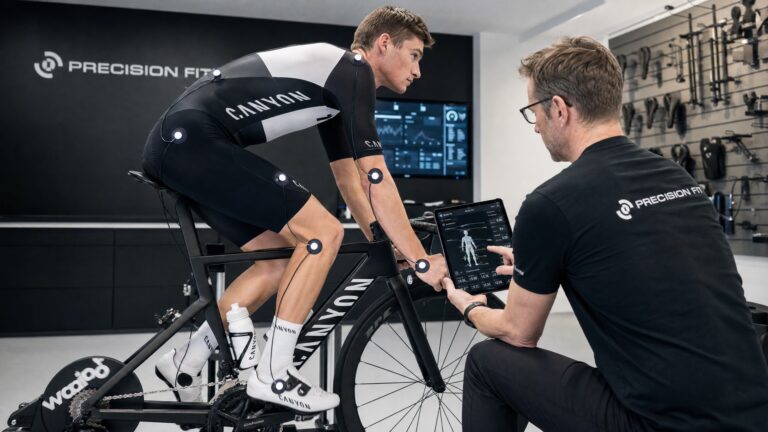
Static bike fitting, where a fitter measures your joint angles while you sit stationary on the bike, is rapidly becoming obsolete. The gold standard in 2026 is dynamic 3D motion capture analysis. This technology utilizes high-speed cameras and reflective markers placed on key anatomical landmarks—such as the ankle, knee, hip, and shoulder—to track your movement in real-time as you pedal under load.
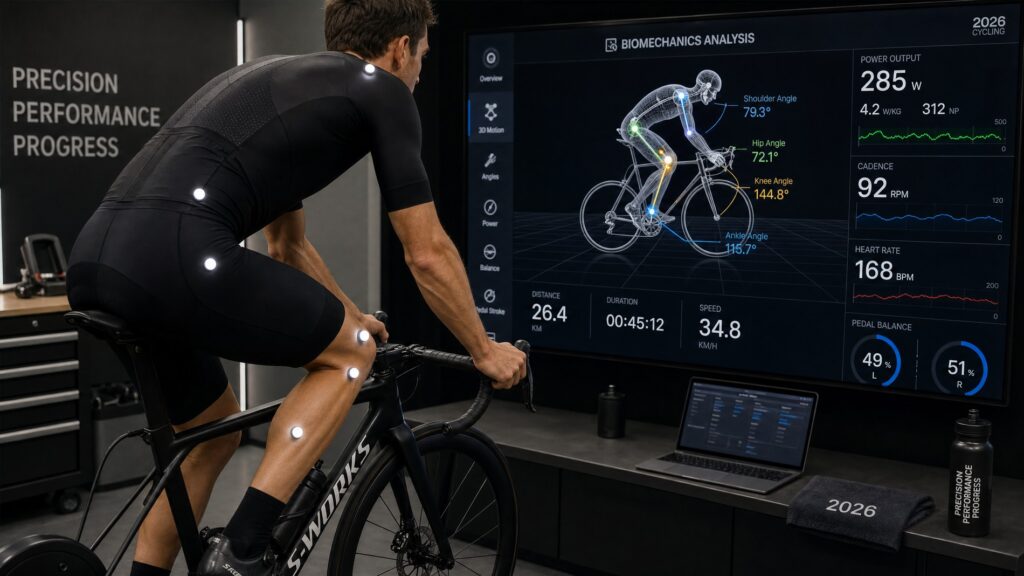
Systems like Retül and gebiomized analyze thousands of data points per second. They can detect minute asymmetries in your pedal stroke, lateral knee tracking issues, and pelvic rocking that a human eye might miss. By analyzing the rider in motion, fitters can make micro-adjustments to saddle height, fore/aft position, and cleat alignment. This dynamic approach ensures that the fit is optimized for the actual mechanics of pedaling, rather than a static pose, leading to significant improvements in both power output and long-term comfort.
Saddle Height and Cleat Alignment Precision
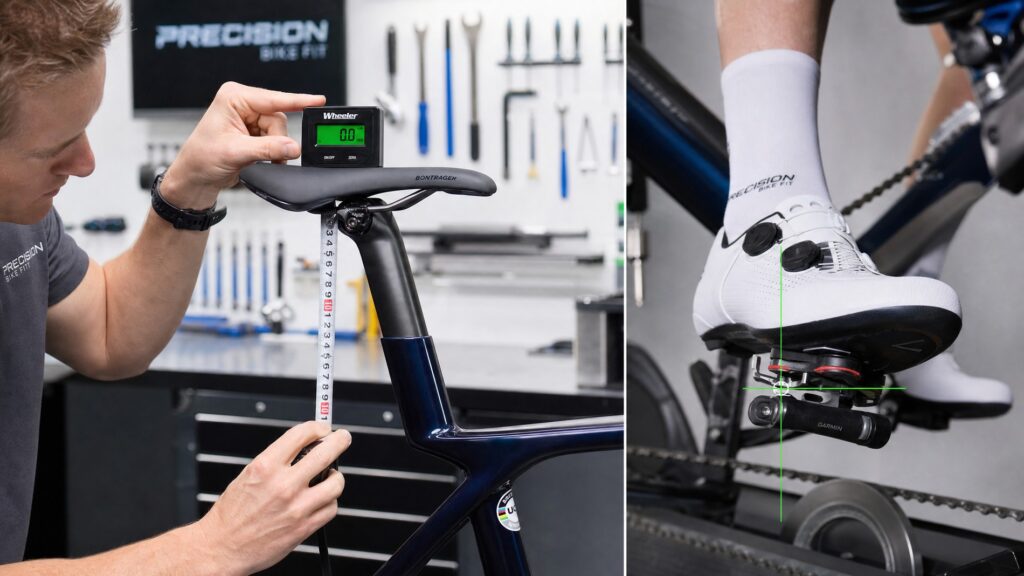
Perhaps no adjustment is more critical to power transfer and knee health than saddle height and cleat alignment. Setting the saddle too high can lead to rocking hips and lower back pain, while a saddle that is too low places excessive strain on the patellar tendon. In 2026, fitters use digital inclinometers and laser alignment tools to achieve millimeter-perfect positioning.
Cleat placement is equally vital. The interface between the shoe and the pedal is the primary point of power transfer. Modern cleat technology allows for precise adjustments in fore/aft position, medial/lateral stance width, and rotational float. A professional fitter will assess your natural foot mechanics, arch support needs, and varus/valgus tilt to position the cleats optimally. This meticulous attention to the foot-pedal interface prevents hot spots, numbness, and overuse injuries in the kinetic chain.
Frame Angles and Handling Characteristics
Beyond stack and reach, the angles of the frame tubes drastically affect how a bike handles. The head tube angle dictates the steering response. A steeper angle (e.g., 73-74 degrees) results in quick, twitchy steering ideal for criterium racing. A slacker angle (e.g., 70-71.5 degrees) slows down the steering, providing stability at high speeds and over rough terrain, which is why it is favored on gravel and endurance bikes.
The seat tube angle influences your position relative to the bottom bracket. A steeper seat tube angle pushes the rider forward, opening up the hip angle. This is highly beneficial for time trialists and triathletes who need to produce power while in a deeply tucked aero position. Road bikes typically feature a slightly slacker seat tube angle to balance power delivery with comfort over varied terrain. Understanding these angles helps riders select a frame that matches their specific riding style and handling preferences.
The Future of Custom Geometry
While mass-produced frames fit the majority of the population, the ultimate expression of geometry optimization is full custom fabrication. Brands utilizing advanced carbon layup techniques and 3D-printed titanium lugs can create frames tailored to an individual’s exact biomechanical requirements. If you have unusually long legs relative to your torso, or require a specific weight distribution for handling, custom geometry is the answer.
Furthermore, component integration is playing a massive role in fit. Integrated one-piece bar and stem combos look incredibly sleek and save watts, but they lock the rider into a specific stem length and bar width. Therefore, getting a professional bike fit before purchasing an integrated cockpit is absolutely essential in 2026. By investing in a comprehensive fit session, you ensure that your high-performance drivetrain and aerodynamic frame are working in perfect harmony with your body, unlocking your true cycling potential.