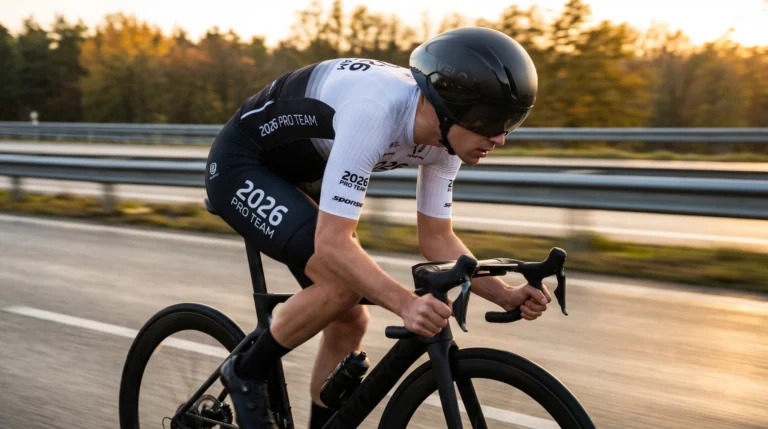
The Evolution of Aerodynamic Helmet Technology in 2026
The pursuit of speed in cycling has always been a battle against the wind. In 2026, the industry is witnessing a profound leap in aerodynamic helmet technology, driven by rigorous wind tunnel testing and advanced computational fluid dynamics (CFD). Riders are no longer forced to choose between a well-ventilated helmet and a fast one. Today, manufacturers are producing helmets that seamlessly blend cooling efficiency with significant drag reduction, fundamentally altering the landscape of road racing and time trialing.
Historically, aero helmets were heavy, stuffy, and visually polarizing. They were reserved almost exclusively for time trials or flat, fast sprint stages. However, modern designs have evolved to become the standard for everyday riding. This shift is largely due to the realization that the rider’s body and head account for the vast majority of aerodynamic drag. Consequently, optimizing the helmet’s shape offers one of the most cost-effective ways to save watts and increase speed, especially when compared to the expense of upgrading to a new set of deep-section carbon wheels.
Wind Tunnel Testing and Performance Validation
The foundation of modern helmet design lies in extensive wind tunnel testing. Facilities around the world are utilized to measure the aerodynamic drag of various prototypes under controlled conditions. During these tests, a rider or a highly accurate mannequin is positioned on a bike, and air is blown over them at specific velocities. Engineers then measure the forces acting on the helmet, allowing them to quantify the exact wattage saved by different shapes and vent configurations.
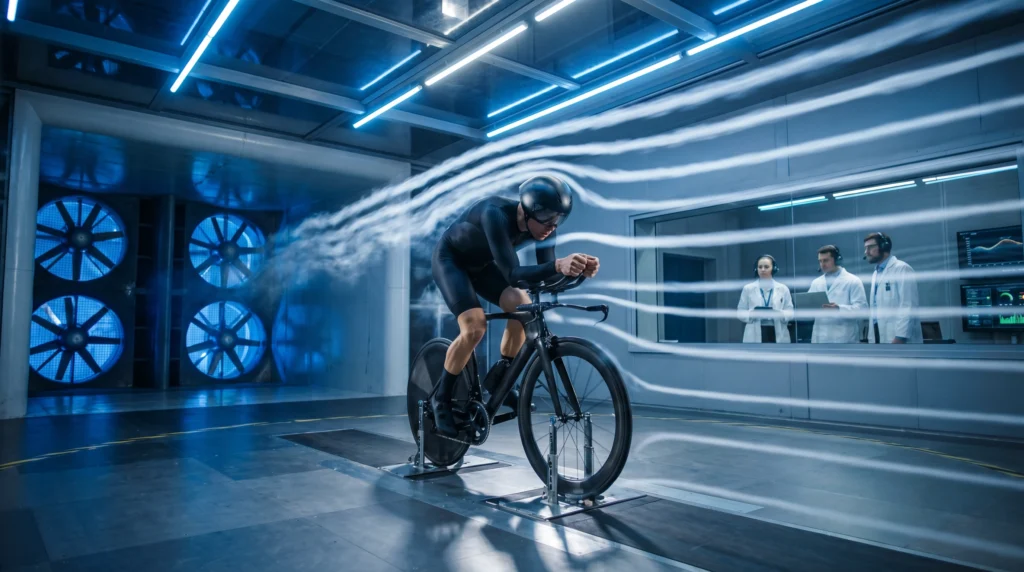
This rigorous testing protocol is essential for validating manufacturer claims. For instance, recent comparative wind tunnel testing of over 40 aero road helmets revealed significant differences in performance between brands. The data showed that the fastest helmets, such as the POC Procen Air and the Specialized S-Works Evade 3, consistently outperformed their competitors across a range of yaw angles. This empirical evidence is crucial for cyclists looking to maximize their efficiency, particularly when integrating these gains with the data provided by Cycling Power Meters and Training Metrics Guide 2026.
Furthermore, wind tunnel testing has highlighted the critical importance of head position. A helmet that is incredibly fast when the rider is looking straight ahead may become an aerodynamic liability if the rider drops their head. Therefore, the best aero helmets in 2026 are designed to be forgiving across a variety of realistic riding postures. This adaptability ensures that the aerodynamic benefits are maintained even when the rider is fatigued or navigating technical terrain, a concept that parallels the advancements seen in Disc Brake Technology and Hydraulic Innovations 2026.
Computational Fluid Dynamics (CFD) Analysis
While wind tunnel testing provides the final validation, the initial design phase relies heavily on Computational Fluid Dynamics (CFD). This advanced software allows engineers to simulate airflow over a digital model of the helmet before a physical prototype is ever built. By analyzing the aerodynamics of cycling through CFD, designers can visualize pressure zones, identify areas of turbulence, and iteratively refine the helmet’s shape to minimize drag.
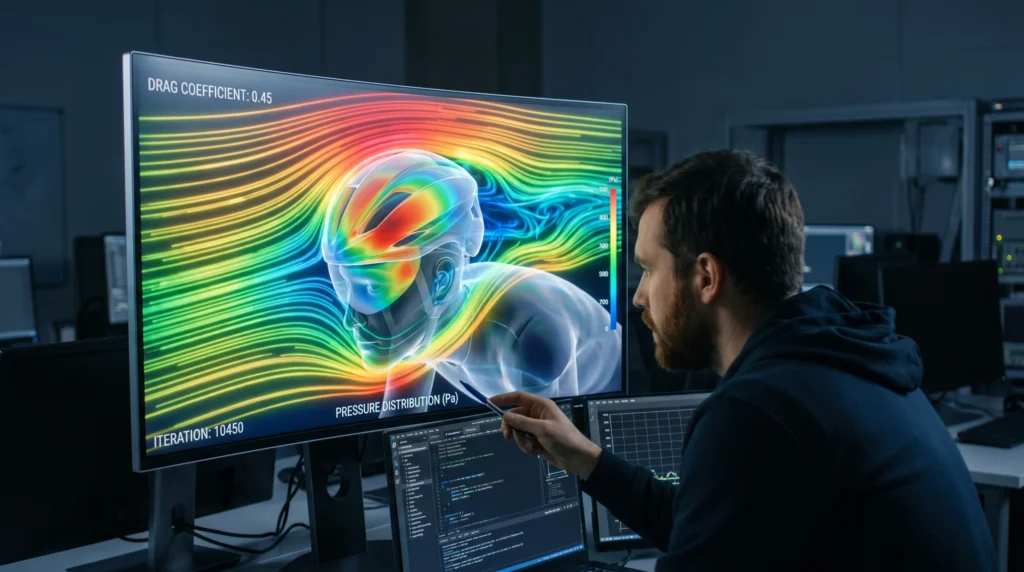
CFD analysis is particularly valuable for optimizing ventilation without compromising aerodynamics. By carefully shaping the internal channels and exhaust ports, engineers can draw air through the helmet to cool the rider’s head while simultaneously smoothing the airflow over the exterior surface. This delicate balance is what separates a truly great aero helmet from a mediocre one. The ability to model these complex fluid dynamics has led to the creation of helmets that are both fast and comfortable, even on hot, mountainous stages.
Moreover, CFD allows for the rapid testing of radical new concepts. For example, the development of the Tucker III 2Vi MIPS Helmet relied extensively on CFD to tailor every detail for maximum speed. This digital prototyping process accelerates innovation and ensures that the final product represents the pinnacle of aerodynamic engineering. As we look towards the future, the integration of CFD with other technologies, such as AI Smart Bike Lights That Adapt to Traffic in 2026, promises even more integrated and efficient cycling systems.
The Future of Aero Helmet Design
The landscape of aero helmet design is constantly evolving, driven by both technological advancements and regulatory changes. The UCI has recently implemented new rules regarding helmet dimensions and integrated visors, forcing manufacturers to adapt their designs. Despite these constraints, the pursuit of speed remains relentless. We are seeing a trend towards more compact, teardrop shapes that minimize frontal area while maintaining a smooth transition to the rider’s back.
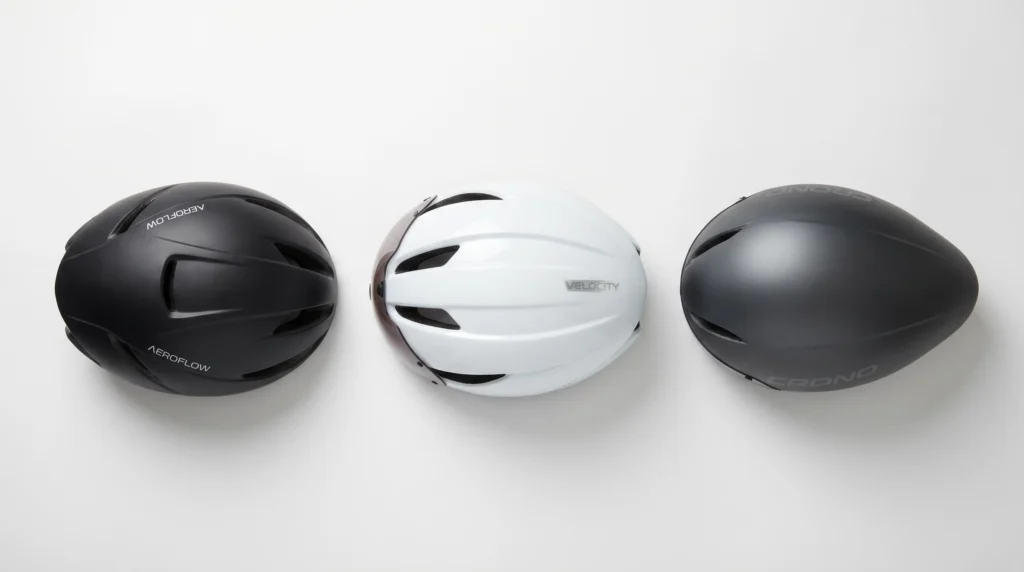
In 2026, the focus is also shifting towards the integration of safety features without compromising aerodynamics. Technologies like MIPS (Multi-Directional Impact Protection System) are now seamlessly incorporated into the sleekest aero helmets, ensuring that riders are protected in the event of a crash. This holistic approach to helmet design, which prioritizes both speed and safety, is a testament to the maturity of the cycling industry. It is a philosophy that is echoed in the development of Solid-State Battery Technology and E-Bike Range Revolution for 2026, where performance and reliability go hand in hand.
Ultimately, investing in a high-quality aerodynamic helmet is one of the smartest decisions a cyclist can make. By leveraging the insights gained from wind tunnel testing and CFD analysis, riders can significantly reduce their aerodynamic drag and increase their speed. Whether you are a competitive racer or a dedicated enthusiast, the advancements in helmet aerodynamics design offer a tangible, measurable advantage on the road. The science of speed has never been more accessible, and the tools to achieve it are now resting comfortably on our heads.