The Evolution of Mountain Bike Performance in 2026
The landscape of off-road cycling is undergoing a massive transformation as we move deeper into 2026. Riders are pushing the boundaries of what is possible on two wheels, demanding equipment that can handle increasingly technical terrain without sacrificing climbing efficiency. At the heart of this revolution is bike suspension technology, which has seen unprecedented advancements in recent months. Manufacturers are no longer just adding travel; they are fundamentally rethinking how a bicycle interacts with the trail beneath it.
This year, the focus has shifted from purely mechanical solutions to highly integrated, intelligent systems. The modern mountain bike is a marvel of engineering, blending aerospace-grade materials with sophisticated electronics. Consequently, riders of all skill levels can experience a level of control and comfort that was previously reserved for elite factory racing teams. Whether you are tackling steep, rocky descents or grinding up technical climbs, the latest suspension innovations are designed to keep your tires planted and your momentum moving forward.
Smart Damping Systems and Electronic Integration
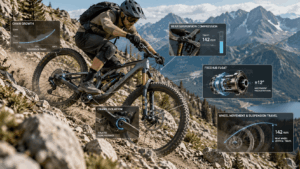
One of the most significant breakthroughs in 2026 is the widespread adoption of electronic, predictive damping systems. Historically, riders had to manually adjust their suspension settings based on anticipated trail conditions, often compromising performance when the terrain unexpectedly changed. However, modern smart suspension systems utilize a network of sensors to read the trail thousands of times per second. These sensors detect impacts, rider weight shifts, and even the bike’s pitch angle.
The data collected is processed by an onboard microcomputer that instantly adjusts the compression and rebound damping of both the fork and rear shock. For example, if the system detects a smooth climb, it automatically stiffens the suspension to maximize pedaling efficiency. Conversely, when the sensors register a sudden drop or a series of rapid impacts, the valves open in milliseconds to absorb the blow. This seamless transition allows riders to focus entirely on their line choice rather than fumbling with lockout levers. Furthermore, these systems integrate perfectly with modern cycling training software, allowing users to analyze their suspension performance post-ride.
Advanced Air Spring Innovations
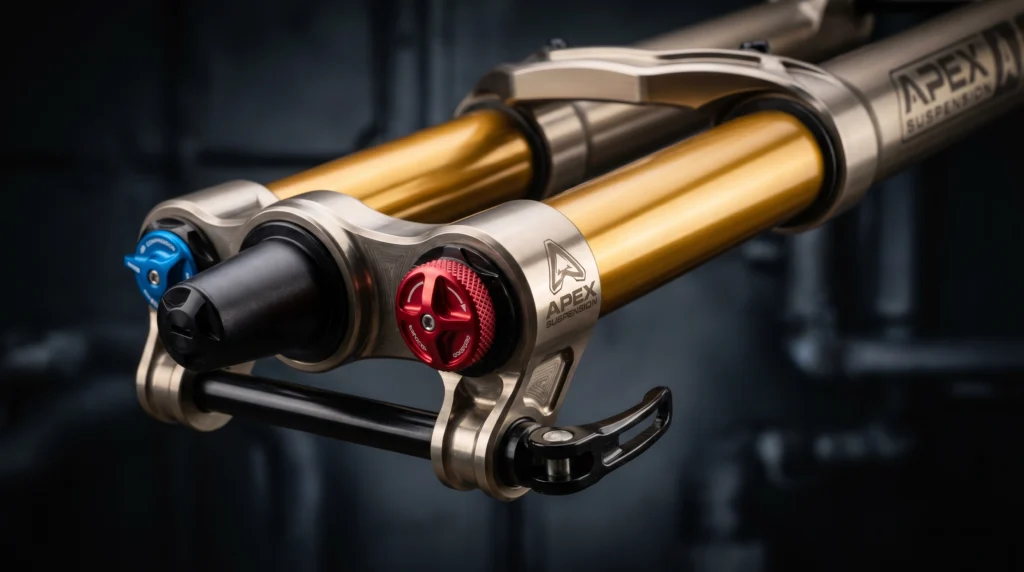
While electronic damping handles the dynamic response, the underlying air spring technology has also seen remarkable improvements. The goal for 2026 has been to create an air spring that mimics the linear, supple feel of a traditional coil shock while retaining the lightweight adjustability of air. Engineers have achieved this by significantly increasing the volume of the negative air chambers in modern forks and shocks. This larger negative volume helps to overcome the initial stiction of the seals, resulting in a suspension that is incredibly sensitive to small bumps and trail chatter.
Additionally, the use of advanced materials in shock technology has reduced internal friction to near-zero levels. Kashima coatings and proprietary low-friction seals ensure that the suspension moves smoothly through its entire stroke. Riders can also fine-tune the progressivity of their air springs using easily swappable volume spacers. By adding or removing these spacers, a rider can customize how the suspension ramps up at the end of its travel, preventing harsh bottom-outs on large jumps while maintaining mid-stroke support for aggressive cornering.
The Science of Frame Geometry Optimization
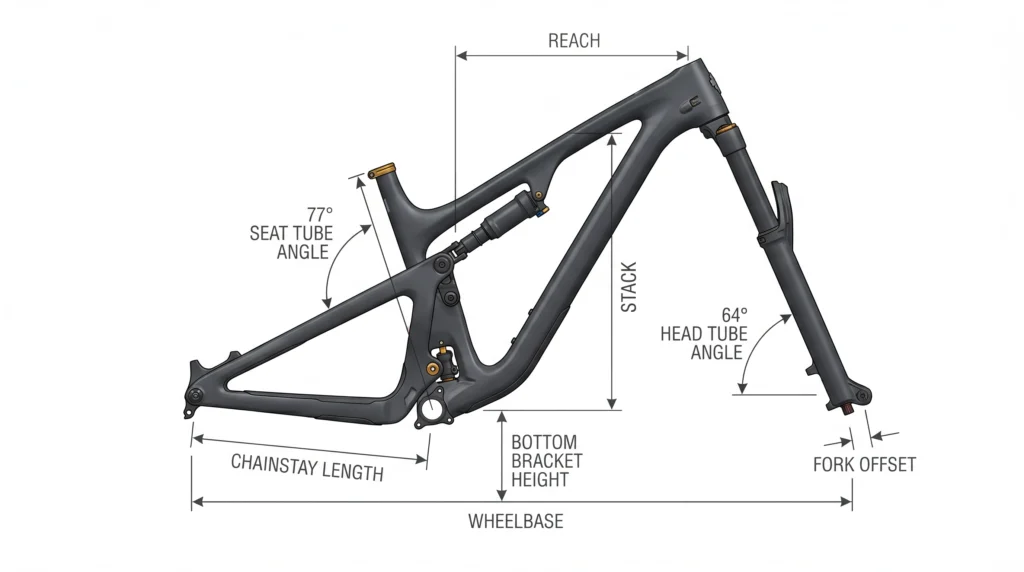
Suspension technology cannot reach its full potential without a properly designed chassis. In 2026, bike geometry optimization has become a highly refined science. The industry trend of “longer, lower, and slacker” has matured into a more nuanced approach, where every angle and measurement is carefully calculated to balance stability with agility. Head tube angles have settled into a sweet spot—typically around 64 degrees for enduro bikes—providing immense confidence on steep descents without causing the front wheel to wander on climbs.
Equally important is the evolution of seat tube angles. Modern frames feature significantly steeper seat tubes, often exceeding 77 degrees. This design places the rider in a more forward, aggressive pedaling position, directly over the bottom bracket. Consequently, climbing efficiency is drastically improved, and the front wheel remains planted on steep gradients. When combined with a longer reach, this geometry creates a spacious cockpit that allows the rider to move dynamically over the bike, maintaining balance and control in unpredictable terrain.
Kinematics and Linkage Design
The way a frame’s suspension linkage moves through its travel—known as its kinematics—is crucial to how the bike feels on the trail. In 2026, engineers are utilizing advanced computer modeling to fine-tune leverage rates, anti-squat, and anti-rise characteristics. Anti-squat refers to the suspension’s ability to resist compressing under pedaling forces. Modern designs achieve high anti-squat values early in the travel for efficient climbing, but allow the suspension to become more active deeper in the stroke to absorb large impacts.
Anti-rise, on the other hand, dictates how the suspension behaves under heavy braking. A well-optimized linkage will remain active and supple even when the rider is grabbing handfuls of brake, ensuring that the rear tire maintains traction when it is needed most. Some manufacturers are even incorporating high-pivot designs with idler pulleys. This complex setup allows the rear wheel to move backward as it compresses, helping the bike carry momentum over square-edged hits rather than hanging up on them. Proper essential bike maintenance is critical to keeping these intricate multi-pivot systems running smoothly.
The Expansion of Micro-Suspension in Gravel
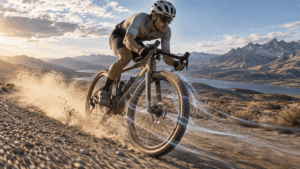
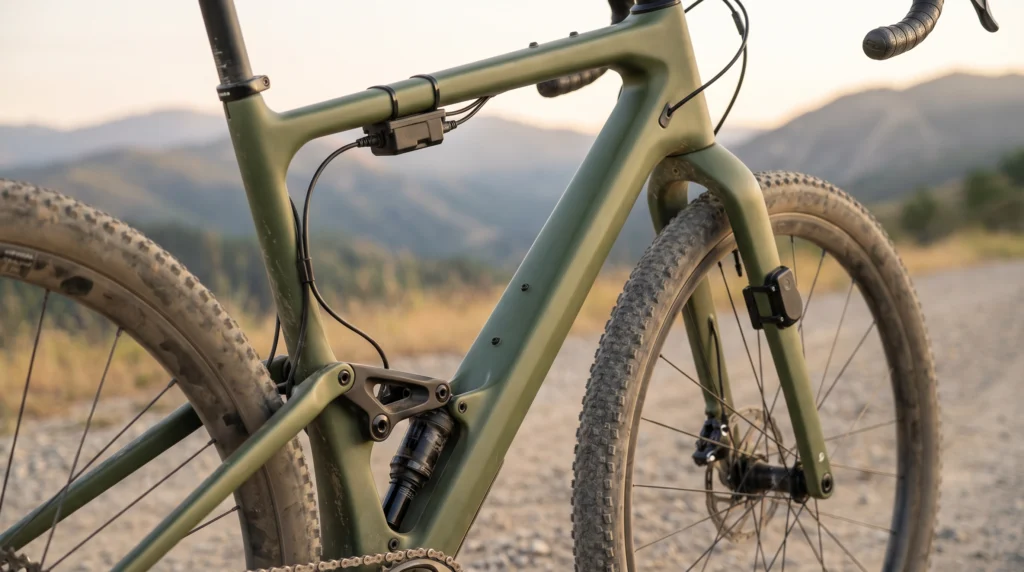
The benefits of advanced suspension are no longer confined to mountain biking. The gravel cycling segment has exploded in popularity, and with it, the demand for compliance on rough, unpaved roads. In 2026, gravel bike suspension trends have moved beyond simple tire volume. We are now seeing the widespread integration of micro-suspension systems designed specifically for the unique demands of gravel riding.
These systems typically offer between 20mm and 40mm of travel, just enough to take the sting out of washboard roads and unexpected potholes. Front suspension is often achieved through lightweight, short-travel forks or innovative steering column shock absorbers. In the rear, manufacturers are utilizing engineered flex zones in the carbon frame, pivoting seat stays, or even miniature shock absorbers integrated into the top tube. This micro-suspension significantly reduces rider fatigue over long distances, allowing gravel enthusiasts to ride faster and further with less physical toll.
Looking Ahead: The Future of Ride Dynamics
As we look toward the future, the integration of technology into bicycle suspension and geometry shows no signs of slowing down. We can expect to see even deeper synergy between e-bike motors and suspension systems, where the motor’s torque output is dynamically adjusted based on the suspension’s current state. Furthermore, the use of AI-driven setup applications will become standard, guiding riders through the complex process of tuning their air pressures, volume spacers, and damping clicks based on their specific weight, riding style, and local trails.
Ultimately, the goal of all these innovations is to enhance the rider’s experience. By optimizing geometry and utilizing intelligent suspension, the modern bicycle becomes an extension of the rider’s body. Whether you are analyzing your performance with a cycling power meter or simply enjoying a weekend trail ride, the technology of 2026 ensures that your bike is working with you, not against you. The result is a faster, safer, and undeniably more enjoyable ride on any terrain.