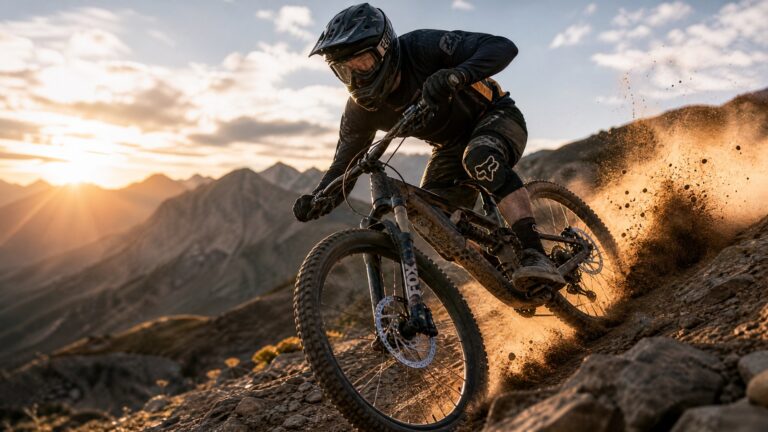
The Evolution of Bike Stopping Power and Brakes Technology in 2026
When discussing bicycle performance, the conversation often gravitates toward aerodynamics, lightweight frame materials, and drivetrain efficiency. However, the most critical component on any bicycle is arguably its braking system. The ability to stop safely, predictably, and powerfully dictates how fast a rider can confidently travel. In 2026, bike brakes technology has reached a pinnacle of engineering, fundamentally altering how cyclists approach descents, cornering, and overall bike handling. The debate between traditional rim brakes and modern disc brakes has largely been settled, with the industry overwhelmingly embracing the superior stopping power and modulation offered by hydraulic systems. Understanding the nuances of these technologies is essential for any rider looking to upgrade their equipment or improve their descending skills.
The primary function of a bicycle brake is to convert kinetic energy into thermal energy through friction. This process decelerates the bicycle, allowing the rider to navigate obstacles, negotiate tight corners, and come to a complete stop. While the basic physics remain unchanged, the mechanisms used to apply this friction have evolved dramatically. Historically, rim brakes were the standard, utilizing rubber pads that squeezed against the wheel’s rim. Today, disc brakes, which utilize a caliper to squeeze pads against a metal rotor mounted to the wheel hub, dominate the market. This shift has not only improved braking performance but has also influenced bike wheel technology and aerodynamic rim design, as rims no longer need a reinforced braking track.
The Great Debate: Disc Brakes vs. Rim Brakes
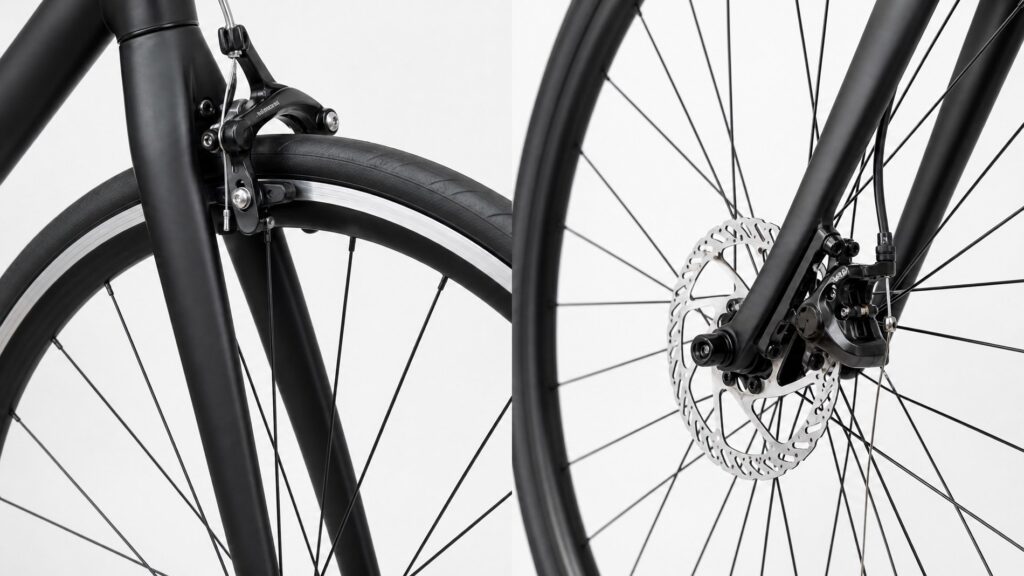
For decades, rim brakes were the undisputed king of road cycling. They were lightweight, mechanically simple, and easy to maintain. A traditional caliper rim brake uses a cable to pull two opposing brake pads against the braking surface of the wheel rim. While effective in dry conditions, rim brakes suffer from significant drawbacks. Their performance degrades rapidly in wet or muddy conditions, as the pads must first clear water and debris from the rim before generating friction. Furthermore, prolonged braking on long descents can cause the rims to overheat, potentially leading to tire blowouts or, in the case of carbon rims, structural delamination. Despite these limitations, some purists still prefer rim brakes for their classic aesthetic and marginal weight savings.
Disc brakes, conversely, have revolutionized stopping power across all cycling disciplines. By moving the braking surface away from the rim and onto a dedicated rotor at the hub, disc brakes offer consistent performance regardless of weather conditions. The rotor is less susceptible to water and mud accumulation, ensuring immediate bite when the lever is pulled. Additionally, because the wheel rim is no longer subjected to the abrasive forces of braking, rims can be designed lighter, wider, and more aerodynamic. This transition has also facilitated the widespread adoption of wider tires, which significantly improve comfort and traction. According to experts at REI, the industry standard has firmly shifted toward disc brakes for their superior reliability and safety.
The performance gap between the two systems becomes glaringly obvious during high-speed descents or emergency stops. Disc brakes provide significantly greater absolute stopping power, allowing riders to brake later into corners and carry more speed through technical sections. This increased confidence translates directly to faster overall times and a safer riding experience. While disc brake systems are generally heavier than their rim brake counterparts, the performance benefits far outweigh the minor weight penalty for the vast majority of cyclists. The integration of disc brakes has also necessitated changes in mountain bike trail skills, as riders must learn to manage the increased braking force without skidding.
Mechanical vs. Hydraulic Disc Systems
Within the realm of disc brakes, there are two primary actuation methods: mechanical and hydraulic. Mechanical disc brakes operate similarly to traditional rim brakes, utilizing a braided steel cable to connect the brake lever to the caliper. When the lever is pulled, the cable pulls an actuating arm on the caliper, which pushes the brake pads against the rotor. Mechanical systems are generally more affordable and easier to service for the home mechanic, as they do not require specialized bleeding tools or fluids. However, they are susceptible to cable stretch, friction within the housing, and contamination from dirt and moisture, which can degrade performance over time.
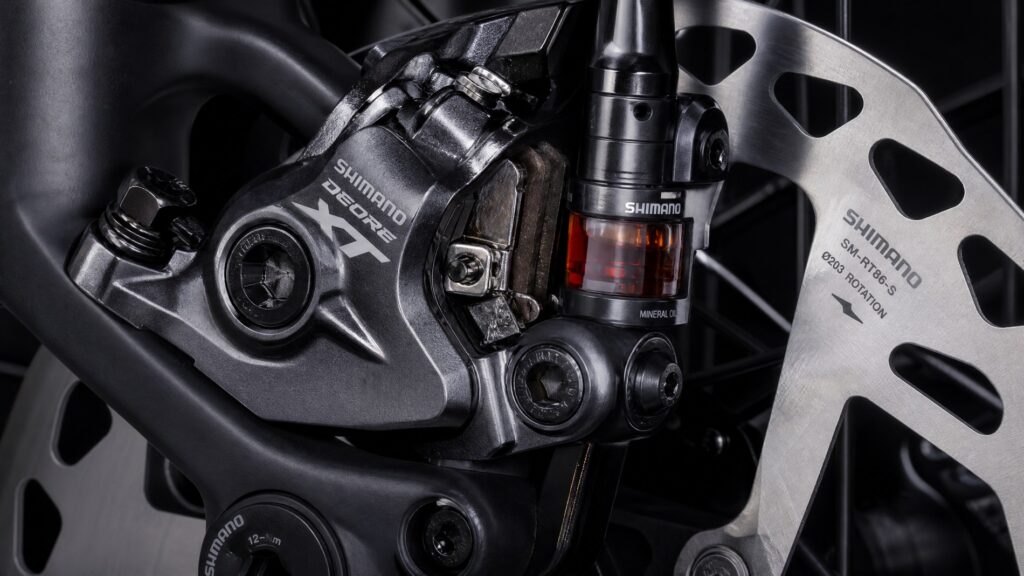
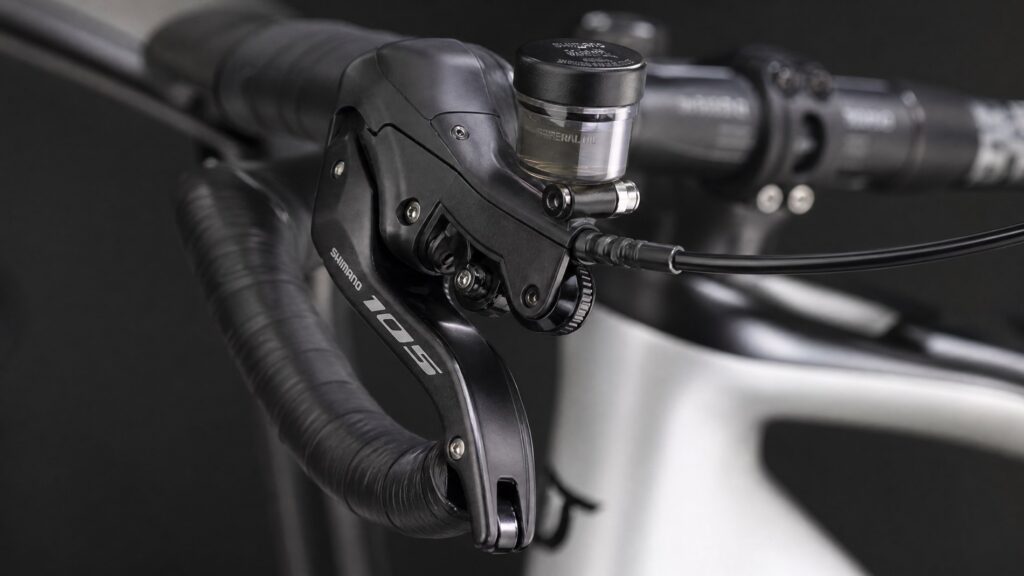
Hydraulic disc brakes represent the pinnacle of current braking technology. Instead of a steel cable, hydraulic systems use a sealed fluid line (typically containing mineral oil or DOT fluid) to transmit force from the lever to the caliper. When the rider pulls the lever, a piston pushes fluid through the hose, which in turn pushes the pistons in the caliper, forcing the pads against the rotor. Because fluid is incompressible, hydraulic brakes offer incredibly direct and powerful actuation with minimal friction. This results in a lighter lever feel and significantly less hand fatigue on long descents. The sealed nature of the system also makes it highly resistant to contamination, ensuring consistent performance in the harshest conditions.
The primary advantage of hydraulic systems lies in their superior modulation. Modulation refers to the rider’s ability to precisely control the amount of braking force applied. With a mechanical system, the relationship between lever pull and braking force can sometimes feel non-linear or “grabby.” Hydraulic brakes, however, provide a highly linear and predictable response. This allows the rider to apply just enough pressure to scrub speed without locking up the wheels and losing traction. As noted by TRP Cycling, excellent modulation is what separates a good brake from a great one, giving the rider ultimate control over their deceleration. This level of control is crucial for cycling injury prevention, as it reduces the likelihood of over-the-bars crashes.
Optimizing Braking Performance and Maintenance
To maximize the performance of any braking system, proper setup and maintenance are essential. For disc brakes, the most critical component is the brake pad. Brake pads come in various compounds, primarily organic (resin) and metallic (sintered). Organic pads offer a strong initial bite and operate quietly, making them ideal for dry conditions and lighter riders. However, they wear out faster and can fade under extreme heat. Metallic pads, on the other hand, are highly durable and perform exceptionally well in wet, muddy, and high-heat conditions, making them the preferred choice for downhill mountain biking and heavy touring. Choosing the right pad compound for your riding style and local terrain is a key aspect of bike maintenance.
Another crucial factor in disc brake performance is rotor size. Rotors typically range from 140mm to 220mm in diameter. A larger rotor provides a longer lever arm for the caliper to act upon, resulting in greater stopping power. Furthermore, larger rotors have more surface area, which allows them to dissipate heat more effectively during long descents. Road and gravel bikes generally use 140mm or 160mm rotors to save weight, while enduro and downhill mountain bikes utilize 200mm or 220mm rotors to handle the immense thermal loads generated by aggressive braking. Upgrading to a larger rotor is one of the most cost-effective ways to increase a bike’s stopping power.
Finally, regular maintenance is paramount for ensuring consistent braking performance. For hydraulic systems, this means periodically “bleeding” the brakes to remove any air bubbles that may have entered the fluid lines. Air is compressible, and its presence in the system will result in a spongy lever feel and a drastic reduction in stopping power. Additionally, brake pads and rotors must be kept clean and free of contaminants like oil or degreaser, which can ruin the friction surfaces. When installing new pads or rotors, it is vital to perform a proper “bedding-in” procedure. This involves a series of controlled stops to transfer a thin layer of pad material onto the rotor, which significantly increases friction and prevents brake squeal. By understanding the technology and adhering to a strict maintenance schedule, cyclists can ensure their brakes deliver maximum stopping power when it matters most.