Cycling helmets have always been one of the most important safety accessories for riders, but in 2026 they are becoming much more than protective equipment. The newest generation of smart cycling helmets 2026 combines artificial intelligence, sensors, communication technology, and connected safety systems to create a more intelligent riding experience.
From automatic crash detection to emergency alerts and real-time navigation assistance, smart helmets are transforming how cyclists stay protected on roads, trails, and urban environments.
The Evolution of Smart Cycling Helmets
Traditional helmets are designed primarily to reduce head injuries during crashes. Smart helmets add another layer of protection by actively monitoring the rider’s environment and responding to potential dangers.
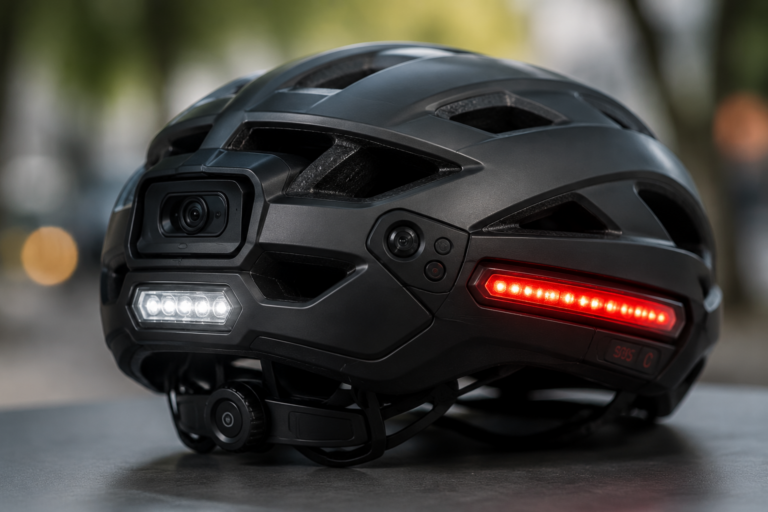
Modern smart helmets may include:
- Impact detection sensors
- Rear-facing cameras
- Integrated LED lighting
- Bluetooth communication systems
- GPS connectivity
- Emergency alert functions
Companies developing connected cycling equipment are creating helmets that work together with smartphones, cycling computers, and wearable devices.
Resources from organizations such as NHTSA bicycle safety resources continue to highlight the importance of visibility and awareness for cyclists.
AI Crash Detection and Emergency Alerts
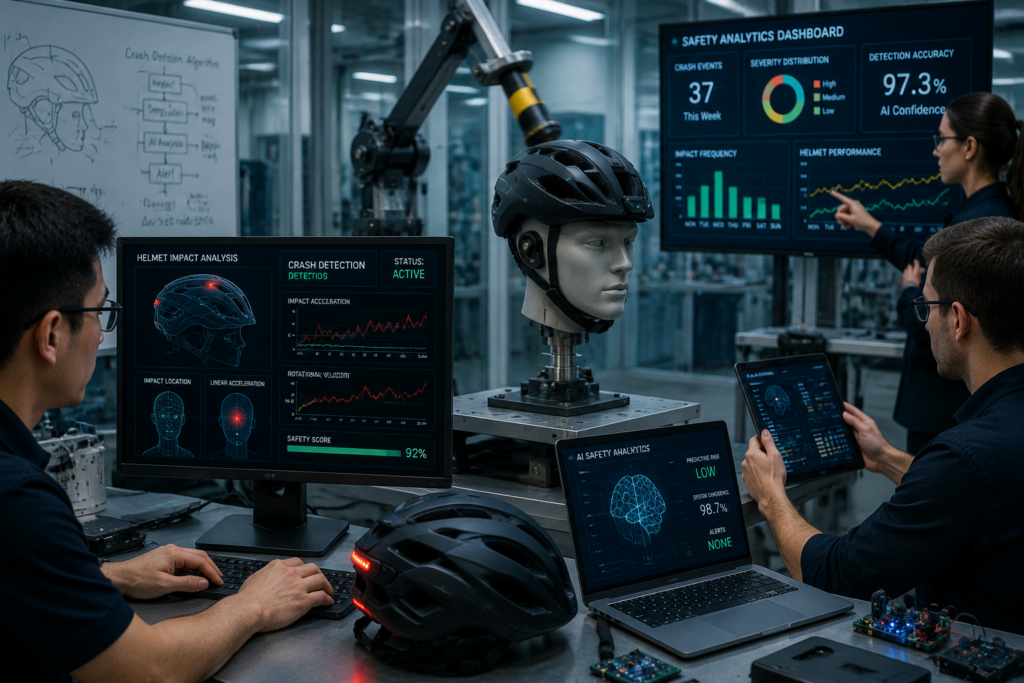
One of the biggest advancements in smart helmets is automated crash detection. Using accelerometers, gyroscopes, and motion sensors, helmets can recognize unusual impacts or sudden changes in movement.
When a serious incident is detected, connected systems can send alerts containing location information to emergency contacts.
This technology is especially valuable for:
- Solo cyclists
- Long-distance riders
- Mountain cyclists
- Remote bikepacking adventures
Similar safety concepts are already appearing in connected devices from companies like Garmin and other cycling technology manufacturers.
Integrated Cameras and Road Awareness
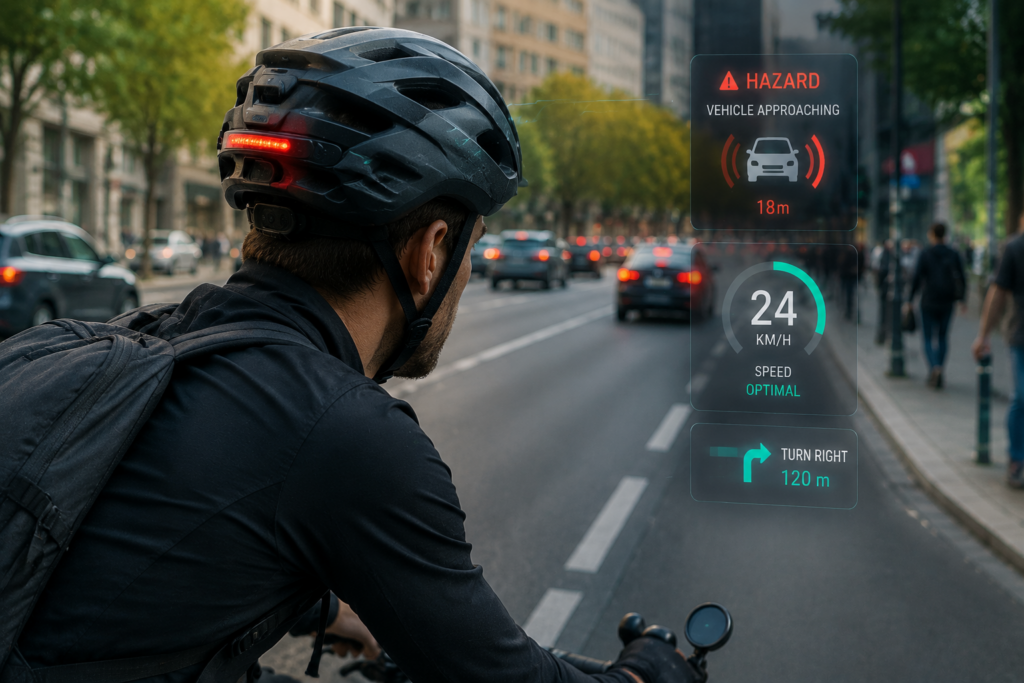
Smart helmets are also improving rider awareness through integrated cameras and sensors. Rear cameras can provide additional visibility by monitoring vehicles approaching from behind.
Combined with AI software, these systems can identify potential risks and provide warnings through audio alerts, LED indicators, or connected displays.
This technology connects naturally with our previous article about connected cycling analytics and predictive safety systems.
Communication Systems for Group Riding
Another growing trend is built-in communication technology. Smart helmets allow cyclists to communicate without removing their hands from the handlebars.
Voice communication can improve safety during:
- Group rides
- Bikepacking trips
- Competitive training sessions
- Adventure cycling
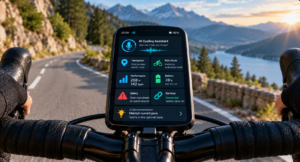
Connected helmet systems can also integrate with navigation devices, allowing riders to receive spoken directions without looking down at a screen.
Integration With Wearable Cycling Technology
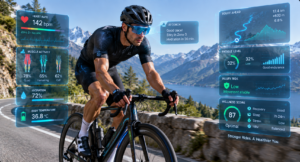
The future of smart helmets is closely connected with wearable technology. Helmet sensors can communicate with heart rate monitors, smart watches, and AI cycling dashboards.
For example, a rider experiencing fatigue may receive alerts recommending reduced intensity or a recovery break.
This creates a complete ecosystem similar to the systems discussed in our guide about wearable cycling biofeedback technology.
The Future of Smart Helmet Technology
Future smart helmets may include augmented reality displays, improved artificial intelligence, and deeper integration with smart cities.
Potential developments include:
- AI-powered hazard prediction
- Vehicle proximity detection
- Advanced biometric monitoring
- Automatic emergency response systems
Conclusion
Smart cycling helmets in 2026 represent a major shift in rider protection. By combining traditional helmet safety with AI, sensors, and connected technology, cyclists gain better awareness, communication, and emergency protection.
As cycling technology continues to advance, smart helmets will become an essential part of the connected cycling ecosystem.