Cycling technology is becoming increasingly interactive as artificial intelligence moves beyond performance tracking and into direct rider communication. In 2026, AI cycling digital assistants 2026 are changing how cyclists interact with bicycles by introducing voice commands, hands-free controls, intelligent recommendations, and connected ride management.
Instead of checking multiple screens or manually adjusting settings, future cyclists may communicate naturally with their bicycles and receive immediate assistance during every ride.
AI-powered cycling systems are increasingly combining sensors, software, navigation tools, and rider data to create more personalized and connected experiences. Industry discussions around smart bikes highlight AI’s growing role in training, safety, e-bike systems, and connected services.
The Evolution of Bicycle Interaction
Traditional bicycles require riders to manually operate most functions. Cyclists adjust gears, change assistance levels, check navigation screens, and interpret performance data themselves.
Smart bicycles are changing this relationship by introducing software systems capable of understanding rider requests and providing intelligent feedback.
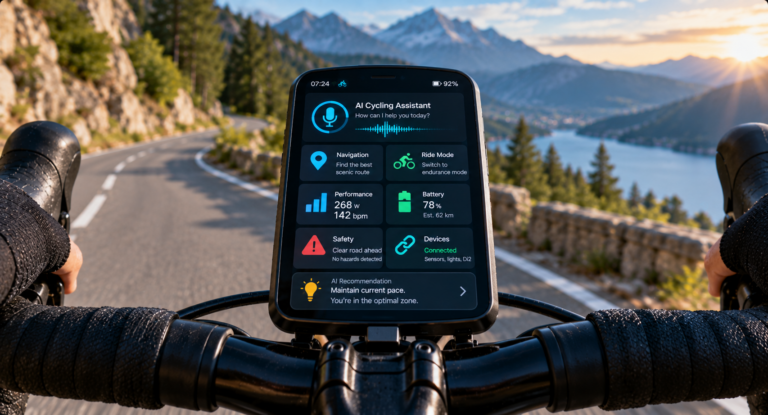
An AI cycling digital assistant may help manage:
- Navigation directions
- Performance information
- Training recommendations
- Battery management
- Safety notifications
- Connected accessories
This creates a more natural relationship between cyclist and technology.
This connects with our article about AI Cycling Assistants 2026.
Voice-Controlled Cycling Technology
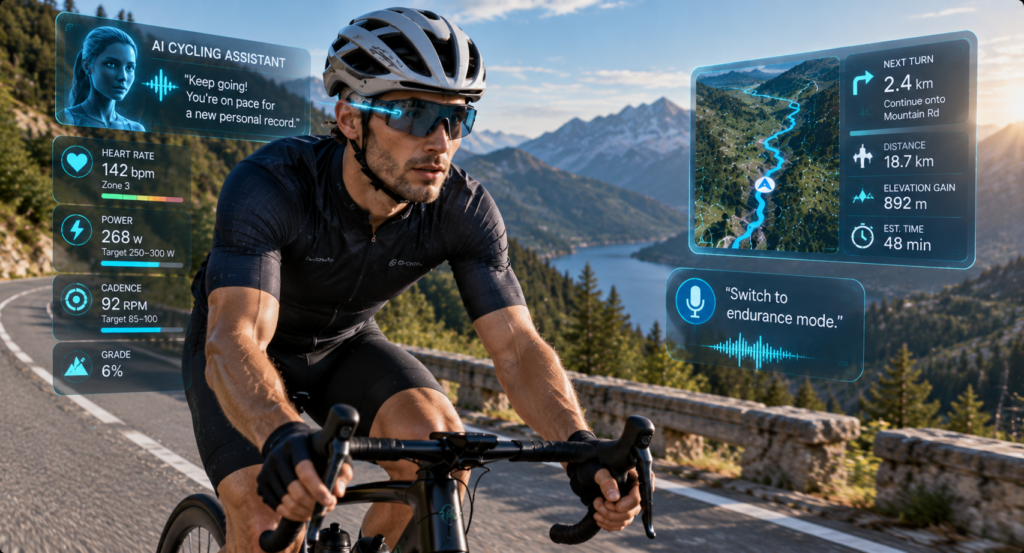
One of the biggest developments in AI cycling assistants is hands-free voice interaction. Cyclists often cannot safely look down at a screen while riding, especially during fast descents, traffic situations, or challenging climbs.
Voice-controlled AI systems may allow riders to:
- Ask for route information
- Change riding modes
- Request performance updates
- Check battery range
- Receive training advice
Instead of stopping to interact with a device, cyclists can communicate naturally while keeping their focus on riding.
Hands-free AI navigation features are already expanding into cycling applications, allowing riders to interact with navigation systems through conversational commands.
Smart Commands for Connected Bikes
Future AI cycling assistants may control different bicycle functions through voice commands.
Examples may include:
- “Increase assistance level”
- “Find a safer route”
- “Show my recovery status”
- “Check battery range”
- “Start endurance mode”
This type of interaction could make smart bicycles easier to use for both experienced riders and beginners.
AI Assistants and Smart Bicycle Operating Systems
AI digital assistants will likely become a major part of future bicycle operating systems. Instead of separate applications controlling different features, one intelligent system may manage the entire bicycle ecosystem.
A connected AI assistant could communicate with:
- Smart cycling computers
- Wearable sensors
- Electronic drivetrains
- Smart lights
- Navigation platforms
- Battery systems
This creates a unified experience where different bicycle technologies work together.
This connects with our article about Smart Bicycle Operating Systems 2026.
AI Navigation Through Natural Conversations
Navigation is one of the most useful applications for AI cycling assistants. Traditional GPS systems provide directions, but AI systems can understand context.
A cyclist may ask:
- “Find a less crowded route.”
- “Avoid steep climbs.”
- “Where is the nearest charging station?”
- “Suggest a faster training route.”
The AI assistant can combine route data, rider preferences, and environmental information to provide better recommendations.
This connects with our article about AI Cycling Route Intelligence 2026.
AI Performance Feedback During Rides
Another important function of digital assistants is real-time performance guidance.
The AI system may analyze:
- Heart rate
- Power output
- Cadence
- Training intensity
- Fatigue levels
Instead of reviewing performance after a ride, cyclists may receive suggestions while training.
For example, the AI assistant may recommend adjusting pace, improving cadence, or reducing intensity based on current conditions.
This connects with our article about AI-Powered Cycling Coaching 2026.
Integration With Smart Cycling Wearables
AI assistants become more powerful when connected with wearable technology. Smart clothing, watches, glasses, and biometric sensors can provide additional information about the rider.
Connected wearable data may include:
- Heart rate trends
- Recovery status
- Hydration information
- Sleep data
- Training readiness
The AI assistant can use this information to provide more personalized recommendations.
This connects with our article about Connected Cycling Wearable Ecosystems 2026.
AI Safety Assistance Through Voice Alerts
Digital assistants may also improve cycling safety by providing spoken warnings.
Possible safety features include:
- Vehicle proximity alerts
- Obstacle warnings
- Weather notifications
- Route hazard information
- Emergency assistance
This allows riders to receive important information without constantly viewing a display.
This connects with our article about AI Bicycle Safety Systems 2026.
AI Assistants for Electric Bicycles
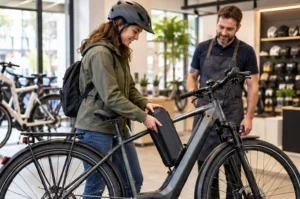
Electric bicycles may benefit significantly from AI digital assistants because they already contain advanced electronic systems.
An AI assistant could manage:
- Motor assistance settings
- Battery optimization
- Range predictions
- Charging recommendations
- Energy usage
Smart e-bike systems are increasingly exploring AI-powered adjustments based on rider movement, terrain, and usage patterns.
This connects with our article about Smart E-Bike Energy Ecosystems 2026.
The Future of AI Cycling Digital Assistants
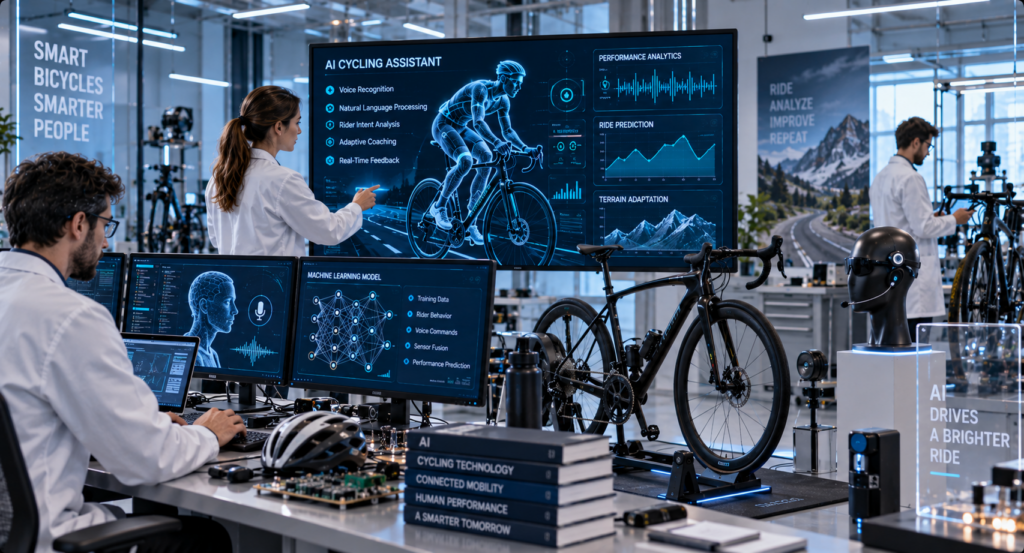
AI cycling digital assistants represent a shift from bicycles that simply collect information to bicycles that actively communicate with riders.
Future developments may include:
- Advanced conversational AI
- Personalized digital cycling coaches
- Automatic bicycle adjustments
- Smart city integration
- Fully connected mobility assistants
As bicycles become more intelligent, AI assistants may become one of the most important interfaces between riders and their machines.
Conclusion
AI cycling digital assistants in 2026 are creating a new way for cyclists to interact with technology. Through voice commands, connected systems, and artificial intelligence, future bicycles may provide smarter guidance, easier controls, and more personalized riding experiences.
The future cyclist may not simply ride a smart bicycle. They may ride alongside an intelligent digital assistant that understands their goals, preferences, and performance needs.