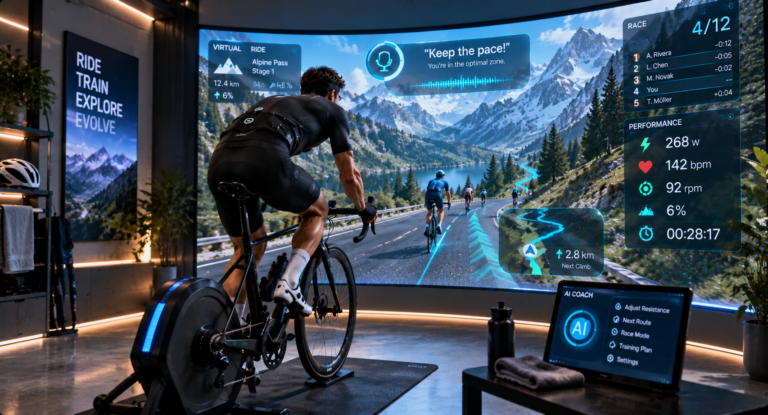
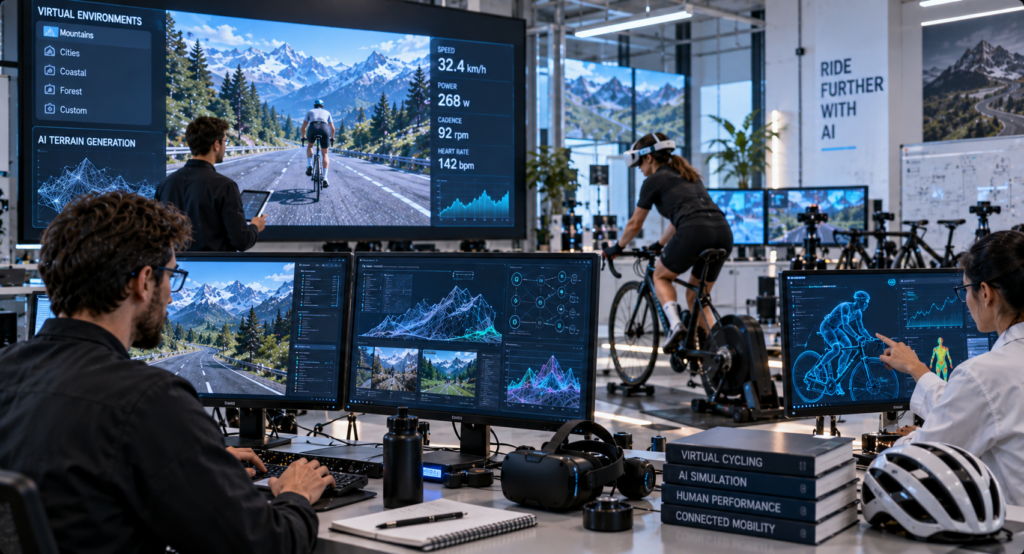
Indoor cycling is evolving from a simple fitness alternative into a fully interactive digital experience. In 2026, immersive cycling worlds 2026 are transforming how cyclists train by combining virtual reality, artificial intelligence, smart trainers, digital environments, and connected competition platforms.
Instead of simply watching a screen while riding indoors, cyclists can now enter realistic virtual landscapes, compete in digital races, and experience adaptive training environments designed around their goals.
The growth of smart trainers and virtual cycling platforms has accelerated the development of more realistic indoor riding experiences, with technology companies focusing on simulation, connectivity, and interactive training.
The Evolution of Digital Cycling Experiences
Indoor cycling has traditionally been used for convenience, allowing riders to maintain fitness when outdoor conditions are unsuitable. However, modern technology is changing indoor riding into a more engaging experience.
Immersive cycling worlds combine:
- Smart bike trainers
- Virtual reality systems
- Artificial intelligence
- Digital landscapes
- Online competitions
- Performance analytics
Together, these technologies create interactive environments where riders can train, compete, and explore.
This connects with our article about Immersive Cycling Technology 2026.
AI-Generated Virtual Cycling Environments
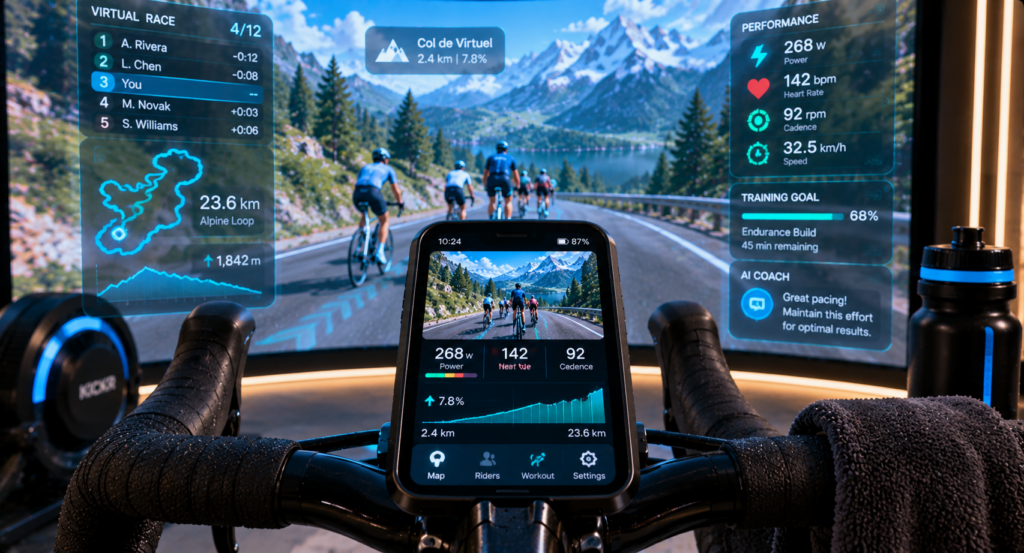
One of the most exciting developments in immersive cycling is the use of artificial intelligence to create dynamic digital environments.
Future AI-generated cycling worlds may include:
- Realistic mountain routes
- Virtual cities
- Fantasy landscapes
- Custom training environments
- Adaptive weather conditions
Unlike traditional video simulations, AI environments may change based on rider performance, preferences, and training goals.
Smart Trainers and Realistic Ride Simulation
Smart trainers are the foundation of immersive cycling experiences. These devices can adjust resistance automatically to simulate different riding conditions.
Advanced smart trainers can recreate:
- Steep climbs
- Rolling terrain
- Descending conditions
- Race intensity
- Variable road resistance
This creates a more realistic connection between physical effort and digital environments.
This connects with our article about Smart Trainers and Indoor Cycling Technology Trends for 2026.
Virtual Racing and Digital Competition
Digital racing has become one of the most popular applications of immersive cycling technology. Riders can compete against others from around the world without traveling to physical events.
Future virtual cycling competitions may include:
- AI-controlled competitors
- Real-time multiplayer racing
- Digital championships
- Adaptive race conditions
- Virtual team events
Artificial intelligence may also create realistic opponents that adjust difficulty based on the rider’s ability.
This connects with our article about AI-Powered Cycling Coaching 2026.
Personalized Digital Training Worlds
Every cyclist has different goals. Some riders train for competition, while others focus on fitness, endurance, or enjoyment.
AI-powered immersive systems may create personalized environments based on:
- Fitness level
- Training history
- Performance targets
- Preferred terrain
- Riding style
A cyclist preparing for a mountain event may train in simulated climbing environments, while another rider may prefer endurance-focused virtual routes.
This connects with our article about AI Cycling Performance Twins 2026.
Virtual Reality and Mixed Reality Cycling
Virtual reality and mixed reality technologies are making digital cycling experiences more immersive.
Future systems may combine:
- VR headsets
- Augmented reality glasses
- Smart trainers
- Motion tracking
- Interactive environments
These technologies allow riders to experience digital worlds while maintaining realistic physical movement.
This connects with our article about Smart Cycling Glasses 2026.
AI Coaching Inside Virtual Worlds
Immersive cycling environments provide new opportunities for AI coaching. Instead of receiving instructions from a simple dashboard, riders may interact with digital coaches inside virtual spaces.
AI coaches may provide:
- Real-time pacing advice
- Training adjustments
- Motivation feedback
- Performance analysis
- Recovery recommendations
This creates a more engaging relationship between cyclist and technology.
This connects with our article about AI Cycling Digital Assistants 2026.
Social Cycling in Digital Worlds
Connected virtual environments may also change how cyclists interact socially.
Future digital cycling communities may include:
- Virtual group rides
- Global training events
- AI-powered clubs
- Digital cycling challenges
- Online competitions
Cyclists may be able to ride together regardless of physical location.
Benefits for Different Cyclists
Professional Riders
Competitive cyclists can use immersive environments for race preparation, strategy testing, and performance improvement.
Indoor Training Riders
Cyclists who train indoors can experience more realistic and motivating workouts.
New Cyclists
Beginners can use guided digital environments to build confidence and improve skills.
The Future of Immersive Cycling Worlds
The future of cycling may include digital experiences that are almost indistinguishable from outdoor riding.
Future developments may include:
- AI-generated endless routes
- Advanced VR cycling environments
- Realistic digital competitions
- Personalized virtual coaching
- Connected global cycling communities
As technology advances, indoor cycling may become not just a substitute for outdoor riding but an entirely new category of cycling experience.
Conclusion
Immersive cycling worlds in 2026 represent a major shift in how cyclists train and experience riding. Through virtual reality, artificial intelligence, smart trainers, and connected platforms, cycling is becoming more interactive, personalized, and accessible.
The future cyclist may not only ride on roads and trails but also explore unlimited digital environments designed around performance, competition, and enjoyment.