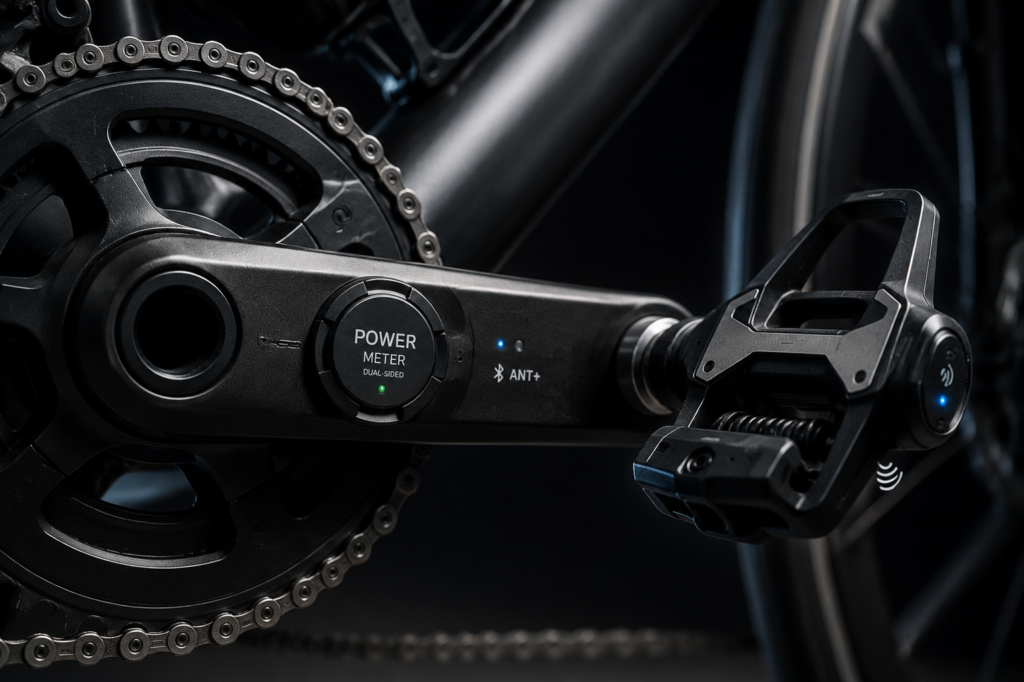
Power meters have become one of the most important performance tools in modern cycling, but in 2026 they are becoming significantly more intelligent. The latest smart cycling power meters 2026 combine advanced sensors, artificial intelligence, and predictive analytics to provide riders with deeper insights into efficiency, fatigue, and training progress.
Instead of simply measuring watts, next-generation power meters analyze how riders produce power, how efficiently they pedal, and how their performance changes over time.
The Evolution of Cycling Power Measurement
Traditional power meters transformed cycling training by allowing riders to measure actual power output instead of relying only on speed or heart rate. However, modern systems are expanding beyond basic watt measurements.
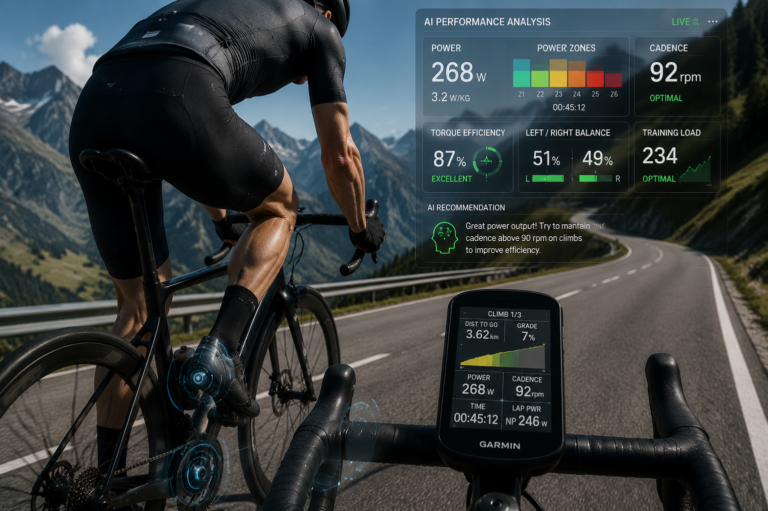
Smart power meters can now analyze:
- Power output trends
- Pedaling efficiency
- Torque application
- Left and right leg balance
- Fatigue patterns
These improvements allow cyclists to better understand how they generate performance and where they can improve.
This technology connects closely with our article about AI-Powered Cycling Training 2026.
AI-Powered Performance Analysis
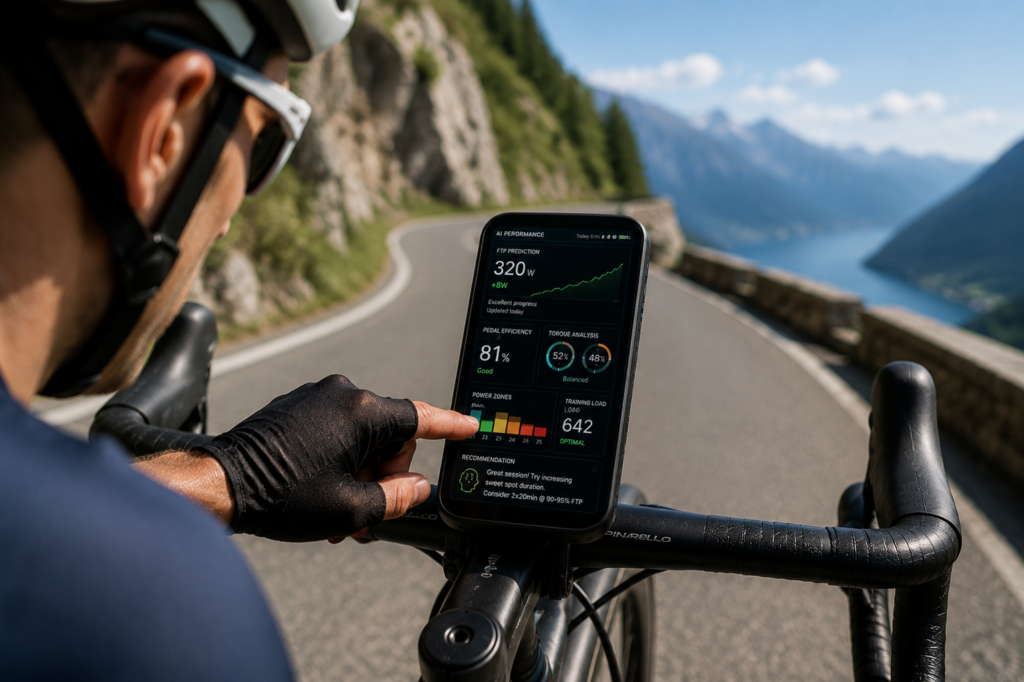
Artificial intelligence is changing how cyclists interpret power data. Instead of manually reviewing charts and numbers, AI systems can identify patterns and provide personalized recommendations.
AI-powered power meters can analyze:
- Training load changes
- Recovery requirements
- Optimal intensity zones
- Performance improvements
For example, an AI system may identify that a cyclist produces strong power during short efforts but loses efficiency during long climbs. The system can then recommend targeted workouts to improve endurance.
Torque Analysis and Pedaling Efficiency
One of the biggest advancements in smart power meters is detailed torque analysis.
Modern sensors can examine how force is applied throughout each pedal rotation, helping riders improve:
- Pedaling smoothness
- Power transfer
- Muscle balance
- Energy efficiency
This information is especially valuable for competitive cyclists who are looking for small improvements that can create meaningful performance gains.
Predictive Training and Fitness Forecasting
Future power meters are becoming predictive rather than simply reactive. By analyzing historical performance data, AI systems can estimate future fitness improvements and identify potential training issues.
Predictive features may include:
- FTP improvement forecasts
- Fatigue warnings
- Recovery recommendations
- Race preparation insights
This approach allows riders to adjust training plans before performance declines occur.
Integration With Smart Cycling Ecosystems
Power meters are becoming part of larger connected cycling networks. They now communicate with:
- Smart trainers
- Cycling computers
- Wearable sensors
- Electronic drivetrains
- AI coaching platforms
For example, a smart power meter can communicate with a cycling computer to automatically adjust training targets based on current performance.
This connected approach matches the technology trends discussed in our article about Connected Cycling Analytics 2026.
Benefits for Different Types of Cyclists
Professional Riders
Competitive cyclists use power meters to optimize race preparation, pacing strategies, and training efficiency.
Endurance Cyclists
Long-distance riders benefit from understanding sustainable power levels and preventing excessive fatigue.
Beginner and Recreational Riders
Smart power meters can help newer cyclists understand progress and train more effectively without relying only on speed.
Smart Power Meters and Indoor Training
Indoor cycling has become increasingly connected, and smart power meters play an important role in virtual training environments.
When paired with platforms such as TrainerRoad and Zwift, power data creates realistic training experiences with accurate performance feedback.
Riders can complete structured workouts, monitor improvements, and compare results over time.
The Future of Cycling Power Technology
Future power meters will likely become smaller, more accurate, and more integrated into bicycle components.
Possible developments include:
- AI-powered automatic training adjustments
- Integrated frame and drivetrain sensors
- Real-time muscle fatigue analysis
- Advanced biometric integration
- Cloud-based performance modeling
As bicycles become smarter, power meters will become a central component of connected cycling systems.
Conclusion
Smart cycling power meters in 2026 represent a major advancement in performance technology. By combining accurate measurement with artificial intelligence and predictive analytics, these devices help cyclists train smarter and achieve better results.
The future of cycling performance will depend not only on how much power riders produce, but how intelligently they understand and use their data.