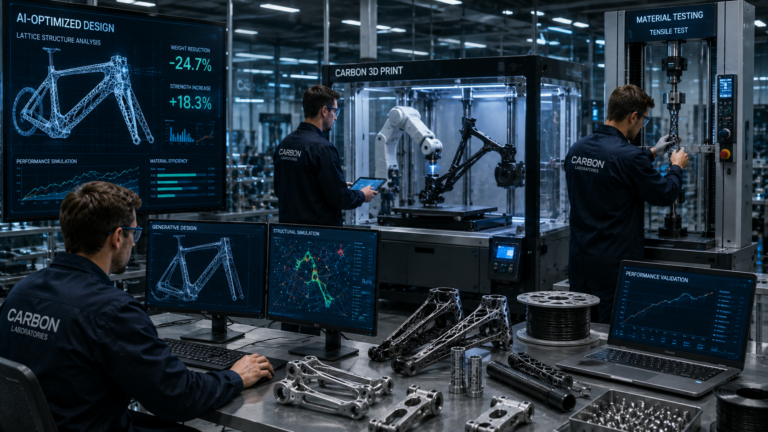
Bicycle manufacturing is entering a new era as advanced production methods allow engineers to create lighter, stronger, and more personalized components. In 2026, 3D printed bicycle components 2026 are becoming an important development in cycling technology, combining additive manufacturing, artificial intelligence, and advanced materials.
Instead of relying only on traditional manufacturing methods, bicycle companies are exploring 3D printing to create optimized structures that improve performance, customization, and production efficiency.
The Growth of 3D Printing in Bicycle Manufacturing
Traditional bicycle manufacturing often requires multiple production stages, specialized tooling, and complex assembly processes. 3D printing introduces a different approach by building components layer by layer from digital designs.
This technology allows manufacturers to experiment with:
- Complex frame structures
- Lightweight designs
- Custom geometries
- Integrated components
- Advanced material combinations
By using digital models, engineers can quickly test and refine bicycle designs before large-scale production.
This connects with our article about Smart Bicycle Digital Twins 2026, where virtual bicycle models help analyze performance and design improvements.
AI-Designed Bicycle Components
Artificial intelligence is becoming an important part of additive manufacturing. AI design systems can analyze performance requirements and create structures that may be difficult to develop manually.
AI-assisted bicycle design may optimize:
- Weight distribution
- Frame stiffness
- Aerodynamics
- Material usage
- Structural strength
Engineers can use AI simulations to explore thousands of possible designs and identify promising solutions.
This approach supports the same design philosophy discussed in our article about Smart Bike Frames 2026.
Custom Bicycle Frames Through 3D Printing
One of the most exciting possibilities of 3D printing is bicycle customization. Traditional frame manufacturing often requires standard sizes and production limitations.
3D printing may allow manufacturers to create more personalized designs based on:
- Rider measurements
- Riding style
- Performance goals
- Terrain preferences
A cyclist could potentially receive a bicycle frame designed around their specific riding requirements.
Lightweight Materials and Advanced Structures
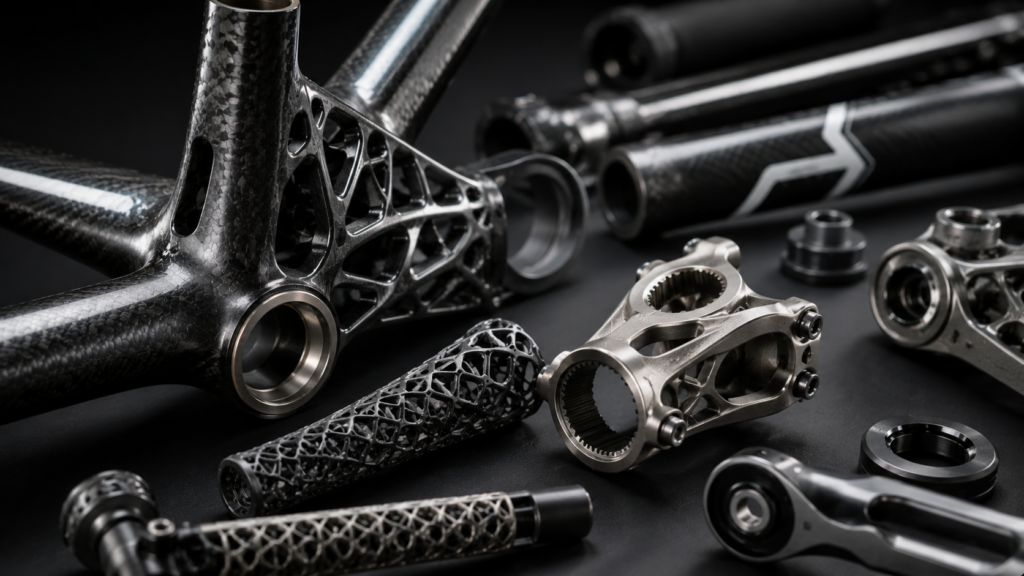
3D printing allows engineers to create internal structures that balance strength and weight. Some designs use lattice patterns and optimized shapes that are difficult to manufacture using traditional methods.
Possible materials include:
- Carbon fiber composites
- Titanium alloys
- Advanced polymers
- Metal composites
These materials can help create components that are lightweight while maintaining structural performance.
3D Printed Components Beyond Frames
While bicycle frames receive significant attention, 3D printing can also be applied to smaller components.
Future 3D printed bicycle parts may include:
- Handlebar systems
- Saddle structures
- Stem components
- Pedal designs
- Suspension parts
- Integrated accessories
These components can be optimized for specific performance requirements.
Improving Bicycle Performance Through Digital Manufacturing
The combination of AI and 3D printing allows engineers to test bicycle performance digitally before creating physical components.
Manufacturers can simulate:
- Frame stress
- Airflow patterns
- Impact resistance
- Rider forces
- Material behavior
This reduces the need for repeated physical prototypes and speeds up development.
This connects with our article about Smart Bicycle Operating Systems 2026, where software and hardware integration shape future bikes.
Sustainability Benefits of Additive Manufacturing
3D printing may also support more sustainable bicycle production by reducing material waste.
Traditional manufacturing methods often remove material from larger pieces, while additive manufacturing builds only the required structure.
Potential sustainability benefits include:
- Reduced manufacturing waste
- Localized production
- Efficient material usage
- Repairable component designs
This aligns with developments discussed in our article about Sustainable Cycling Tech 2026.
Benefits for Different Types of Cyclists
Professional Riders
Competitive cyclists may benefit from highly optimized components designed for speed, efficiency, and specific race conditions.
Adventure Cyclists
Gravel and bikepacking riders may use customized components designed for durability and comfort.
Everyday Cyclists
Future manufacturing improvements may make personalized bicycle designs more accessible to regular riders.

The Role of 3D Printing in Future Bike Innovation
As bicycle technology continues evolving, 3D printing will likely become an important tool for innovation.
Future developments may include:
- AI-generated frame designs
- Fully customized bicycles
- Smart material integration
- Embedded electronics during printing
- On-demand bicycle production
The combination of artificial intelligence and additive manufacturing could change how bicycles are designed, produced, and customized.
Conclusion
3D printed bicycle components in 2026 represent a major shift in cycling manufacturing. By combining AI design, advanced materials, and digital production methods, manufacturers can create more customized and optimized bicycles.
As technology continues advancing, 3D printing may become a key part of building the next generation of lightweight, efficient, and personalized bicycles.