Cycling performance has traditionally focused on power output, heart rate, cadence, and training volume. In 2026, a new generation of technology is changing how riders approach fueling. AI cycling nutrition systems 2026 combine biometric sensors, glucose monitoring, artificial intelligence, and performance data to create more personalized nutrition strategies.
Instead of following general fueling rules, future cyclists may use real-time information to understand when their bodies need carbohydrates, hydration, or recovery support.
Wearable technology is increasingly combining glucose information, heart rate, recovery metrics, and activity data to provide personalized insights. Some athletic systems have already explored continuous glucose monitoring paired with performance platforms and training data.
The Evolution of Cycling Nutrition Technology
Nutrition has always been an important part of endurance cycling. Traditional approaches rely on planned carbohydrate intake, hydration schedules, and experience gained through training.
AI-powered nutrition systems introduce a more adaptive approach by analyzing how each rider responds during different conditions.
These systems may evaluate:
- Exercise intensity
- Ride duration
- Heart rate response
- Energy consumption
- Glucose trends
- Environmental conditions
This allows riders to move from generalized fueling plans toward more personalized recommendations.
This connects with our article about Connected Hydration & Nutrition Smart Systems 2026.
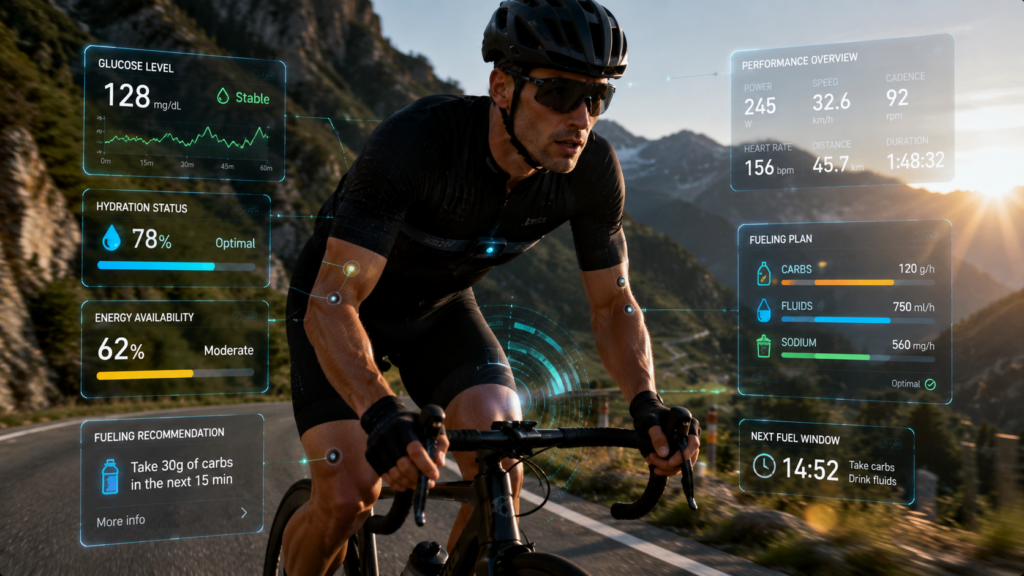
How AI Nutrition Systems Analyze Rider Data
AI cycling nutrition platforms collect information from multiple connected devices. Instead of looking at a single measurement, artificial intelligence analyzes different signals together.
A connected nutrition system may combine:
- Glucose monitoring
- Heart rate data
- Power output
- Training load
- Hydration information
- Recovery status
By analyzing these data points together, AI systems can identify patterns that may help riders better understand their fueling needs.
Glucose Tracking and Endurance Performance
Glucose monitoring is one of the most discussed technologies in performance nutrition. Continuous glucose monitoring systems track changes in glucose levels and provide information about how the body responds to exercise and food intake.
For endurance cyclists, glucose data may help analyze:
- Energy availability during long rides
- Fueling timing
- Individual responses to carbohydrates
- Potential fatigue patterns
Athlete-focused glucose systems have explored integrating glucose trends with cycling platforms and performance metrics.
This technology complements our article about AI Cycling Recovery Systems 2026.
Personalized Fueling Recommendations Through AI
One of the biggest advantages of artificial intelligence is personalization. Every cyclist responds differently to training, carbohydrates, hydration, and recovery.
AI nutrition systems may recommend:
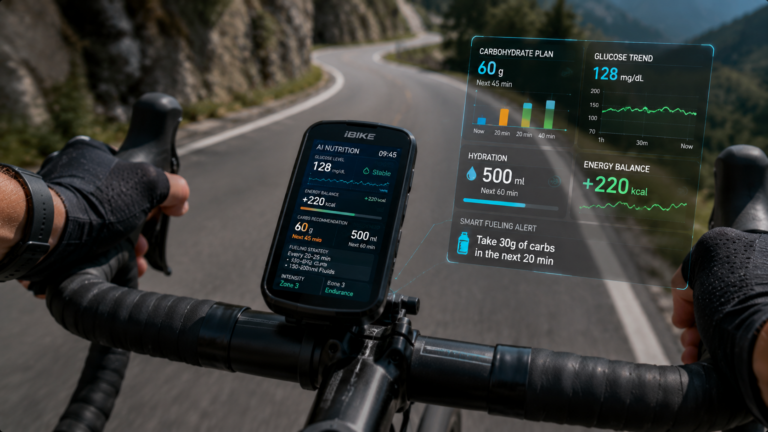
- When to consume carbohydrates
- How much energy is needed
- When hydration should increase
- How nutrition affects performance
For example, two cyclists completing the same route may receive different recommendations because their fitness levels, metabolism, and training history are different.
Integration With Smart Cycling Devices
AI nutrition systems become more powerful when connected with existing cycling technology.
Future integration may include:
- Smart cycling computers
- Wearable sensors
- Smart cycling clothing
- Power meters
- AI training platforms
A cyclist could receive fueling recommendations directly through a handlebar display, smart glasses, or connected wearable device.
This connects with our article about Smart Cycling Clothing 2026.
AI Nutrition During Long-Distance Cycling
Long endurance events are where intelligent fueling systems may provide the greatest benefits. During multi-hour rides, energy management becomes increasingly important.
AI systems may monitor:
- Energy expenditure
- Carbohydrate availability
- Hydration needs
- Training intensity
This information can help cyclists better prepare for demanding rides and avoid poor fueling decisions.
Smart Nutrition and Recovery Planning
Nutrition does not end when the ride finishes. Recovery is another area where AI systems may provide recommendations.
AI platforms may analyze:
- Training stress
- Energy depletion
- Recovery needs
- Sleep information
- Nutrition history
This creates a complete performance cycle that connects preparation, riding, fueling, and recovery.

Benefits for Different Cyclists
Professional Riders
Competitive cyclists may use AI nutrition systems to fine-tune fueling strategies during training and racing.
Endurance Cyclists
Long-distance riders may benefit from understanding how their bodies respond during extended efforts.
Everyday Cyclists
Recreational riders may use simplified nutrition guidance to improve consistency and energy management.
The Future of AI Cycling Nutrition
The future of cycling nutrition is likely to become increasingly connected. As sensors improve, AI systems may provide more detailed recommendations based on real-time rider information.
Future developments may include:
- Non-invasive biometric monitoring
- AI-generated fueling plans
- Connected nutrition accessories
- Real-time metabolic analysis
- Personalized endurance strategies
New wearable technologies are exploring continuous monitoring of biomarkers such as glucose and other metabolic indicators, showing the growing direction of personalized health and performance tracking.
Conclusion
AI cycling nutrition systems in 2026 represent a major advancement in performance technology. By combining glucose tracking, biometric sensors, and artificial intelligence, these systems aim to provide cyclists with more personalized fueling guidance.
As cycling technology continues evolving, nutrition may become another connected part of the intelligent cycling ecosystem, helping riders train smarter, perform better, and manage energy more efficiently.