For decades, cyclists looking for meaningful aerodynamic gains had limited options. They could visit a wind tunnel, complete controlled track testing, or rely on calculations made after a ride. In 2026, that situation is changing as real-time cycling aerodynamics moves directly onto the bicycle.
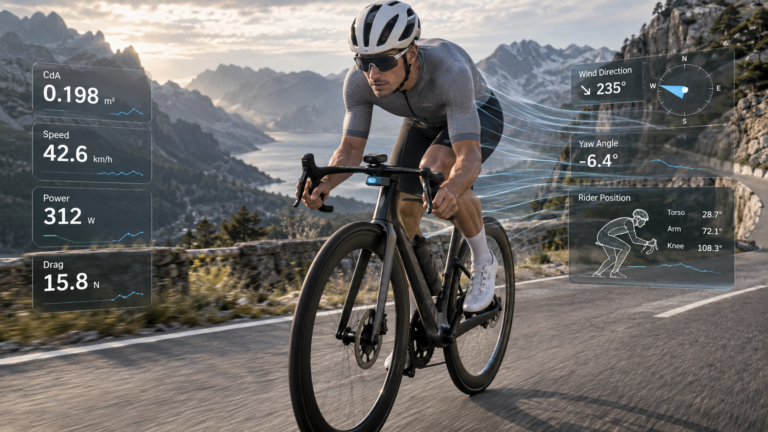
Compact aerodynamic sensors can now help riders measure drag while riding on real roads and tracks. Combined with power meters, speed sensors, cycling computers, wind measurements, and increasingly sophisticated analysis software, these systems can turn aerodynamics into a metric riders can examine alongside power, cadence, and heart rate.
The trend has reached elite cycling. In July 2026, USA Cycling announced GiBLI as its official on-bike aerodynamic sensor partner through the 2028 Los Angeles Olympic Games. The organization said the technology enables athletes and coaches to measure aerodynamic drag, including CdA, in real-world conditions and receive immediate feedback.
What Is CdA and Why Does It Matter?
CdA stands for coefficient of drag multiplied by frontal area. In practical cycling terms, it is a useful measurement of how much aerodynamic resistance a rider-and-bike combination creates.
A lower CdA generally means a cyclist can travel faster for the same power when aerodynamic resistance is a major factor. That is why riders spend so much time optimizing helmets, clothing, handlebar positions, wheels, frames, and body posture.
Historically, accurately measuring CdA usually required carefully controlled testing. Today, products such as the GiBLI G10 aerodynamic sensor and Aerosensor are designed to bring aerodynamic measurement to normal road and track environments.
This development complements our guide to Bike Fit Technology and 3D Body Scanning Trends 2026, where rider position is already becoming increasingly data-driven.
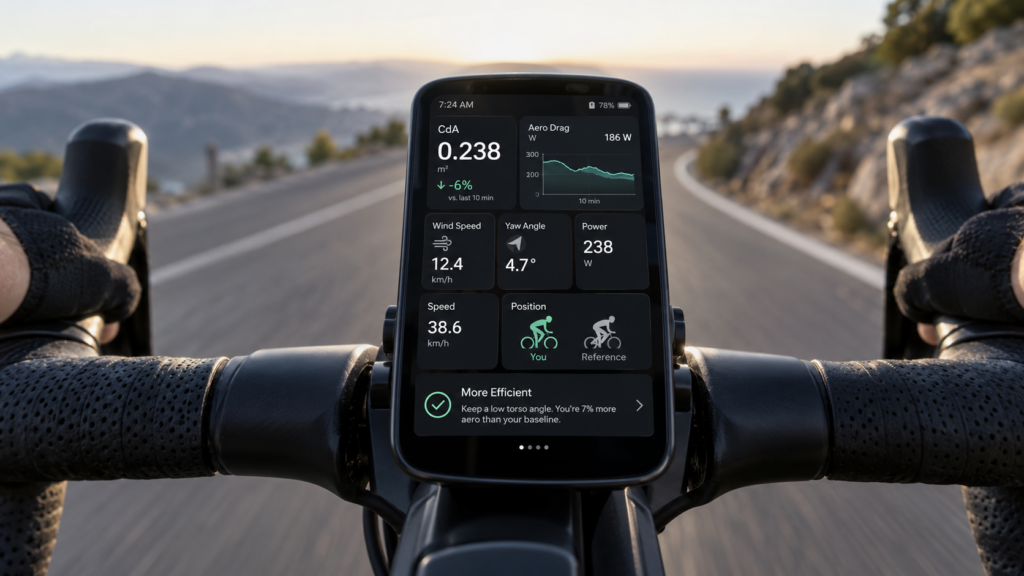
How Real-Time Aero Sensors Work
On-bike aerodynamic testing requires more than simply measuring speed. The system needs enough information to separate aerodynamic resistance from other forces influencing the bicycle.
Depending on the platform, the analysis may combine:
- Rider speed
- Power output
- Air speed
- Wind direction
- Road gradient
- Bike and rider configuration
GiBLI specifically emphasizes measuring crosswinds because real-world CdA analysis depends on understanding changing airflow around the cyclist. Aerosensor similarly combines an aerodynamic measurement device with power and speed information and can display CdA through compatible cycling computers.
Another example is AeroPod Wireless, which supports on-road aero testing and live CdA information through compatible devices. The growing variety of systems suggests aerodynamic testing is becoming less confined to specialist laboratories.
From Wind Tunnels to Everyday Roads
Wind tunnels remain extremely valuable because they create controlled conditions. Engineers can compare positions and equipment while limiting variables that make outdoor testing difficult.
However, real roads introduce conditions riders actually face in competition: crosswinds, changing gradients, different speeds, road surfaces, traffic-free training sections, and continuously changing body positions.
Real-time sensors can therefore complement rather than replace traditional aerodynamic testing.
Swiss Side has demonstrated outdoor CdA measurement using its CDAM system to analyze aerodynamic conditions on a real cycling course. The concept highlights why field testing matters — the aerodynamic environment outside a laboratory is rarely constant.
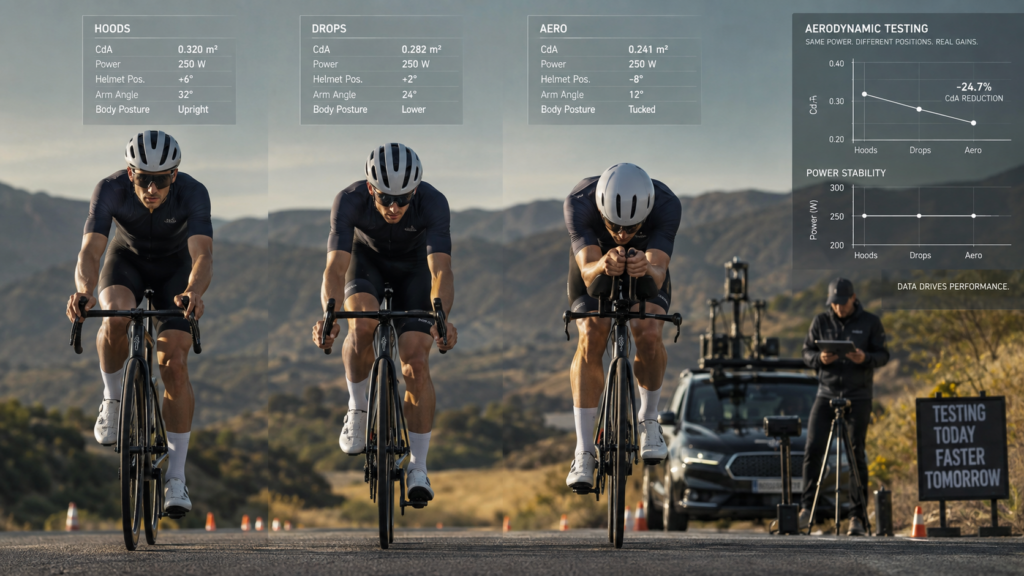
Testing Rider Position With Live CdA
The rider is one of the largest contributors to aerodynamic drag, which makes body position an obvious target for testing.
A cyclist could perform repeated controlled efforts while comparing:
- Hands on the hoods versus drops
- Different elbow positions
- Head height
- Torso angle
- Handlebar height
- Arm and shoulder position
Instead of assuming that a lower position is automatically faster, riders can examine whether a change actually reduces drag while preserving sustainable power.
This is particularly important because an extreme aerodynamic position is not useful if a cyclist cannot maintain it. Our article on Cycling Posture and Core Strength Training 2026 explains why strength and stability are important when maintaining efficient riding positions for long periods.
Aerodynamics Versus Power Output
Aero optimization is not simply a competition to achieve the lowest CdA possible.
Imagine that a new position reduces drag but also prevents the cyclist from producing their normal power. The aerodynamic gain may be partly or completely offset by the reduction in output.
Future performance platforms can become more useful by examining aerodynamic data alongside:
- Power output
- Heart rate
- Cadence
- Speed
- Fatigue
- Biomechanical stability
This makes aerodynamic optimization an individual process rather than a universal formula.
It also fits naturally with concepts explored in our AI Cycling Performance Twins 2026 article, where multiple rider data streams can be combined to create more personalized performance models.
Equipment Testing Becomes More Practical
Live aerodynamic measurements are also useful when comparing equipment. Cyclists frequently purchase expensive upgrades based on manufacturer wind-tunnel figures, but results can differ depending on the rider, bicycle, position, and environmental conditions.
Structured field testing may help compare changes such as:
- Helmet designs
- Wheel depths
- Clothing
- Handlebar configurations
- Hydration placement
- Rider positions
The key is consistency. One uncontrolled ride is not enough to prove that an equipment change is faster. Repeated testing under comparable conditions remains important because wind, road gradient, traffic, temperature, posture, and power can influence results.
Why Wind Direction and Yaw Matter
Cyclists rarely experience perfectly straight headwinds. Air frequently reaches the rider and bicycle from an angle, commonly described in aerodynamic testing through yaw angle.
This matters because a position or component that performs well in one airflow condition may perform differently when exposed to crosswinds.
Real-time wind measurement can help riders understand this changing environment. Rather than reducing aerodynamic performance to one laboratory number, field-based testing can show how equipment and positions behave across actual riding conditions.
AI Could Make Aero Data Easier to Use
Collecting data is only part of the challenge. Cyclists also need to understand what the numbers mean.
AI-assisted analysis could eventually compare repeated test runs and identify patterns such as:
- A position that consistently lowers CdA
- Positions that become less efficient as fatigue increases
- Equipment that performs better at particular wind angles
- Body movements associated with increased drag
- Optimal compromises between power and aerodynamic efficiency
Instead of giving riders another complicated graph, future systems may summarize the result as a practical recommendation: slightly narrow the elbows, maintain the current head position, or return to a more sustainable posture during long climbs.
Aerodynamic Rules Still Matter in Competition
Performance technology does not operate independently from racing regulations. The UCI introduced several equipment requirements for 2026, including rules affecting handlebar dimensions, road rim height, helmets, and rider support positions.
That means athletes can use aerodynamic measurement to optimize within the rules rather than simply pursuing the lowest possible drag value.
For riders making larger position changes, our guide to Bike Fit and Geometry Optimization for Performance 2026 provides additional context on balancing geometry, comfort, biomechanics, and performance.
Who Can Benefit From Live Aero Testing?
Time Trialists and Triathletes
These riders spend long periods in aerodynamic positions, making relatively small improvements potentially meaningful over race distance.
Road Racers
Road cyclists can investigate how hood, drop, and breakaway positions affect drag while ensuring their setup remains compliant and controllable.
Performance-Focused Recreational Riders
Enthusiasts interested in marginal gains can use aerodynamic testing to determine whether positional or equipment changes actually improve their own performance rather than relying only on generalized claims.
The Future of Real-Time Cycling Aerodynamics
Real-time aerodynamic measurement is moving cycling toward a future where drag becomes another trainable metric.
Power meters transformed training by making rider output visible. Modern aero sensors are attempting something similar for aerodynamic efficiency — taking a quantity previously associated with wind tunnels and making it available during normal training.
The next generation may combine live CdA with cameras, motion tracking, artificial intelligence, weather information, digital rider models, and automated position analysis. That could allow cyclists to see not just that aerodynamic efficiency changed, but understand why it changed.
Conclusion
Real-time cycling aerodynamics in 2026 is bringing aerodynamic testing out of specialized facilities and onto everyday roads and tracks. Live CdA sensors can help cyclists investigate body position, equipment choices, wind conditions, and performance without relying entirely on theoretical assumptions.
The technology does not eliminate the need for careful testing, professional bike fitting, or wind-tunnel analysis. Instead, it adds another layer of information — one that shows how aerodynamic choices perform where cyclists actually ride.
For riders chasing marginal gains, the biggest change may be simple: aerodynamic drag is becoming something they can measure, test, and refine during real-world training.