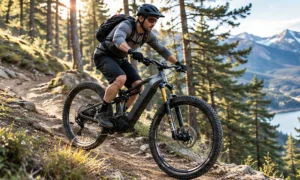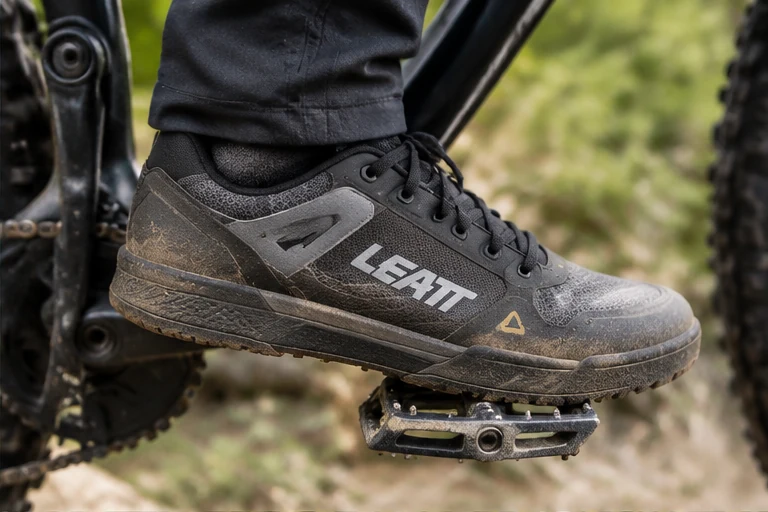
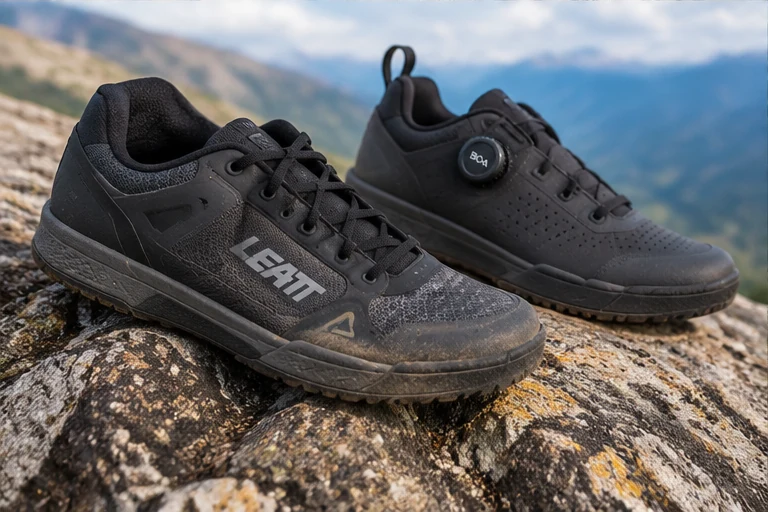
The Leatt SuperTack MTB shoes target one key concern for flat-pedal riders: keeping the foot connected when the trail gets rough. Announced on November 10, 2026, the new outsole arrives on the low-cut Flat 3.0 SuperTack and the mid-top ProFlat 5.0 SuperTack BOA.
Leatt says the rubber took six years to develop, with seven compound versions and five outsole revisions. This guide compares both models, explains the design and considers early wear reports without treating first impressions as a long-term test.
What Is Leatt SuperTack?
SuperTack combines a soft rubber compound with a Waffle Grip-style tread, raised lugs and deep channels arranged on an off-center bias. The layout is designed to let the shoe settle against the pedal platform while giving the pins rubber to engage.
Leatt says more than 100 riders, including team athletes, tested the shoes. That is useful development feedback, but not a substitute for independent lab data or multi-season durability testing. See Leatt’s SuperTack overview and its launch announcement.
Leatt SuperTack MTB Shoes: Key Specifications
| Feature | Flat 3.0 SuperTack | ProFlat 5.0 SuperTack BOA |
|---|---|---|
| Cut | Low-top | Mid-top |
| Closure | Compression laces with lace stash | Single BOA Li2 dial |
| Outsole | SuperTack soft-compound rubber | SuperTack soft-compound rubber |
| Upper | Cordura Re/Cor recycled fabric and synthetic leather | Cordura Re/Cor recycled fabric and synthetic leather |
| Weight | About 320 g per shoe, EU 43 | About 335 g per shoe, EU 43 |
| U.S. listed price | $149 | $199 |
| Colors | Black and Vapor Grey | Black and Vapor Grey |
Weights are listed per shoe in EU 43. U.S. prices and availability can change; check the current Flat 3.0 listing and ProFlat 5.0 listing before ordering.
Why the Outsole Matters More Than the Upper
On a flat-pedal bike, the shoe sole is the main mechanical connection between the rider and the pedal. The pins bite into the rubber and help prevent the foot from sliding when the bike pitches, lands, brakes or changes direction. If the compound is too hard, the pins may not engage deeply enough. If it is too soft, it may grip impressively but wear quickly.
Leatt’s approach combines a softer rubber with a patterned surface. Raised lugs and channels are intended to give pedal pins room to engage while allowing the sole to sit against the pedal body. The off-center layout is designed to follow the natural stance of the foot rather than relying on a completely uniform tread.
The layout matters when standing, pumping through rollers, landing jumps or riding rough ground. A stable shoe can reduce foot movement, but it cannot replace technique, suitable pedals or correctly positioned pins. See iBikeBlog’s guide to pedal technology and innovations.
Flat 3.0 SuperTack: The Simpler Lace-Up Option
The Flat 3.0 is the lower-cut and less expensive model. It uses compression laces, a knitted tongue and collar, and a lace stash to keep loose ends tucked away. Leatt says the knit construction creates a sock-like fit that adapts to different instep shapes.
Stretch laces are designed to accommodate foot swelling. The upper combines Cordura Re/Cor recycled fabric and synthetic leather, with directional heel material to help limit heel lift. A removable, quick-drying EVA insole is included.
At about 320 grams per shoe in EU 43 and $149 in the U.S., the Flat 3.0 suits riders who prefer laces and a low ankle profile over a dial closure.
ProFlat 5.0 SuperTack BOA: More Coverage and Micro-Adjustment
The ProFlat 5.0 is the premium model. Its mid-top shape adds coverage around the ankle, while a single BOA Li2 dial replaces traditional laces and allows small fit adjustments without stopping to retie the shoe.
The BOA Li2 platform offers multidirectional micro-adjustment and quick release. It is convenient for fine-tuning tension, but comfort still depends on the shoe’s last, instep height, toe-box width and heel hold.
At about 335 grams per shoe in EU 43 and $199 in the U.S., the ProFlat costs $50 more. The premium buys the BOA closure and mid-top construction, not a different SuperTack outsole.
Does SuperTack Actually Grip Better?
Early reports are encouraging, but they are not final verdicts. Bikerumor’s first look describes a prototype ride and a comparison with Five Ten Freerider Pro shoes. The reviewer found the grip competitive, with firm pin engagement and some ability to reposition the foot.
BikeMag’s first look also praised the grip and fit but raised questions about early wear. These impressions are useful, yet longer testing across different pedals is needed to judge full-season durability.
Grip also depends on pin height and shape, pedal concavity, rider weight, foot position and trail conditions. A shoe that feels locked in on one pedal may behave differently on another.
The Durability Trade-Off: Sticky Rubber Can Wear Faster
Soft rubber often trades some lifespan for traction. A compound that conforms around pedal pins may show marks, cuts or abrasion sooner. That does not automatically mean poor quality, but buyers should monitor wear.
Early reviewers have noted pin scarring, and Leatt acknowledges the grip-versus-durability trade-off. Until longer-term data is available, sole longevity remains an open question.
To limit unnecessary wear, keep pins in good condition, remove embedded grit and avoid dragging the sole across sharp edges. Inspect for deep cuts or separation around the edges.
Fit, Sizing and Comfort: What to Check Before Buying
Do not choose by outsole alone. Try both models if possible and check:
- Toe room: Your toes should not press hard against the front when standing or descending.
- Heel hold: The heel should stay secure without painful pressure or rubbing.
- Instep pressure: The closure should hold the foot without creating numbness or hot spots.
- Width: Check whether the forefoot shape suits your foot instead of sizing up to gain width.
- Pedal contact: Stand on your own pedals and check whether the sole sits naturally on the platform.
For more on shoe construction and fastening systems, read iBikeBlog’s cycling footwear technology guide and shoe fit overview. Their fit principles also apply to flat-pedal footwear.
Which Leatt SuperTack Shoe Should You Choose?
- Choose Flat 3.0 if you prefer laces, want a low-top shoe, and would rather spend $149 than $199.
- Choose ProFlat 5.0 BOA if you value a dial closure, want a mid-top design and prefer added ankle coverage.
- Consider another shoe if you prioritize a firmer, longer-wearing sole, need a very specific fit shape, or cannot test the shoe with your pedals.
Neither model suits everyone. Downhill riders may value the ProFlat’s higher cut, while trail riders, dirt jumpers and pump-track users may prefer the lighter, simpler Flat 3.0. Foot shape and pedal setup should decide.
Pairing the Shoes With the Right Flat Pedals
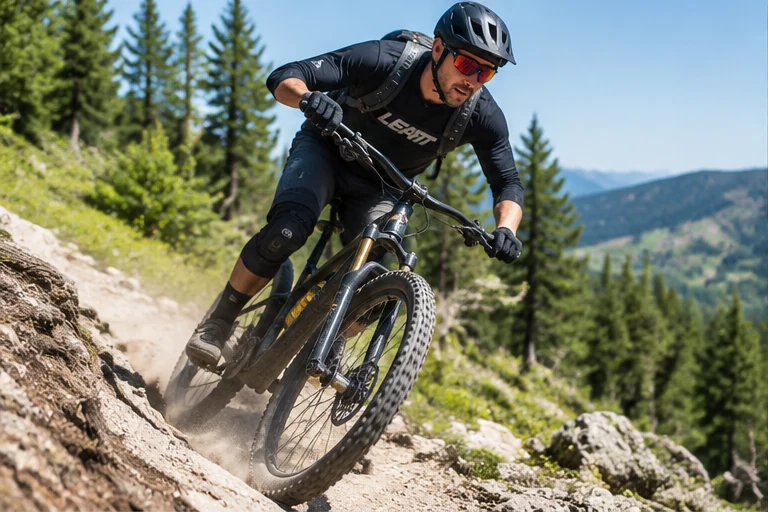
A high-grip sole works best with a pedal that has a stable platform and pins in good condition. Check that the pedal is wide enough for your stance, that the pins are evenly placed, and that none are bent or protruding excessively. Very aggressive pins can damage a soft outsole, while worn or shallow pins may not provide the engagement you expect. Shoes and pedals should be considered as one contact system. For a broader look at how grip affects off-road control, see iBikeBlog’s e-MTB traction control guide.
Is the Leatt SuperTack Upgrade Worth It?
The Leatt SuperTack MTB shoes bring a new rubber compound and revised tread layout to two flat-pedal models. The Flat 3.0 costs $149, while the mid-top ProFlat 5.0 BOA adds a dial closure for $199.
Early impressions suggest strong grip, but sole wear is the key question. Riders seeking maximum pedal connection may want to try them; those prioritizing longevity should wait for more extended testing.
The best MTB shoe fits securely, works with your pedals, and stays comfortable. SuperTack may improve grip, but fit and durability will decide whether it earns a place in your kit.