Mastering Mountain Bike Trail Skills in 2026
Mountain biking is a dynamic and demanding sport that requires a unique blend of physical fitness, mental focus, and precise technical execution. While having the latest Bike Suspension Technology and Geometry 2026 certainly helps, the most significant upgrades you can make to your riding are not bought in a bike shop; they are developed on the trail. In 2026, the progression of trail building has resulted in faster, more technical, and more challenging terrain, making proper mountain bike trail skills absolutely essential for both performance and safety.
Whether you are a beginner looking to build confidence or an experienced rider aiming to shave seconds off your enduro race times, focusing on fundamental techniques is the key to unlocking your potential. As emphasized by professional coaching organizations like Fluidride and Ninja Mountain Bike Performance, mastering body position, cornering, and braking will transform your riding experience from surviving the trail to truly dominating it.
The Foundation: Attack Position and Body Mechanics
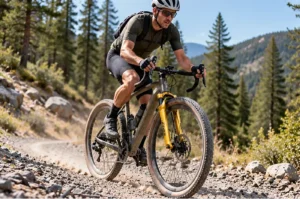
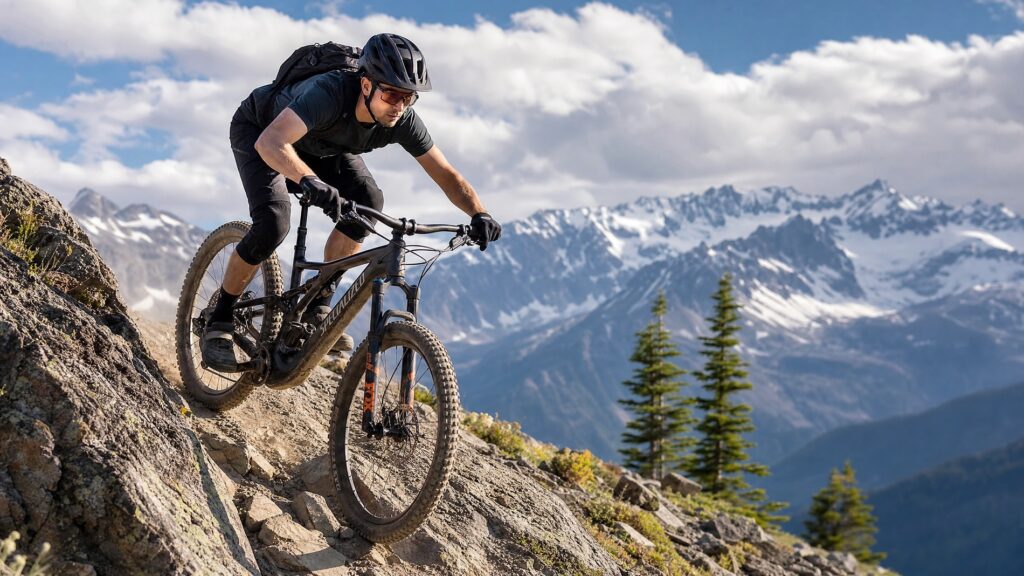
Every mountain bike skill begins with proper body position, often referred to as the “attack position” or “ready position.” When descending or approaching technical features, you should never be seated. Your pedals should be level (at the 3 o’clock and 9 o’clock positions), with your weight evenly distributed over the bottom bracket. Your knees and elbows must be bent, acting as your body’s natural suspension system.
A common mistake among newer riders is shifting their weight too far back over the rear wheel when descending. While this feels safer, it unweights the front tire, drastically reducing steering traction and control. Instead, focus on keeping your chin over the stem and your hips centered. This aggressive posture allows the bike to pivot and move beneath you while your upper body remains relatively stable, a concept closely related to Cycling Posture and Core Strength Training 2026.
Mastering the Art of Cornering
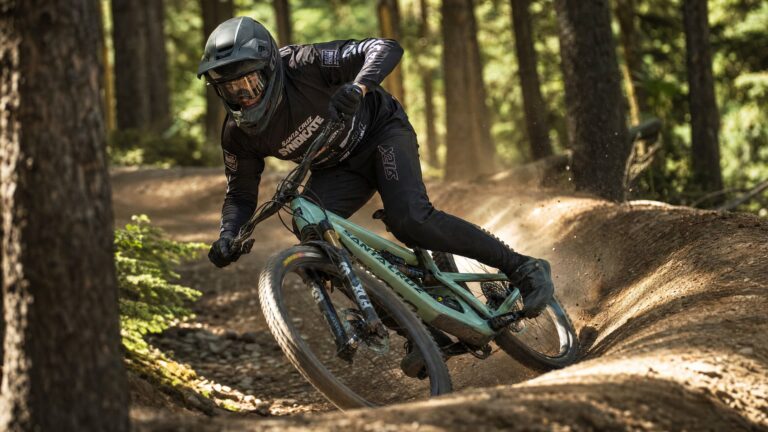
Cornering is arguably the most critical skill in mountain biking, as races are often won or lost in the turns. The key to fast, confident cornering lies in bike-body separation. Unlike riding a road bike where you lean with the bicycle, mountain biking requires you to lean the bike independently of your body. You achieve this by dropping your outside pedal to the 6 o’clock position and applying heavy pressure through that foot, driving the side knobs of your tires into the dirt.
Simultaneously, your hips should point toward the exit of the turn, and your eyes must look far ahead through the corner. Target fixation—staring at the rock or tree you want to avoid—will almost guarantee you hit it. As discussed in Bike Tire Technology and Tread Pattern Innovations 2026, trusting your tire’s aggressive shoulder knobs is essential for maintaining traction at high lean angles.
Braking Technique and Trail Reading
Going fast is easy; stopping efficiently requires immense skill. Proper braking technique is about modulation and timing. The majority of your stopping power (roughly 70%) comes from your front brake, as your weight naturally shifts forward during deceleration. However, grabbing a handful of front brake in a panic will send you over the handlebars. You must learn to squeeze the levers smoothly, applying pressure progressively.
Crucially, you should do all your heavy braking before you enter a corner or a technical feature. Braking while turning stands the bike up and causes the tires to break traction and slide. This requires advanced trail reading skills—scanning the trail 15 to 20 feet ahead to identify smooth braking zones before the terrain gets rough. This proactive approach is a fundamental aspect of Cycling Injury Prevention and Biomechanics 2026.
Navigating Rock Gardens and Technical Features
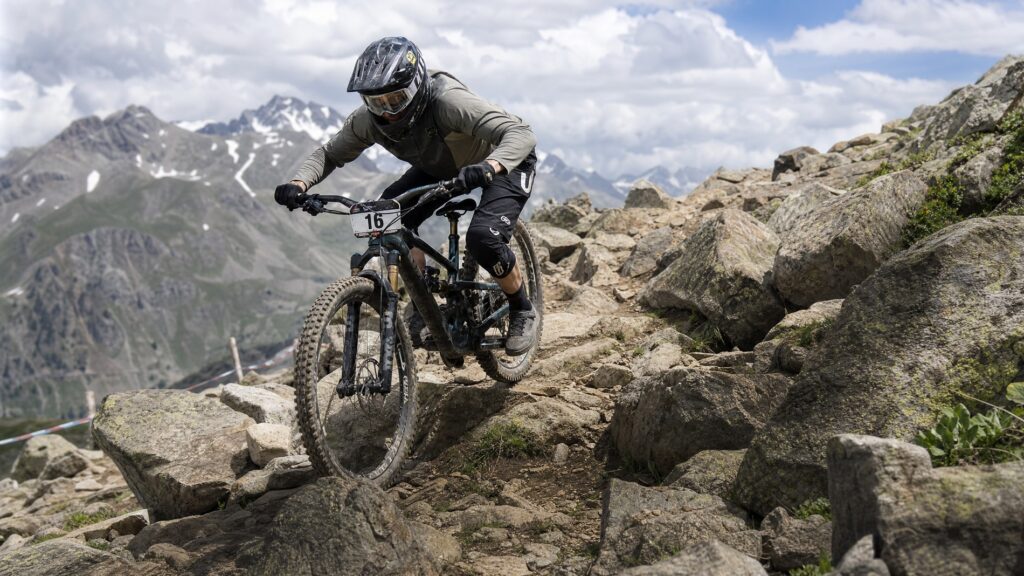
When approaching a rock garden or a heavily rooted section, momentum is your best friend. Speed creates stability, allowing your wheels to roll over obstacles rather than getting hung up in the holes between them. Maintain your attack position, keep your grip on the handlebars relaxed (avoid the “death grip”), and let the bike dance beneath you.
It is also vital to unweight your wheels as they strike large square-edged hits. By performing a subtle manual (lifting the front wheel) followed by a rear-wheel unweight, you can glide over obstacles that would otherwise cause a pinch flat or a crash. This dynamic movement requires explosive core strength and precise timing.
The Value of Professional Coaching
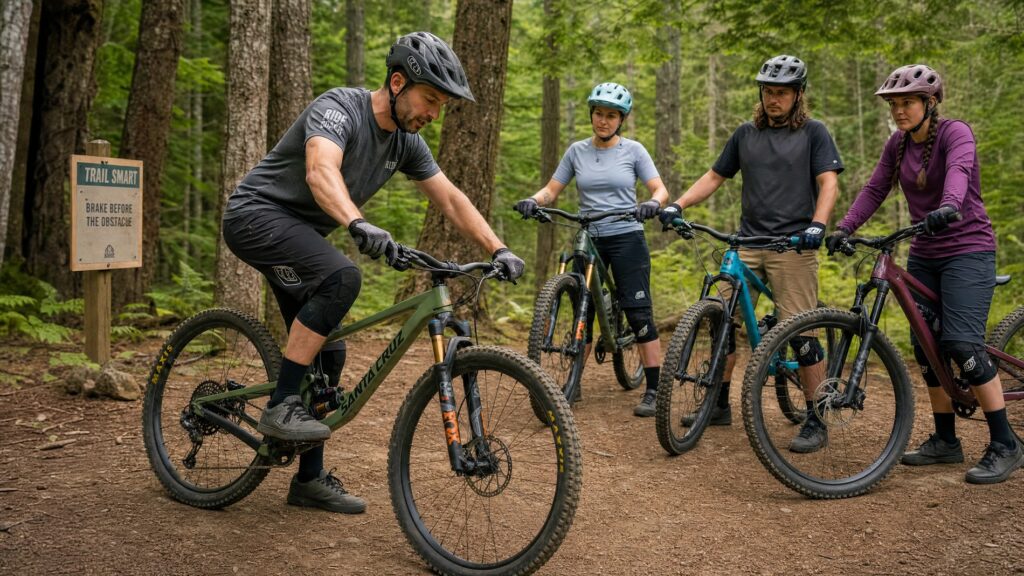
While watching YouTube tutorials from channels like GMBN is helpful, nothing accelerates your progression like professional, in-person coaching. A certified instructor can instantly identify bad habits and provide immediate, personalized feedback. They can break down complex movements into manageable steps, ensuring you build a solid foundation of technique.
In 2026, mountain biking is more accessible and exciting than ever. By dedicating time to practice these fundamental trail skills—body position, cornering, braking, and trail reading—you will ride with greater confidence, increased speed, and a significantly reduced risk of injury. Remember, the best upgrade you can buy for your mountain bike is an upgrade to your own skills.