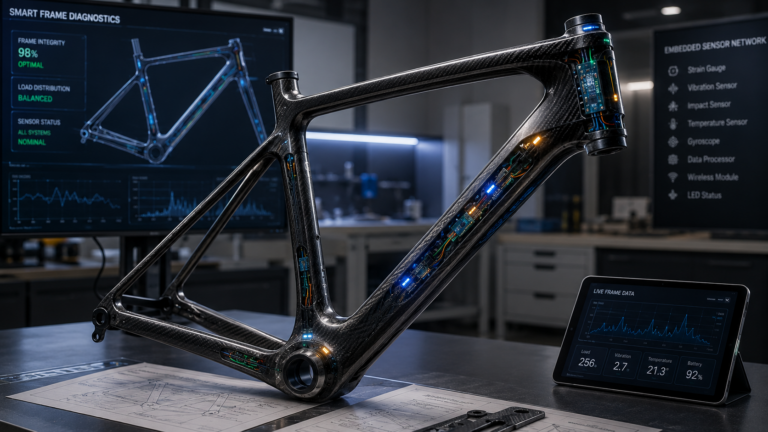
Bicycle frames have always been the foundation of cycling performance, but in 2026 they are becoming much more than structural components. The next generation of smart bike frames 2026 combines embedded sensors, connected materials, and intelligent monitoring systems to create bicycles that can analyze performance, detect wear, and communicate valuable information to riders.
Instead of being passive structures, future bike frames are evolving into intelligent platforms that work together with cycling computers, wearable devices, and AI-powered systems.
The Evolution of Intelligent Bicycle Frames
Traditional bicycle frames are designed around weight, stiffness, durability, and aerodynamics. While these characteristics remain important, manufacturers are now exploring ways to add digital intelligence directly into the frame.
Smart frames may include:
- Embedded strain sensors
- Wireless diagnostic systems
- Integrated electronic components
- Material health monitoring technology
- Connectivity with cycling applications
These innovations allow riders and manufacturers to understand how a bicycle performs during real-world conditions.
This development follows the broader movement toward connected cycling technology discussed in our article about Connected Cycling Analytics 2026.

Embedded Sensors for Real-Time Monitoring
One of the biggest advancements in smart bike frames is embedded sensor technology. Small sensors placed inside the frame can collect information about structural forces, vibration, temperature, and riding conditions.
During a ride, these sensors may monitor:
- Frame stress during climbs
- Impact forces on rough terrain
- Vibration levels on gravel roads
- Component performance changes
This information can help cyclists understand how their bike responds under different riding conditions.
For gravel and adventure riders, smart frames can provide valuable insights when combined with technologies such as adaptive suspension systems.
Self-Diagnostics and Maintenance Alerts
One of the most exciting possibilities for smart frames is self-diagnostic technology. Similar to modern vehicles that monitor mechanical systems, intelligent bicycles can analyze their own condition.
Future systems may identify:
- Unusual vibration patterns
- Potential frame fatigue
- Component installation issues
- Changes in structural performance
Instead of discovering problems after a failure occurs, riders could receive maintenance recommendations before issues become serious.
This approach supports longer bike lifespans and connects with the sustainable cycling movement discussed in our article about Sustainable Cycling Tech 2026.
Connected Materials and Smart Carbon Fiber
Materials are also becoming smarter. Engineers are experimenting with advanced composites that combine lightweight construction with monitoring capabilities.
Future smart materials may include:
- Conductive carbon fiber layers
- Embedded micro sensors
- Intelligent composite structures
- Recyclable advanced materials
These materials could allow manufacturers to create lighter, stronger, and more transparent bicycle designs.
Integration With AI Cycling Systems
Smart frames will become even more powerful when connected with artificial intelligence. AI systems can analyze data collected from the frame and combine it with information from:
- Power meters
- Heart rate sensors
- GPS systems
- Electronic drivetrains
- Smart suspension
For example, a connected bicycle could analyze riding style, terrain, and mechanical performance to recommend adjustments that improve efficiency.
This technology connects naturally with trends covered in our article about AI-powered cycling training.
Benefits for Different Types of Cyclists
Road Cyclists
Performance riders can use smart frame data to analyze stiffness, power transfer, and aerodynamic efficiency during training sessions.
Gravel Cyclists
Adventure riders benefit from monitoring vibration, impacts, and terrain conditions during long-distance rides.
E-Bike Riders
Smart frames can communicate with motors, batteries, and electronic components to improve efficiency and reliability.
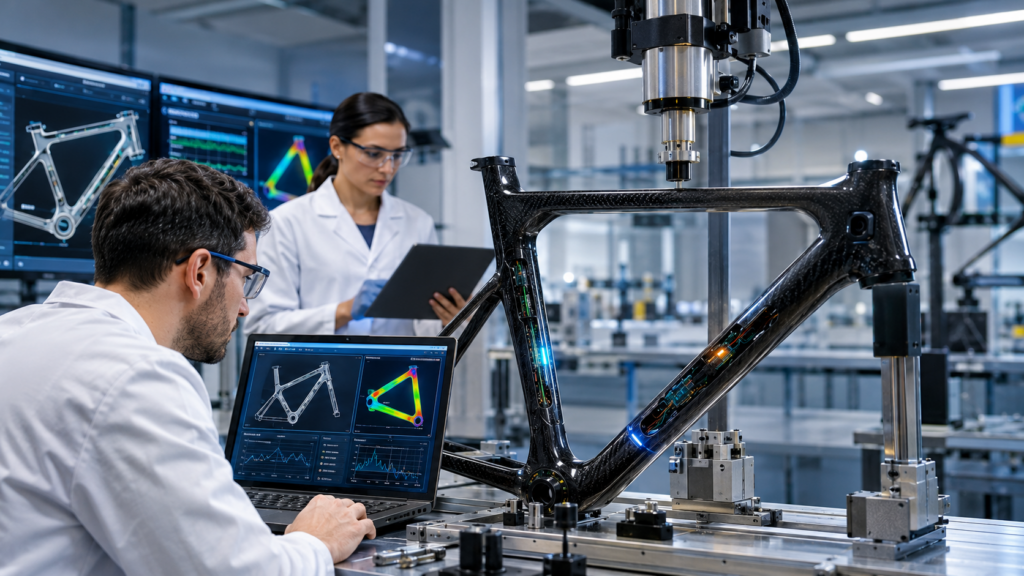
The Future of Connected Bicycle Design
The future bicycle may become a fully connected machine where every component communicates with each other. Frames, wheels, suspension systems, drivetrains, and wearable devices will work together to create personalized riding experiences.
Potential future developments include:
- AI-powered frame optimization
- Automatic maintenance recommendations
- Wireless energy systems
- Real-time structural monitoring
- Advanced recyclable smart composites
Smart Frames and the Future of Cycling
Smart bike frames represent a major shift in bicycle engineering. Instead of simply supporting components, future frames will actively collect information, communicate with riders, and improve performance through intelligent systems.
As cycling technology continues advancing, smart frames will become an important part of connected bicycles designed for performance, safety, and sustainability.
Conclusion
Smart bike frames in 2026 are transforming the bicycle from a mechanical machine into an intelligent connected platform. Through embedded sensors, self-diagnostics, and smart materials, cyclists will gain better performance insights, improved safety, and longer-lasting equipment.