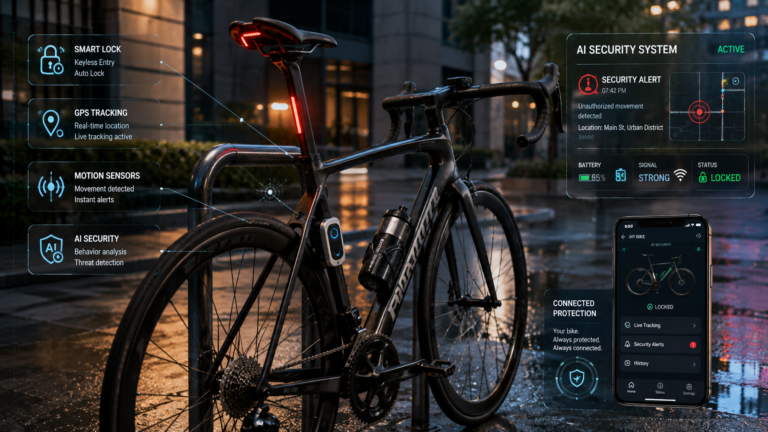
Bicycles are becoming more advanced, connected, and valuable, creating a growing need for smarter protection systems. In 2026, smart bicycle security systems 2026 combine artificial intelligence, GPS tracking, biometric authentication, motion sensors, and connected applications to help riders protect their bikes more effectively.
Modern bike security is moving beyond traditional locks. The future bicycle may actively monitor its surroundings, detect suspicious activity, and communicate with its owner in real time.
The Evolution of Bicycle Security Technology
Traditional bicycle security has mainly depended on mechanical locks and physical protection methods. While strong locks remain important, connected technology is introducing new ways to monitor and protect bicycles.
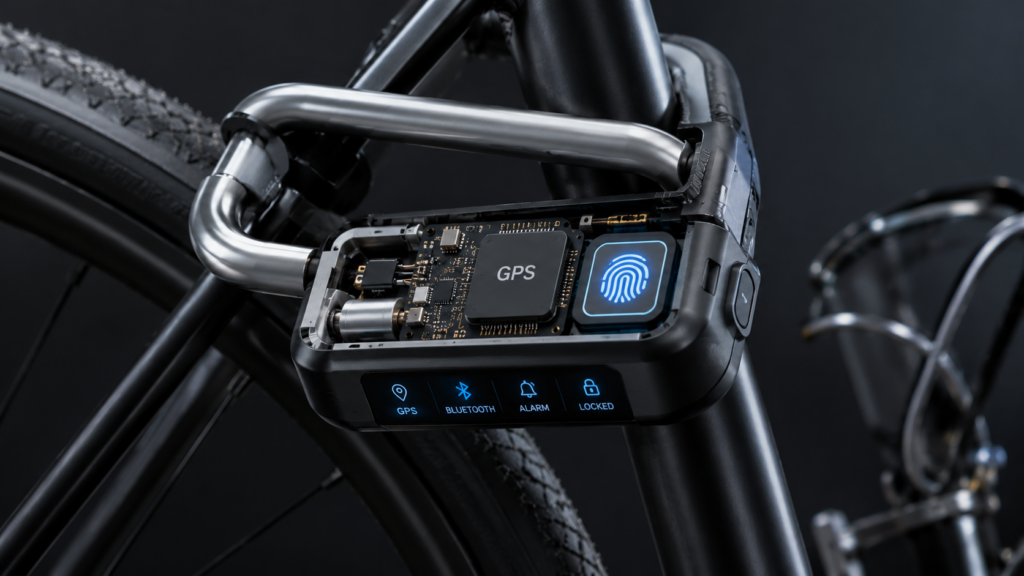
Smart bicycle security systems may include:
- GPS tracking modules
- AI movement detection
- Biometric authentication
- Smart locks
- Mobile security applications
- Connected alarm systems
These technologies create a more complete security network that helps riders stay connected with their bicycles.
This development connects with our article about Smart Bike Frames 2026, where bicycles become increasingly intelligent through embedded technology.
AI Theft Detection and Motion Monitoring
One of the biggest improvements in modern bicycle security is artificial intelligence-powered activity monitoring.
Smart systems can analyze movement patterns and identify unusual activity, such as:
- Unexpected bike movement
- Unauthorized handling
- Suspicious transport activity
- Location changes outside normal use
When unusual activity is detected, the system may send alerts directly to the rider’s smartphone or connected devices.
This creates a proactive approach where the bicycle can communicate potential security concerns instead of relying only on the owner discovering a problem later.
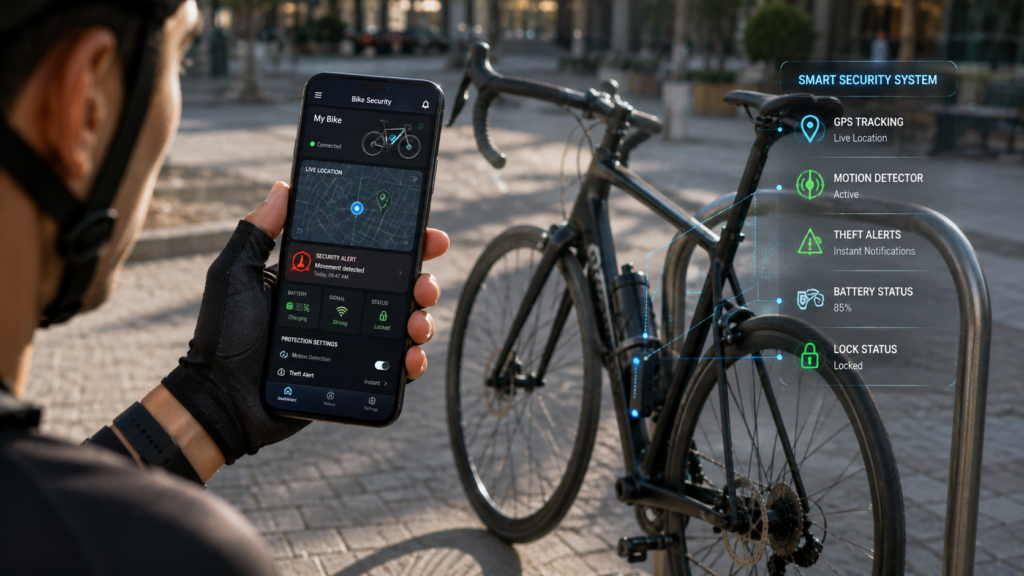
GPS Tracking and Real-Time Location Monitoring
GPS tracking is becoming one of the most important features of connected bicycle security. Compact tracking modules allow riders to view their bicycle location through mobile applications.
Smart GPS systems can provide:
- Real-time location updates
- Movement history
- Geofencing alerts
- Location sharing
- Ride tracking information
Geofencing allows owners to create virtual boundaries. If the bicycle moves outside a selected area, the system can send an alert.
This technology also complements connected cycling systems discussed in our article about Connected Cycling Analytics 2026.
Biometric Locks and Keyless Protection
Future bicycle security may move beyond traditional keys and combinations. Biometric authentication allows riders to use unique personal identifiers for access.
Possible biometric security features include:
- Fingerprint recognition
- Smartphone authentication
- Digital identity verification
- Encrypted wireless access
These systems can provide convenient access while adding another layer of protection for high-value bicycles.
Integration With Smart Cycling Devices
Bicycle security systems are becoming part of a larger connected cycling ecosystem. Security features can communicate with other smart devices used by cyclists.
Future integration may include:
- Smart helmets
- Cycling computers
- Smart glasses
- Mobile applications
- AI cameras
For example, a smart helmet or cycling computer could display security notifications while riding.
This connects with our coverage of Smart Cycling Glasses 2026, where wearable technology expands cyclist awareness.
Security Features for Different Types of Cyclists
Urban Commuters
City riders benefit from GPS tracking, smart locks, and mobile alerts when leaving bicycles in public areas.
Adventure Cyclists
Bikepackers and long-distance riders can use location tracking and connected monitoring when traveling through remote areas.
Performance Cyclists
High-end bicycle owners can use advanced security systems to protect valuable equipment and components.
AI Security and Connected Bicycle Networks
The future of bicycle security may involve connected networks where bicycles communicate with surrounding infrastructure.
Potential developments include:
- Smart city bicycle monitoring
- Community theft detection networks
- Automated security notifications
- Connected parking systems
These systems could create safer environments for cyclists while improving bicycle ownership experiences.
The Role of AI Cameras in Bicycle Protection
AI cameras are another technology that may improve bicycle security. Connected cameras can record suspicious activity, monitor surroundings, and provide additional information when unusual events occur.
This technology connects with our article about AI-Powered Cycling Cameras 2026.
The Future of Smart Bicycle Security
As bicycles continue becoming more connected, security systems will become more intelligent and automated.
Future developments may include:
- AI-powered theft prediction
- Automatic emergency notifications
- Advanced biometric protection
- Integrated smart locks
- Cloud-based bicycle monitoring
The future bicycle may not only provide transportation but also actively protect itself through connected technology.
Conclusion
Smart bicycle security systems in 2026 represent a major advancement in connected cycling technology. By combining AI monitoring, GPS tracking, biometric protection, and smart devices, these systems provide riders with better awareness and control over bicycle security.
As bicycles become more valuable and technologically advanced, intelligent security solutions will become an increasingly important part of modern cycling.