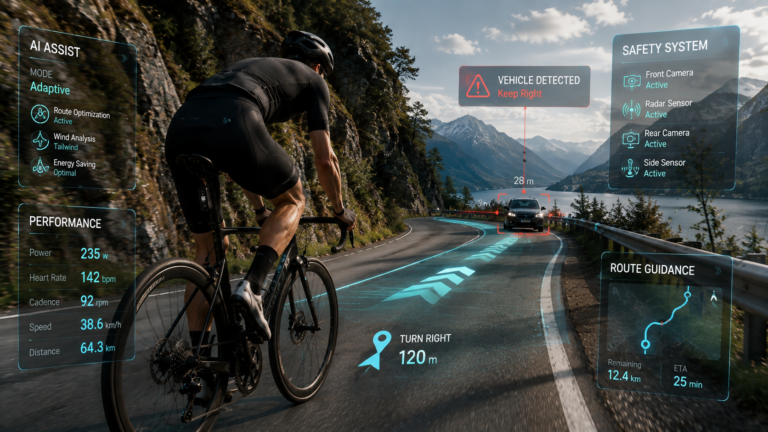
Cycling technology is moving toward a future where bicycles can understand their surroundings, analyze riding conditions, and provide intelligent assistance. In 2026, autonomous cycling technology 2026 combines artificial intelligence, cameras, sensors, and connected systems to create smarter bicycles designed to support riders with navigation, safety awareness, and performance information.
Unlike fully autonomous vehicles, autonomous cycling focuses on assistance rather than replacing the rider. These systems aim to improve awareness, reduce risks, and create a more connected riding experience.
AI-powered bicycles are gaining attention across the cycling industry, with new concepts exploring adaptive motors, radar systems, cameras, and connected safety technology.
The Evolution of Autonomous Bicycle Technology
Traditional bicycles depend entirely on rider input. While modern bikes have introduced electronic shifting, smart displays, and connected sensors, most systems still require manual operation.
Autonomous cycling technology introduces a new approach by allowing bicycles to collect information and provide intelligent feedback.
Future autonomous cycling systems may include:
- AI-powered cameras
- Radar-based detection
- Smart navigation systems
- Environmental sensors
- Automatic performance adjustments
These technologies create a bicycle that can better understand the rider, the road, and surrounding conditions.
This development connects with our article about Smart Bicycle Operating Systems 2026.
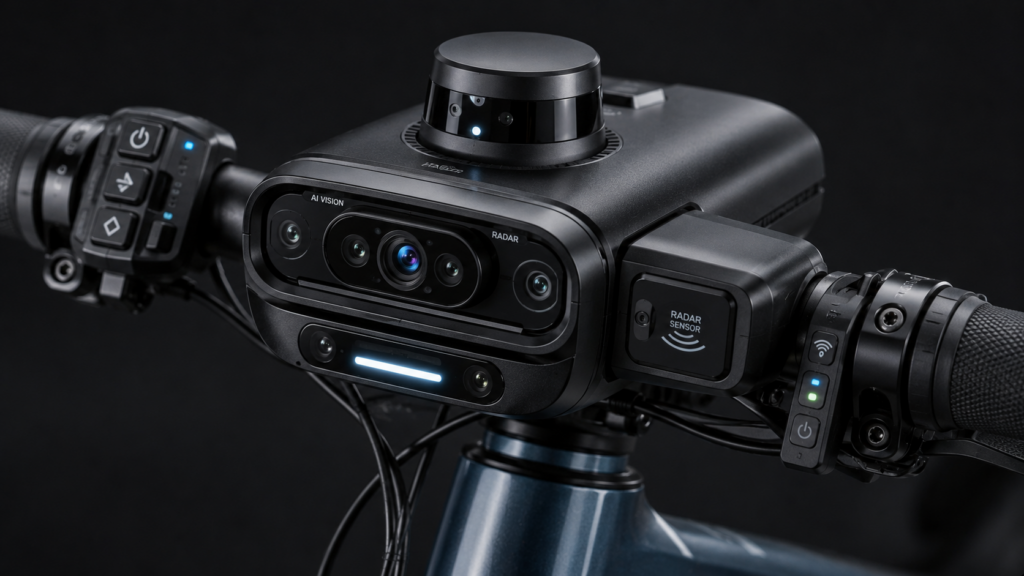
How AI-Assisted Bikes Understand Their Environment
Autonomous cycling systems rely on multiple sensors working together. Cameras, radar, and other detection technologies collect information about nearby objects and road conditions.
AI systems can analyze:
- Nearby vehicles
- Road obstacles
- Traffic movement
- Surface conditions
- Route changes
The bicycle then processes this information to provide alerts or adjustments that support the rider.
Prototype systems have explored 360-degree sensing, AI hazard analysis, and rider alerts through displays, lights, and feedback systems.
AI Safety Assistance for Cyclists
Safety is one of the biggest areas where autonomous cycling technology may have an impact.
AI systems can help riders identify situations that may be difficult to notice while riding.
Potential safety features include:
- Vehicle proximity alerts
- Blind spot detection
- Obstacle recognition
- Road hazard warnings
- Group riding awareness
For example, a smart bicycle could detect an approaching vehicle and provide an alert through a handlebar display, wearable device, or connected helmet.
This technology builds on our article about Connected Cycling Analytics & Predictive Safety Systems in 2026.
Smart Navigation and Rider Assistance
Navigation is another important part of autonomous cycling systems. Future smart bicycles may combine GPS information with AI analysis to create more adaptive routes.
AI navigation may consider:
- Traffic conditions
- Weather changes
- Elevation difficulty
- Battery range
- Rider preferences
Instead of following a fixed route, an AI system may suggest changes based on current conditions.
This connects with our article about AI Cycling Route Optimization 2026.
Adaptive Performance Assistance
Autonomous cycling technology is not limited to safety. AI systems may also help riders improve efficiency and comfort.
Future bicycles may adjust settings based on:
- Rider effort
- Terrain changes
- Heart rate information
- Energy consumption
- Training goals
Electric bicycles are already exploring intelligent assistance systems that analyze rider movement and terrain conditions to adjust motor support.
Autonomous Features in Smart E-Bikes
Electric bicycles are likely to benefit significantly from autonomous technology because they already include motors, batteries, and electronic controllers.
Future smart e-bikes may combine:
- AI motor management
- Battery optimization
- Automatic assistance modes
- Connected diagnostics
- Safety monitoring
This connects with our article about Self-Charging E-Bikes 2026.
Challenges Facing Autonomous Cycling
Although autonomous cycling technology is advancing, several challenges remain before these systems become common.
- Battery requirements
- Sensor accuracy
- Weather reliability
- Cost of advanced components
- Infrastructure compatibility
Cyclists also need systems that provide assistance without reducing the control and enjoyment that make cycling unique.
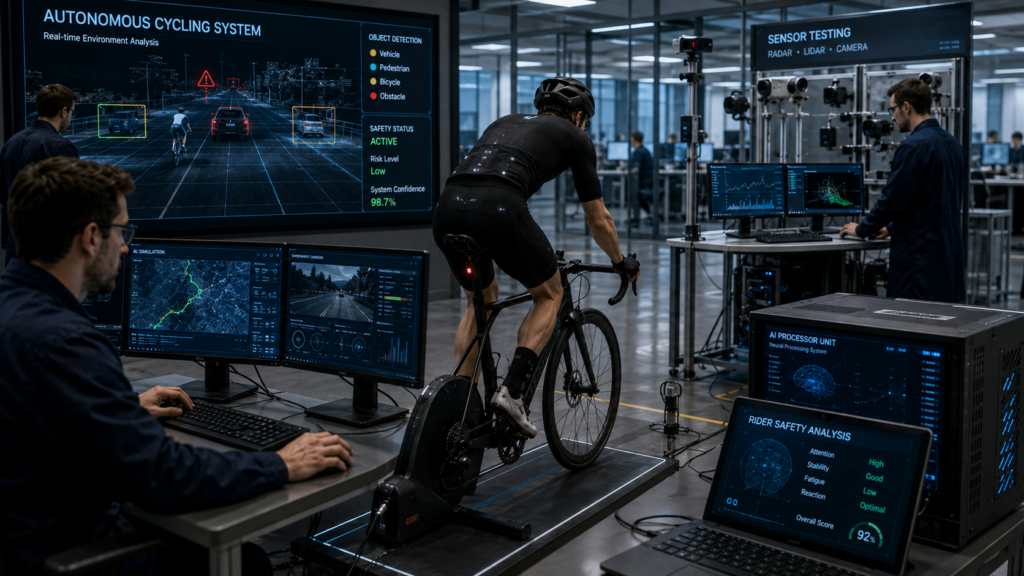
The Future of Self-Assisting Bicycles
Future bicycles may become increasingly intelligent while keeping the rider at the center of the experience.
Possible developments include:
- AI-powered riding companions
- Connected vehicle communication
- Automatic safety adjustments
- Advanced obstacle prediction
- Personalized riding assistance
Research into AI-based cycling safety and connected mobility continues to explore ways technology can improve rider awareness and protection.
Conclusion
Autonomous cycling technology in 2026 represents a major step toward smarter bicycles. By combining artificial intelligence, sensors, and connected systems, future bikes may provide riders with better information, improved awareness, and more personalized assistance.
The future of cycling is unlikely to remove the human element. Instead, autonomous technology may become a digital companion that helps riders make better decisions while enjoying the ride.