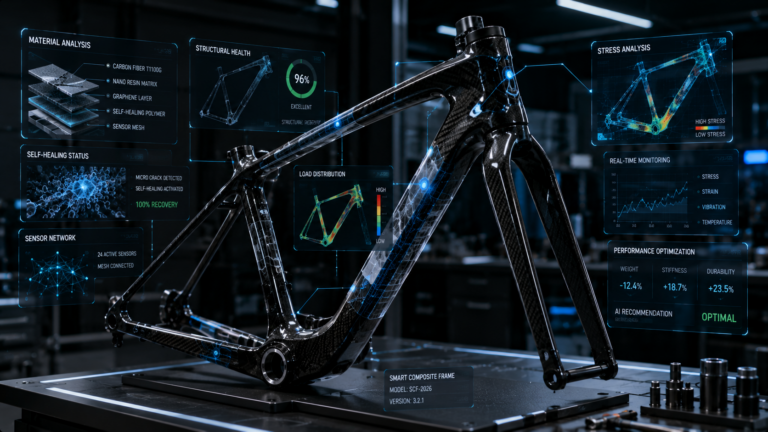
The future of bicycle design is moving beyond traditional carbon fiber and aluminum construction. In 2026, smart bicycle materials 2026 are introducing new possibilities through advanced composites, intelligent structures, embedded sensors, and materials designed to improve durability, performance, and sustainability.
Future bicycles may not only be lighter and stronger but also capable of monitoring their own condition through integrated material technology.
The Evolution of Bicycle Materials
Bicycle manufacturers have continuously searched for materials that improve weight, stiffness, comfort, and durability. Early bicycles relied heavily on steel, followed by aluminum, titanium, and carbon fiber composites.
Modern material development is now focusing on intelligent structures that combine physical strength with digital capabilities.
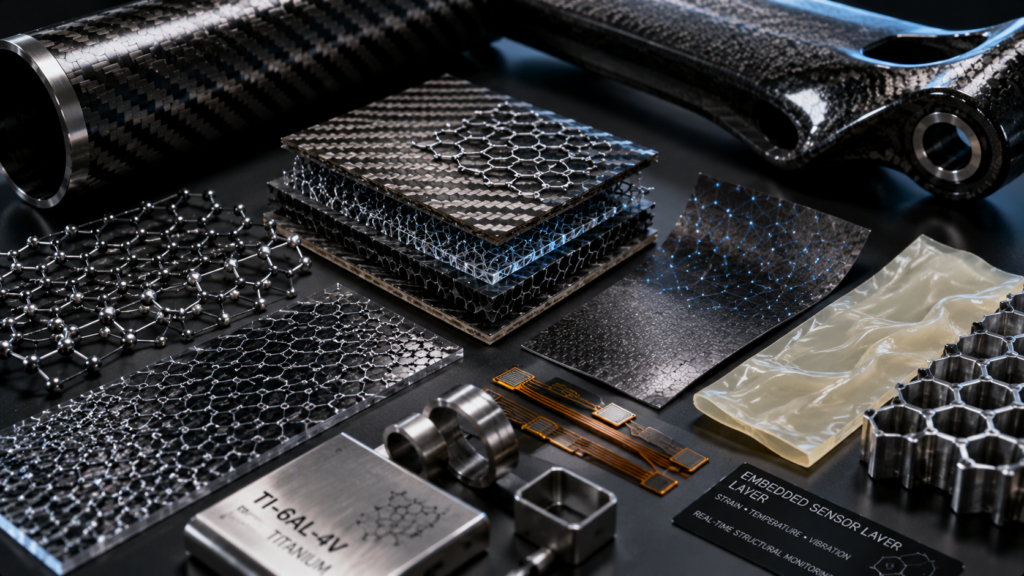
Future smart bicycle materials may include:
- Advanced carbon composites
- Graphene-enhanced materials
- Self-healing polymers
- Smart alloys
- Embedded sensor materials
These innovations could redefine how bicycles are designed and maintained.
This connects with our article about Smart Bike Frames 2026, where embedded technology transforms bicycle structures into connected systems.
Self-Healing Bicycle Frames
One of the most futuristic developments in bicycle materials is self-healing technology. Researchers have explored materials that can repair minor damage by responding to cracks, stress, or environmental changes.
In bicycle applications, self-healing materials could potentially help address:
- Small surface cracks
- Material fatigue
- Micro-damage from impacts
- Long-term structural wear
While fully self-repairing bicycle frames are still developing, smart material research is creating new opportunities for longer-lasting components.
This technology connects with our article about AI-Powered Bicycle Maintenance 2026.
Advanced Carbon Fiber Composites
Carbon fiber remains one of the most important materials in high-performance bicycles. However, future carbon composites are becoming more advanced through improved manufacturing methods and material combinations.
New composite technologies may improve:
- Strength-to-weight ratios
- Vibration absorption
- Impact resistance
- Aerodynamic efficiency
Engineers are also exploring combinations of carbon fiber with other advanced materials to create more efficient structures.
Advanced composite development continues to influence professional cycling equipment and next-generation bicycle designs.
Smart Materials With Embedded Sensors
One of the biggest changes in future bicycle materials is the integration of electronics directly into structures.
Smart materials may contain sensors capable of monitoring:
- Frame stress
- Temperature changes
- Impact forces
- Material fatigue
- Structural performance
This information can be sent to connected bicycle systems for analysis and maintenance recommendations.
This connects with our article about Smart Bicycle Digital Twins 2026, where digital models analyze real-world bicycle conditions.
Graphene and Next-Generation Materials
Graphene and other advanced materials are attracting attention because of their unique strength, conductivity, and lightweight properties.
Potential bicycle applications include:
- Stronger frame structures
- Improved electrical conductivity
- Enhanced battery components
- Lightweight protective layers
Although widespread bicycle use is still developing, advanced materials research continues creating opportunities for future cycling products.
Intelligent Structures and Real-Time Monitoring
Future bicycle frames may become intelligent structures capable of understanding how they are being used.
A smart frame could monitor:
- Riding forces
- Terrain impact
- Component stress
- Usage patterns
This information could help riders understand bicycle performance and allow manufacturers to improve future designs.
This technology complements our article about Smart Bicycle Operating Systems 2026.
AI-Optimized Material Design
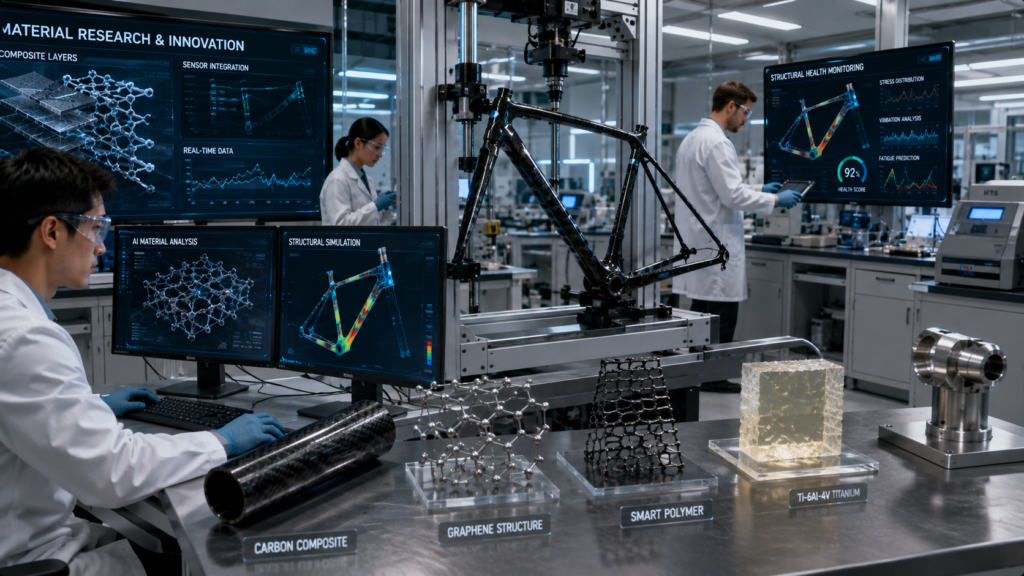
Artificial intelligence is becoming increasingly important in material engineering. AI systems can analyze thousands of possible material combinations and structural designs.
AI-assisted material development can help optimize:
- Weight reduction
- Strength distribution
- Manufacturing efficiency
- Energy absorption
This approach is already influencing advanced manufacturing methods, including 3D printed bicycle components and AI-generated designs.
Learn more in our article about 3D Printed Bicycle Components 2026.
Benefits for Different Cyclists
Professional Cyclists
Competitive riders may benefit from lighter, stronger materials designed for maximum performance and efficiency.
Adventure Cyclists
Durable smart materials could improve reliability for riders traveling through demanding environments.
Everyday Riders
Future material improvements may create bicycles that require less maintenance and last longer.
Sustainability and Future Bicycle Manufacturing
Smart materials may also support more sustainable bicycle production by improving durability and reducing waste.
Longer-lasting components can reduce replacement needs, while advanced manufacturing methods may improve material efficiency.
This connects with our article about Sustainable Cycling Tech 2026.
The Future of Smart Bicycle Materials
As cycling technology continues advancing, materials will become an increasingly important part of intelligent bicycle design.
Future developments may include:
- Self-monitoring bicycle frames
- Self-healing composite structures
- AI-designed materials
- Embedded electronic systems
- Fully personalized bicycle construction
The bicycle of the future may combine mechanical engineering, artificial intelligence, and advanced materials into one intelligent platform.
Conclusion
Smart bicycle materials in 2026 represent the next stage of bicycle innovation. Through advanced composites, intelligent structures, and sensor-enabled materials, future bicycles may become lighter, stronger, and more adaptive.
As manufacturers continue exploring new materials, the next generation of bicycles may offer improved performance while creating a more connected and sustainable cycling experience.