Cycling technology is expanding beyond speed, distance, and performance measurements. In 2026, AI bicycle health monitoring 2026 is introducing a new generation of smart systems designed to understand the cyclist’s body through biometric sensors, artificial intelligence, and connected health analytics.
Future smart bicycles may not only measure how fast a rider travels but also analyze fatigue, recovery, stress levels, hydration needs, and potential injury risks to help cyclists make better decisions before, during, and after every ride.
The growth of AI-powered cycling platforms is being driven by the combination of wearable devices, smart trainers, connected bicycles, and advanced performance analytics. Modern systems increasingly focus on adaptive feedback rather than simply recording data after exercise.
The Evolution From Performance Tracking to Health Intelligence
For many years, cycling technology focused primarily on performance metrics such as speed, power output, cadence, and heart rate. These measurements helped athletes understand training progress but provided limited information about overall wellness.
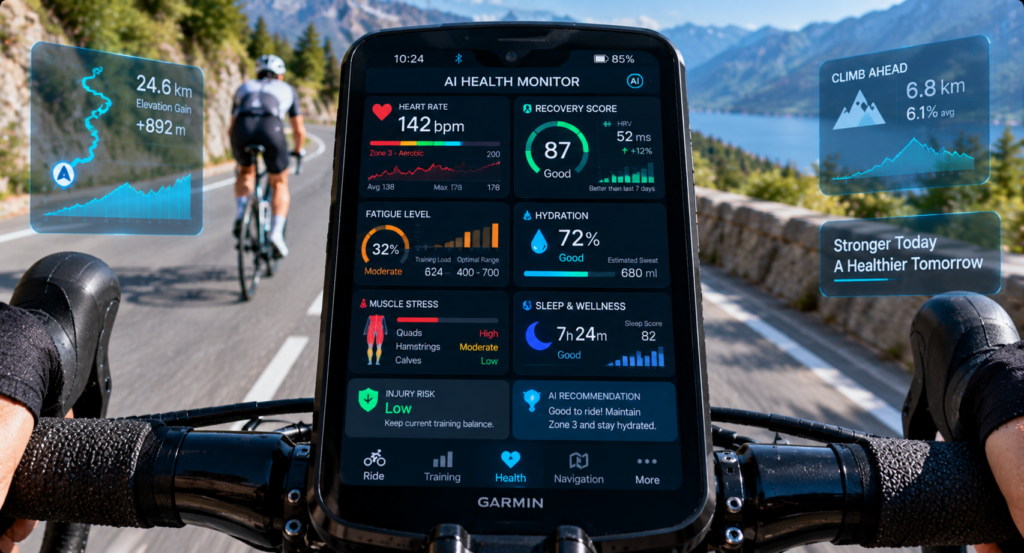
AI health monitoring systems introduce a broader approach by analyzing multiple signals together.
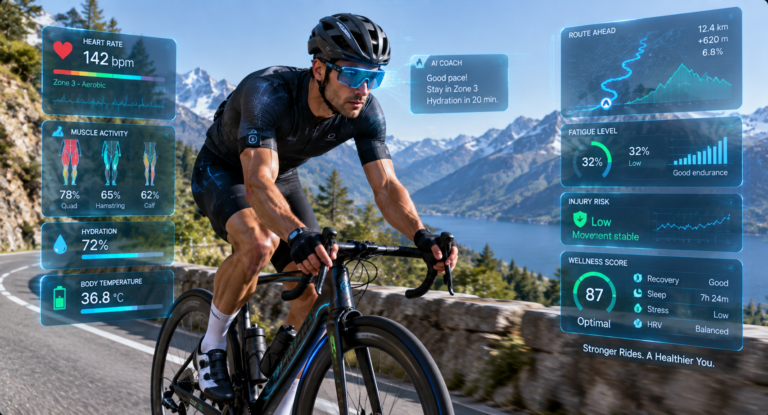
A future smart cycling health platform may monitor:
- Heart rate patterns
- Heart rate variability
- Muscle activity
- Body temperature
- Hydration levels
- Recovery readiness
By combining these measurements, artificial intelligence can provide a more complete picture of how the cyclist is responding to training.
This connects with our article about Connected Cycling Wearable Ecosystems 2026.
How AI Bicycle Health Monitoring Works
AI bicycle health monitoring systems rely on information collected from multiple connected devices.
These may include:
- Smart cycling clothing
- Wearable fitness devices
- Smart watches
- Bike-mounted sensors
- Smart trainers
- Performance platforms
Artificial intelligence analyzes the collected information to identify patterns that may not be obvious from individual measurements.
For example, an AI system may recognize that a cyclist’s heart rate is unusually elevated compared with previous rides or that recovery indicators suggest additional rest may be beneficial.
Real-Time Biometric Analysis During Rides
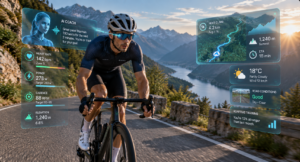
One of the most valuable features of AI health monitoring is real-time feedback.
Instead of reviewing health data after finishing a ride, cyclists may receive recommendations while they are still training.
Real-time AI analysis may monitor:
- Current exertion levels
- Energy availability
- Fatigue progression
- Recovery condition
- Training intensity
This allows riders to adjust their effort based on their current physical condition.
AI-Powered Injury Prevention
Injury prevention is becoming an important area where AI may support cyclists. Many cycling injuries develop gradually due to repeated stress, poor recovery, incorrect positioning, or excessive training loads.
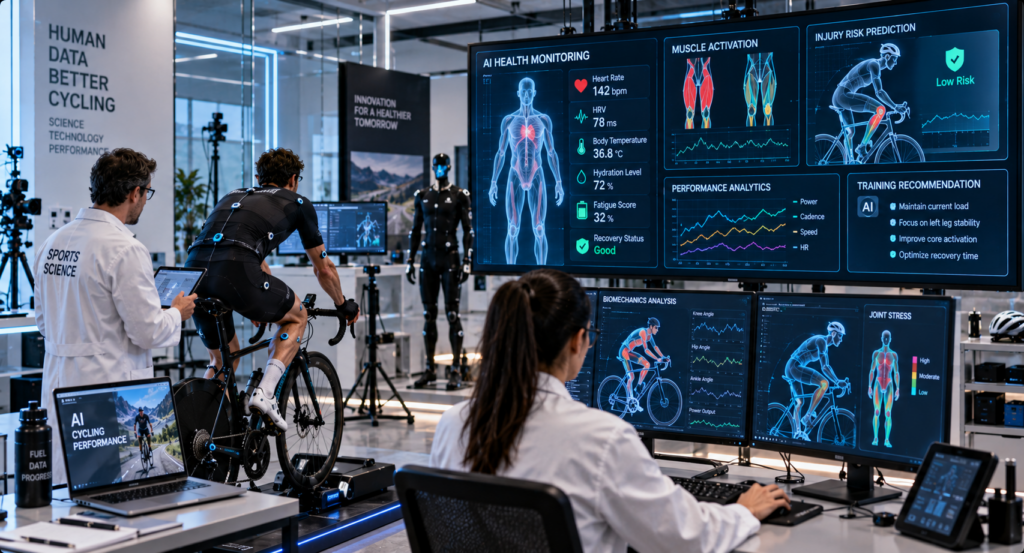
AI health systems may analyze:
- Movement patterns
- Pedaling efficiency
- Muscle imbalance
- Training stress
- Body position changes
The goal is not to replace medical professionals but to help riders recognize possible warning signs earlier.
This technology complements advanced fitting and biomechanical systems already being explored in smart cycling.
This connects with our article about AI-Powered Custom Bike Fitting 2026.
Recovery Intelligence and Training Balance
Successful training requires a balance between effort and recovery. AI health monitoring can help cyclists understand when their bodies are prepared for additional stress.
Recovery analytics may consider:
- Sleep quality
- Heart rate variability
- Training load
- Previous workouts
- Fatigue trends
An AI system could recommend lighter training, additional recovery, or adjustments to future workouts.
This connects with our article about AI Cycling Recovery Systems 2026.
Smart Clothing and Body Monitoring
Smart cycling clothing may become an important part of future health monitoring ecosystems.
Unlike traditional equipment, smart garments can potentially collect information directly from the rider’s body.
Future smart cycling apparel may monitor:
- Muscle activation
- Body temperature
- Posture changes
- Movement efficiency
- Physical stress
When combined with AI platforms, this information can provide deeper insights into rider wellness.
AI Nutrition and Hydration Recommendations
Health monitoring is closely connected with nutrition and hydration management.
During endurance rides, AI systems may analyze:
- Energy expenditure
- Hydration status
- Ride duration
- Environmental conditions
- Training intensity
The system may provide reminders or recommendations based on the cyclist’s condition.
This connects with our article about AI Cycling Nutrition Systems 2026.
AI Health Monitoring With Smart Trainers
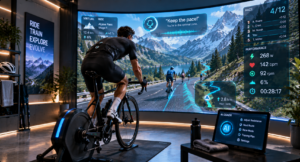
Indoor cycling platforms provide another environment where AI health monitoring can become highly valuable. Smart trainers already collect detailed performance information and connect with training applications.
Future smart trainer systems may combine:
- Power analysis
- Heart rate monitoring
- Recovery tracking
- Training recommendations
- Health predictions
This creates a complete digital training environment.
This connects with our article about AI-Powered Cycling Coaching 2026.
Benefits for Different Cyclists
Professional Cyclists
Competitive riders may use AI health monitoring to optimize training schedules, recovery strategies, and race preparation.
Endurance Cyclists
Long-distance riders may benefit from better fatigue management and hydration awareness.
Everyday Riders
Recreational cyclists may use simplified health insights to improve fitness and build safer riding habits.
The Future of AI Bicycle Health Monitoring
AI bicycle health monitoring represents a shift toward bicycles that understand the cyclist as a complete system rather than only measuring performance.
Future developments may include:
- Continuous biometric monitoring
- AI wellness scores
- Predictive injury alerts
- Personalized health recommendations
- Connected medical and fitness platforms
As smart cycling technology continues evolving, the bicycle may become an important part of a rider’s personal health ecosystem.
Conclusion
AI bicycle health monitoring in 2026 represents the next stage of connected cycling technology. By combining artificial intelligence, wearable sensors, biomechanics, and performance analytics, future systems may help cyclists train smarter and understand their bodies better.
The future bicycle may not only measure the ride. It may understand the rider.