Garmin’s newest cycling computers bring a practical question to the forefront: how much easier can navigation become when a rider no longer has to tap a screen for every change of plan? Announced on October 20, 2026, the Garmin Edge 1060, Edge Explore 3 and Edge Explore 3 Plus introduce updated routing tools, longer-lasting navigation options and, on two models, built-in voice control. The flagship also brings more ways to manage workouts and group rides without repeatedly looking down.
What Is New About the Garmin Edge 1060?
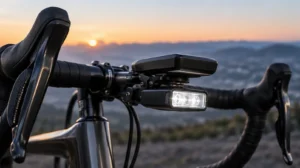
According to Garmin’s October 20 announcement, the Edge 1060 has a built-in microphone and speaker for spoken commands, spoken guidance and compatible messaging. It also combines a vivid touchscreen with physical buttons, an important detail for riders who use gloves or ride in heavy rain. The computer adds navigation features designed to help riders compare routes before setting off.
The voice command feature responds to the wake phrase “Okay, Garmin.” Garmin gives examples such as asking for your heart rate, finding a nearby coffee shop or reporting a pothole. Those are valuable actions during a ride, especially when stopping to manipulate a screen would interrupt the flow of a group or training session. Performance can vary with wind, traffic noise, language availability and other riding conditions, however. Hands-free operation does not remove the need to stay aware of traffic.
Voice Commands Could Change Everyday Navigation
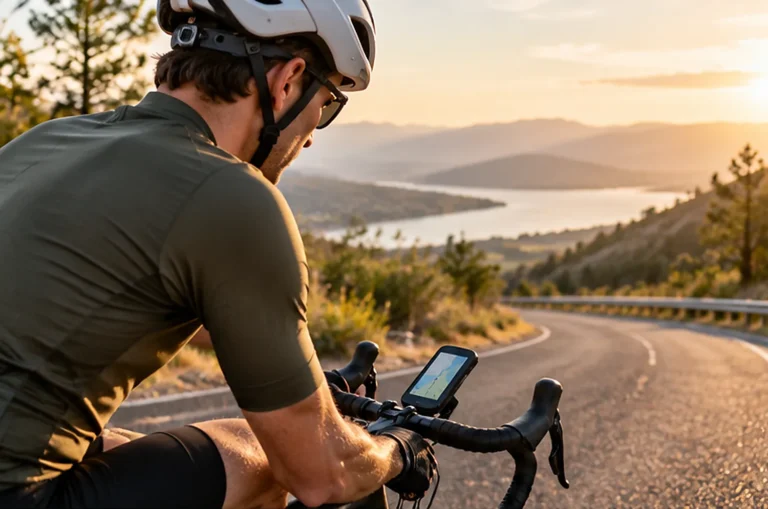
Imagine following a planned route and discovering roadworks or an unexpected detour. On a traditional bike computer, you might stop, zoom out and enter a destination manually. A supported voice command could shorten part of that process on the new Edge. A cyclist can ask for a destination or a ride statistic while maintaining a grip on the handlebars. This is most useful when prompts are short and the system recognizes them reliably.
Voice messaging is a separate feature. The on-device Garmin Messenger experience relies on a compatible connected smartphone to exchange messages with other users. That is different from standalone satellite communication. The speaker also provides audible prompts and a digital bike bell, although riders should not assume a digital alert is a substitute for ordinary, cautious passing.

Route Options, Road Hazards and Free Flow Routing
The most interesting software changes are aimed at decisions before and during a ride. Route Options offers alternative ways to reach a destination, taking factors such as estimated time, elevation and bicycle type into account. Route Previews can show distance, estimated ride time and reported obstacles. The updated Up Ahead feature makes it easier to keep track of useful places, including water stops and restrooms, along a selected route.
Free Flow Routing prioritizes routes with fewer stops, intersections or slowdowns. That can be especially attractive for uninterrupted endurance riding, but it should not be mistaken for a guarantee of faster or safer roads. Actual conditions, weather, traffic controls and local restrictions still matter. Garmin has also added community-reported road-closure warnings alongside other hazard reports, which depend on available reports and connected features.
These changes build on the mapping developments discussed in iBikeBlog’s guide to cycling GPS navigation and smart route planning. The new launch offers a concrete example of how those broader navigation ideas are reaching current devices. For another account of the announcement, see BikeRadar’s launch coverage.
How the Edge Explore 3 and Explore 3 Plus Compare
Not everyone needs the most expensive cycling computer. Garmin introduced the Edge Explore 3 and Explore 3 Plus as navigation-first options for commuters, leisure cyclists and touring riders. Both have cycling-focused maps, turn-by-turn directions, ride data, route suggestions and compatible safety tools. Their interface is built around the practical task of finding a destination and following a course.
The most important distinction is that the Explore 3 Plus adds a microphone and speaker for voice commands, voice messaging and audible prompts. The standard Explore 3 does not offer that same integrated voice feature. Both models support functions such as pin-drop navigation from compatible phone map apps, reported road-hazard alerts and the ability to connect with compatible e-bike systems to display certain battery or assistance information.
Garmin’s Explore 3 launch release describes LiveTrack, incident detection and Garmin Cycling Coach features as well. Riders should check the connected-phone, sensor and regional requirements for individual functions rather than assuming every feature operates without accessories.
Battery Life and Price: Three Different Priorities
Garmin lists the Edge 1060 at a suggested U.S. price of $799.99, with up to 20 hours in demanding use and up to 60 hours in battery-saver mode. The Edge Explore 3 has a suggested price of $399.99 and up to 16 hours in demanding conditions. The Explore 3 Plus costs $499.99 and lists up to 14 hours in demanding use. Both Explore models offer up to 48 hours in battery-saver mode.
These are manufacturer’s estimates, not measurements from a long-term independent road test. Screen brightness, connected sensors, navigation workload and recording settings can affect real battery life. A touring cyclist who needs simple routing may find an Explore unit better aligned with their needs than the flagship, even though the Edge 1060 has a higher maximum saver-mode figure. Conversely, a racer who routinely reviews training data may appreciate the flagship’s broader performance capabilities.
Training, Group Rides and Connected Accessories
On the Edge 1060, the workout screen is more interactive, with a clearer view of upcoming steps and tools to explore the session. Riders who use structured intervals, heart-rate targets or power-meter data may benefit from having more information readily available. Compatibility with sensors is important, though: not every statistic can be calculated accurately from the computer alone.
Garmin also highlights GroupRide enhancements for coordinating with others, alongside the ability to view connected ride information. Some features require paired phones or devices. For cyclists interested in how connected interfaces fit into the bigger picture, iBikeBlog has previously covered cycling digital assistants and voice interaction. The Edge 1060 is a released product announcement, rather than a speculative concept, making it useful for evaluating how much voice control matters today.
A smaller but practical addition is reverse charging on the Edge 1060. With a compatible USB-C cable, Garmin says it can provide power to another device, such as a compatible light or phone, when needed. Garmin specifically cautions that this is not intended for charging while riding. It is an emergency convenience, not a replacement for planning battery capacity for a long trip.
What to Check Before You Upgrade
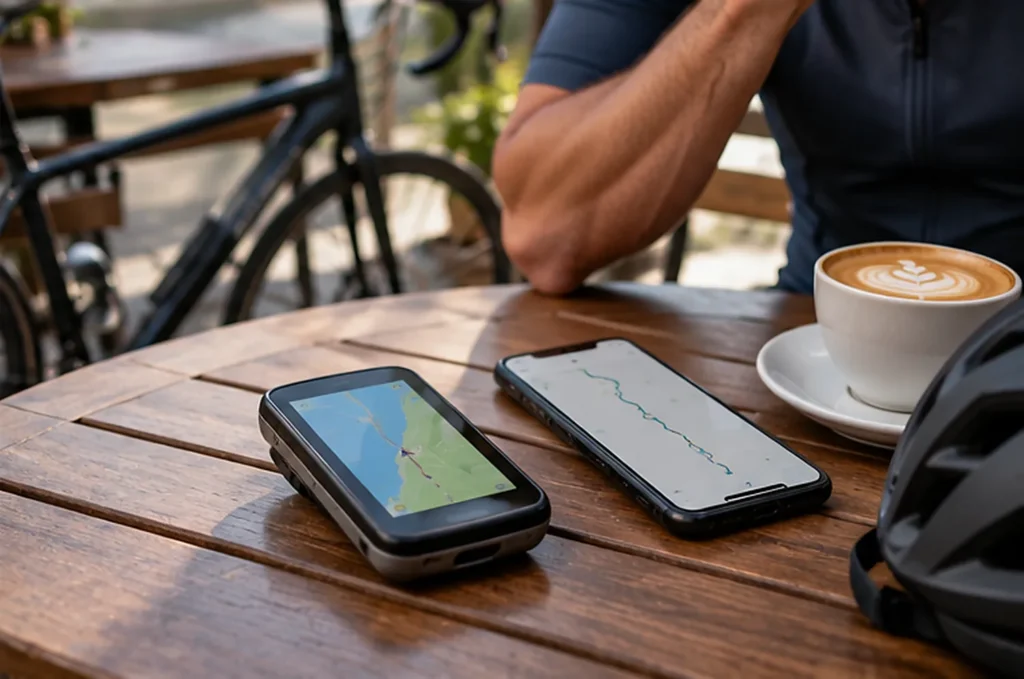
It is also worth considering whether the map display will be used mostly for following a prepared route or frequently for improvising new ones. Riders who plan everything ahead may make fewer on-device changes. City commuters and bike tourists could get more value from searching for points of interest during a ride. Cyclingnews’ announcement report and Cycling Weekly’s pricing coverage offer additional launch perspectives.
Edge 1060 vs Explore 3: Which Rider Fits Each Device?
Choose the Edge 1060 when advanced ride metrics, training tools, a premium screen and voice-enabled navigation are central to how you cycle. It makes the most sense for riders who regularly make use of performance features and value a highly integrated cockpit. Choose the Explore 3 Plus when navigation is your primary concern but you still want built-in voice commands and audible prompts. Choose the standard Explore 3 when you want a simpler, less expensive navigation-oriented computer and can live without the Plus model’s microphone and speaker.
The product pages and manuals are worth reviewing before checkout. Garmin’s Edge 1060 specification page summarizes device functions, and the launch coverage from BikeRadar puts all three models in context. Pricing, availability and supported features can vary by country.
The Bottom Line on Garmin’s October 2026 Launch
The latest Edge range shows how a cycling computer is evolving from a passive route display into an interactive riding tool. The flagship Edge 1060 emphasizes hands-free control and deeper training integration, while the Explore 3 range offers a more accessible route into modern mapping. The right choice depends less on the newest feature list than on how often you need those features on actual rides. Start with navigation, battery needs and total cost, then decide whether voice control genuinely improves your cycling routine.