
The Evolution of Bike Handlebars and Stem Technology in 2026
The cockpit of your bicycle is the primary point of contact and control. Consequently, advancements in bike handlebars and stem technology have become a major focus for manufacturers in 2026. Riders are no longer satisfied with standard round aluminum tubes. Instead, they demand highly engineered, aerodynamic, and ergonomically optimized solutions. Whether you are sprinting for a finish line or navigating rugged gravel trails, the right cockpit setup can drastically alter your riding experience.
Recent innovations have pushed the boundaries of what is possible with carbon fiber and additive manufacturing. Furthermore, the integration of components has reached unprecedented levels. This article explores the cutting-edge trends shaping the future of bicycle steering and control.
Aerodynamic Integration and One-Piece Cockpits
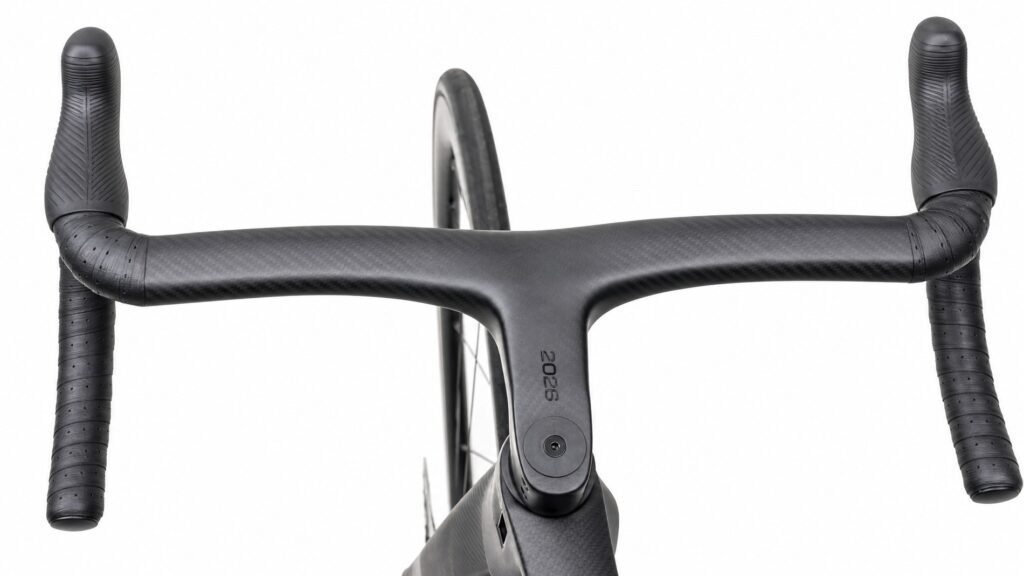
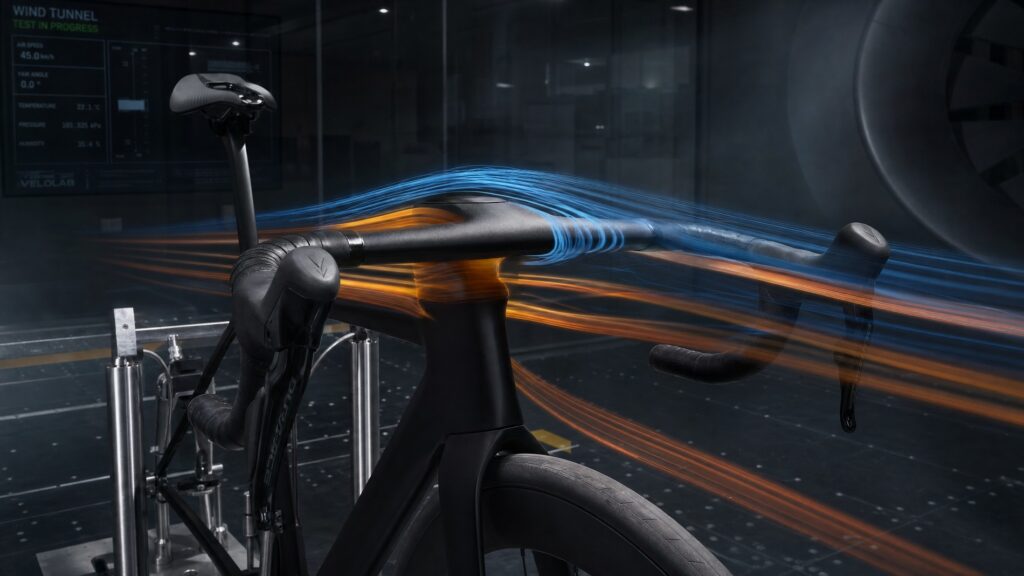
Aerodynamics continues to dominate road cycling design. Therefore, the shift towards fully integrated, one-piece handlebar and stem combinations is more prevalent than ever. By molding the stem and handlebar as a single carbon fiber unit, engineers can eliminate bulky clamping hardware. This seamless design significantly reduces frontal surface area, thereby minimizing aerodynamic drag.
Moreover, these integrated systems allow for completely hidden internal cable routing. Brake hoses and electronic shifting wires run directly through the handlebars, into the stem, and down through the head tube. Not only does this create an incredibly clean aesthetic, but it also saves valuable watts. According to recent aerodynamic testing, a fully integrated cockpit can save a rider up to 5 watts at 40 km/h compared to a traditional two-piece setup with exposed cables.
However, this integration comes with a trade-off in adjustability. Riders must be certain of their bike fit and geometry optimization before committing to a one-piece system, as changing the stem length or handlebar angle is impossible without replacing the entire unit.
Gravel Specific Geometry and Flared Drops
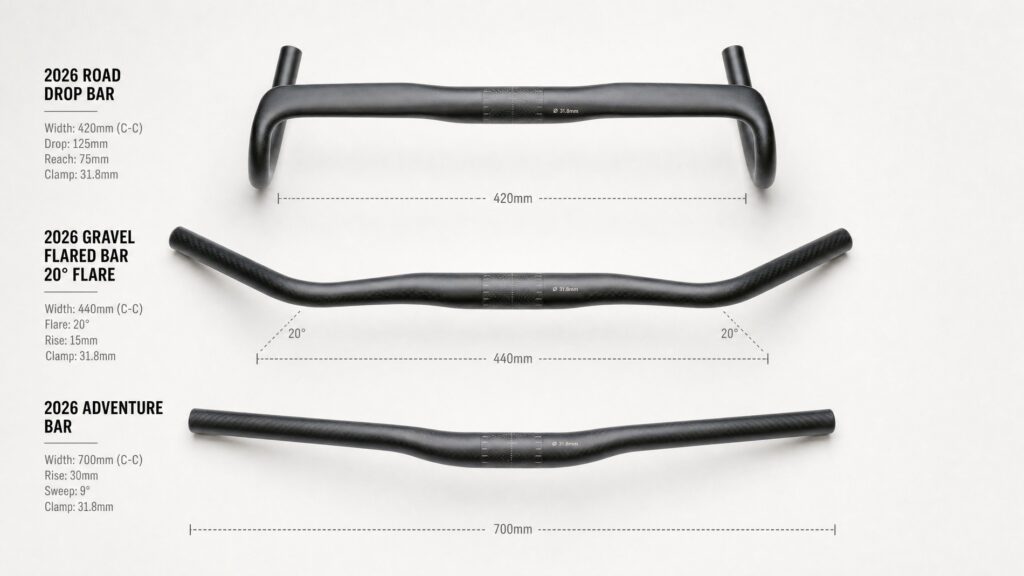
The explosive growth of gravel riding has spurred a revolution in handlebar geometry. Unlike road racing, where narrow bars are favored for aerodynamics, gravel riding prioritizes stability and control over rough terrain. Consequently, the flared drop bar has become the standard for off-road adventures.
Flared handlebars angle the drop section outward, creating a wider stance when the rider’s hands are in the drops. This wider grip provides significantly more leverage and stability when descending steep, loose, or technical trails. In 2026, we are seeing flare angles ranging from a subtle 12 degrees for all-road use to an aggressive 24 degrees or more for extreme bikepacking.
Additionally, manufacturers are incorporating shallower drops and shorter reaches into their gravel designs. This allows riders to transition between the hoods and the drops more comfortably, reducing fatigue during long days in the saddle. When combined with modern bike wheel technology, these ergonomic cockpits offer unparalleled control on unpredictable surfaces.
Vibration Damping and Material Science
Comfort is crucial for endurance, and the handlebar is a primary conduit for road buzz and trail vibrations. To combat hand numbness and fatigue, engineers are utilizing advanced material science to build inherent vibration damping into the handlebars themselves.
Carbon fiber layup techniques have become incredibly sophisticated. By strategically orienting the carbon fibers, manufacturers can create handlebars that are stiff laterally for sprinting and climbing, yet compliant vertically to absorb impacts. Some brands are even integrating elastomeric inserts or specialized resins within the carbon layup to further dissipate high-frequency vibrations.
For riders seeking the ultimate in comfort, suspension stems are making a strong comeback. These stems utilize small elastomers or coil springs to provide a few millimeters of travel, effectively isolating the rider’s hands from harsh impacts. This technology is particularly beneficial for gravel riders and those navigating poorly maintained urban streets, complementing the benefits of cycling injury prevention strategies.
3D Printed Custom Stems
One of the most exciting developments in 2026 is the rise of 3D printed titanium and aluminum stems. Additive manufacturing allows for complex, organic shapes that are impossible to produce using traditional CNC machining or forging methods. These 3D printed stems can be optimized using generative design software to remove material where it is not needed, resulting in incredibly lightweight yet exceptionally strong components.
Furthermore, 3D printing opens the door to true custom geometry. Riders can have a stem printed to their exact specifications, ensuring the perfect length and angle for their unique biomechanics. As noted in recent industry reports, additive manufacturing is revolutionizing how we approach custom bike fitting and component design.
Conclusion
The advancements in bike handlebars and stem technology for 2026 offer riders more choices than ever before. Whether you prioritize the aerodynamic gains of a fully integrated cockpit, the stability of flared gravel bars, or the comfort of vibration-damping materials, there is a setup designed to enhance your specific riding style. By carefully selecting your cockpit components, you can improve your control, increase your comfort, and ultimately, ride faster and further.
As you upgrade your steering components, remember to also consider how they interact with your bike brakes technology and shifting systems. A cohesive, well-planned cockpit is the foundation of a truly optimized bicycle.