The Science of Speed: Cycling Aerodynamics and Drag Reduction in 2026
The pursuit of speed in cycling has always been a battle against the wind. In 2026, the industry is witnessing a profound shift in how we understand and apply cycling aerodynamics and drag reduction. Riders are no longer relying solely on fitness to gain an edge; they are turning to science. Aerodynamic drag is the single greatest force a cyclist must overcome on flat terrain, and minimizing it is the key to unlocking free speed.
Understanding the principles of aerodynamics is no longer reserved for professional time trialists. Today, amateur racers, triathletes, and even dedicated enthusiasts are leveraging wind tunnel data and advanced equipment to optimize their performance. This comprehensive guide explores the latest trends and technologies shaping aerodynamic efficiency in 2026.
The Rider: The Biggest Aerodynamic Factor
When discussing aerodynamics, it is easy to focus on the bicycle. However, the rider’s body accounts for roughly 70% to 80% of the total aerodynamic drag. The bike itself only accounts for the remaining 20% to 30%. Therefore, the most significant and cost-effective aerodynamic gains come from optimizing body position.
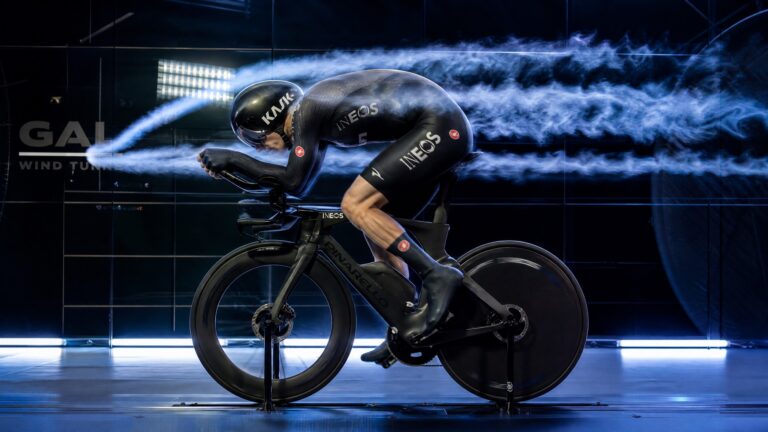
The primary goal is to reduce the frontal area—the silhouette of the rider and bike as seen from the front. A smaller frontal area means less air to push out of the way. Achieving an aerodynamic position involves lowering the torso, flattening the back, and tucking the elbows in. The head should be kept low, flush with the neck and back, while still maintaining safe forward visibility.
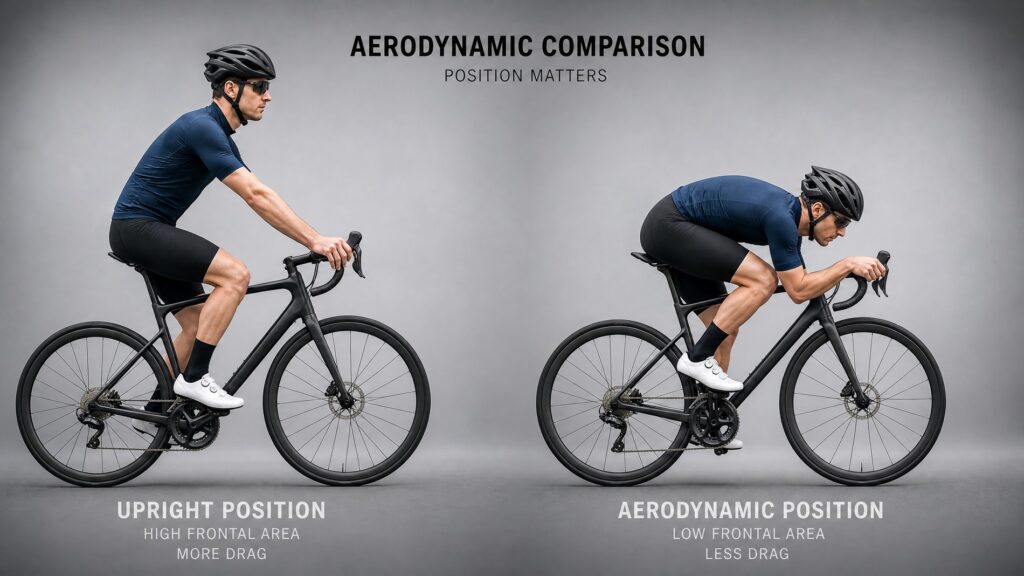
Maintaining this aggressive posture requires significant flexibility and core strength. It is not enough to simply get low; a rider must be able to sustain power output in that position. This highlights the importance of Cycling Posture and Core Strength Training 2026. A professional bike fit is essential to balance aerodynamic efficiency with biomechanical sustainability and comfort.
Wind Tunnels and CFD: The Laboratories of Speed
The development of aerodynamic equipment relies heavily on sophisticated testing methods. In 2026, engineers utilize a combination of Computational Fluid Dynamics (CFD) and wind tunnel testing to refine their designs. CFD is a software-based simulation that predicts how air flows around components. It allows designers to test multiple configurations virtually before creating physical prototypes.
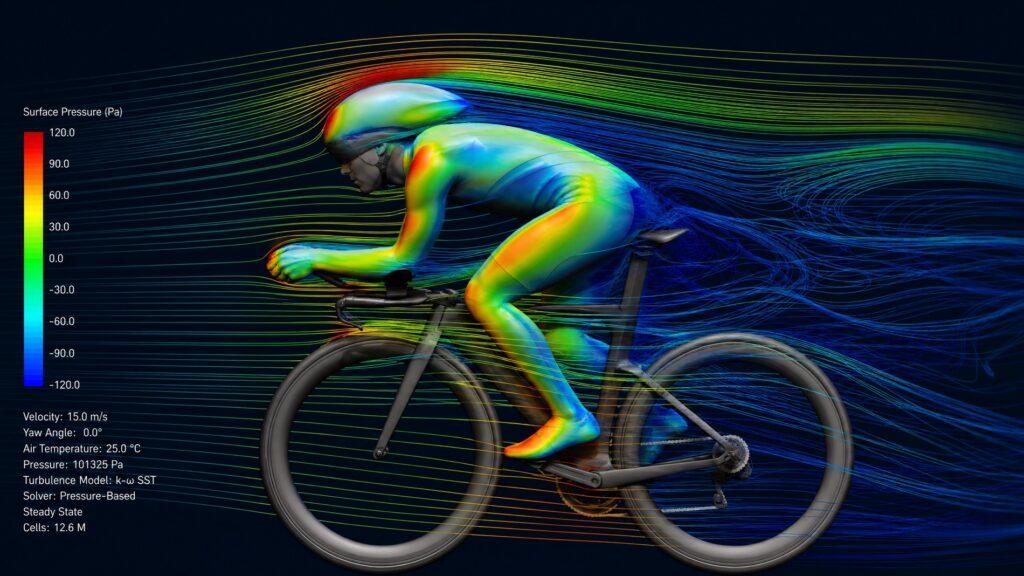
Once a design shows promise in CFD, it moves to the wind tunnel. A wind tunnel provides a controlled environment to measure drag, side forces, and airflow separation precisely. Industry standards typically test equipment at wind speeds of 40 to 45 km/h. While some argue this is faster than average amateur speeds, the data remains relevant. As experts at Faster Bike Blog point out, what is aerodynamically faster at 45 km/h is generally still faster at 30 km/h, albeit with smaller absolute time savings.
Furthermore, wind tunnel testing accounts for the “yaw angle”—the angle of the wind relative to the rider’s direction of travel. In the real world, cyclists rarely experience a perfect headwind. Crosswinds create complex aerodynamic challenges. Modern wheel and frame designs prioritize crosswind stability, ensuring the bike remains predictable and safe in gusty conditions, a crucial factor discussed in our analysis of Bike Wheel Technology and Aerodynamic Rim Design 2026.
Aerodynamic Equipment: Marginal Gains Add Up
While body position is paramount, aerodynamic equipment plays a vital role in the quest for speed. In 2026, the market is flooded with products designed to slice through the wind. Deep-section carbon wheels are perhaps the most recognizable aerodynamic upgrade. A rim depth of 40mm to 50mm is widely considered the sweet spot for general road riding, offering a balance of aerodynamic benefit and crosswind stability.
Clothing also makes a surprising difference. Flapping fabric creates significant drag. Form-fitting aero skinsuits, designed with textured fabrics strategically placed to trip the boundary layer of air, can save valuable watts. Even small details matter; aero socks and shoe covers smooth the airflow over the lower legs and feet, which are constantly moving and churning the air.
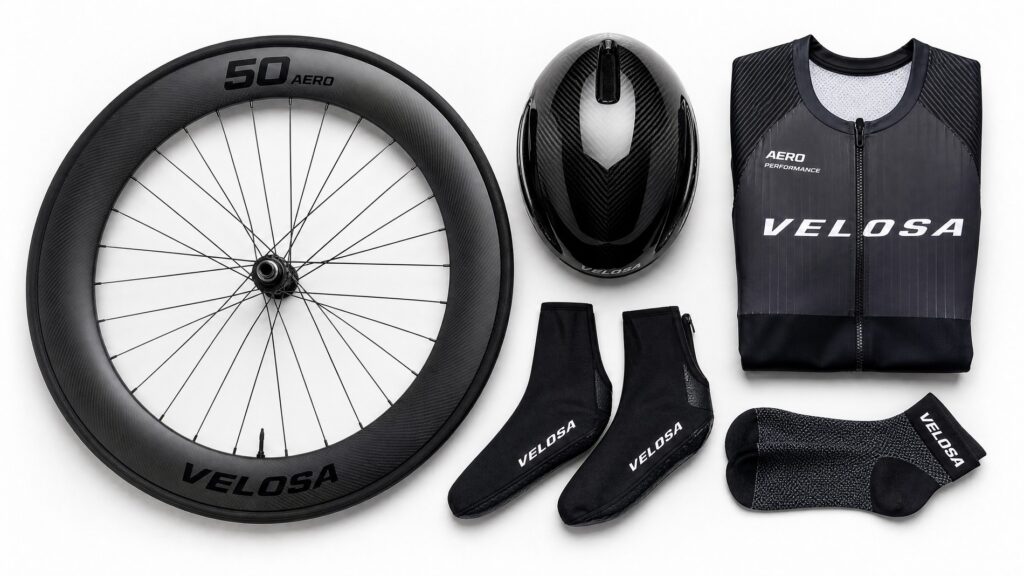
Helmets have also evolved. Modern aero road helmets offer a smooth, elongated profile to reduce drag while maintaining adequate ventilation. The science behind these designs is explored further in our article on Aerodynamic Helmet Technology Wind Tunnel 2026. When combined, these equipment choices—often referred to as “marginal gains”—accumulate to provide a substantial performance advantage.
Real-World Application and Future Trends
Translating wind tunnel data to real-world performance is the ultimate goal. Companies like AeroCoach and Swiss Side are at the forefront of this effort, offering testing and optimization services to riders of all levels. They emphasize that effective wind speed—the combination of rider speed and meteorological wind—is the metric that truly matters.
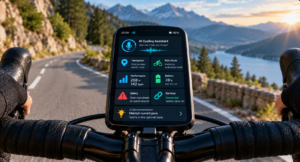
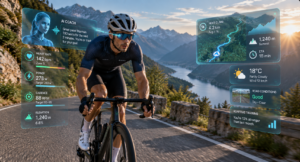
Looking ahead, the integration of real-time aerodynamic sensors is a growing trend. Devices like the Notio aerometer allow riders to measure their Coefficient of Aerodynamic Drag (CdA) on the open road. This technology bridges the gap between the laboratory and the real world, enabling cyclists to test different positions and equipment setups in their actual riding environment.
As research published in Science Direct continues to refine our understanding of fluid dynamics, we can expect even more innovative solutions. The integration of aerodynamics into everyday cycling apparel, as detailed in Cycling Clothing and Aerodynamic Apparel 2026, proves that the pursuit of free speed is accessible to everyone.
Conclusion
Mastering cycling aerodynamics in 2026 requires a holistic approach. It begins with optimizing the rider’s body position for a smaller frontal area and extends to the strategic selection of aerodynamic equipment. By understanding the science of drag reduction and leveraging the latest technologies, cyclists can ride faster and more efficiently than ever before. The wind will always be a formidable opponent, but with the right knowledge and gear, it can be conquered.