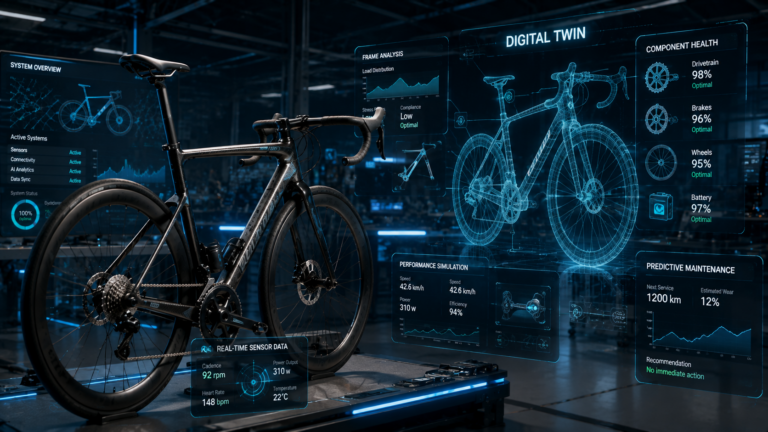
The bicycle of the future is becoming more intelligent, connected, and data-driven. In 2026, smart bicycle digital twins 2026 are emerging as a new technology that creates virtual versions of physical bicycles. These digital models allow riders, engineers, and manufacturers to analyze performance, monitor components, simulate changes, and predict future maintenance needs.
Digital twin technology is already used in industries such as automotive, manufacturing, and aerospace. The same concept is now expanding into advanced cycling systems through sensors, artificial intelligence, and connected components.
What Is a Bicycle Digital Twin?
A digital twin is a virtual representation of a physical object that receives information from sensors and connected systems. In cycling, a digital twin creates a digital copy of a bicycle that reflects real-world conditions.
A smart bicycle digital twin may include information about:
- Frame structure
- Component condition
- Rider performance data
- Battery information
- Drivetrain performance
- Maintenance history
Instead of viewing a bicycle as a simple mechanical object, digital twins turn it into a connected system that continuously provides information.
This technology builds on concepts covered in our article about Smart Bike Frames 2026, where embedded sensors help bicycles collect performance data.
How Smart Bicycle Digital Twins Work
A bicycle digital twin depends on multiple technologies working together. Sensors collect information from the physical bike while software creates a digital model that analyzes the data.
The system may collect information from:
- Frame sensors
- Power meters
- Electronic drivetrains
- Battery systems
- Smart suspension components
- Wearable devices
Artificial intelligence then processes this information to identify patterns, simulate conditions, and provide insights.
Performance Simulation and Optimization
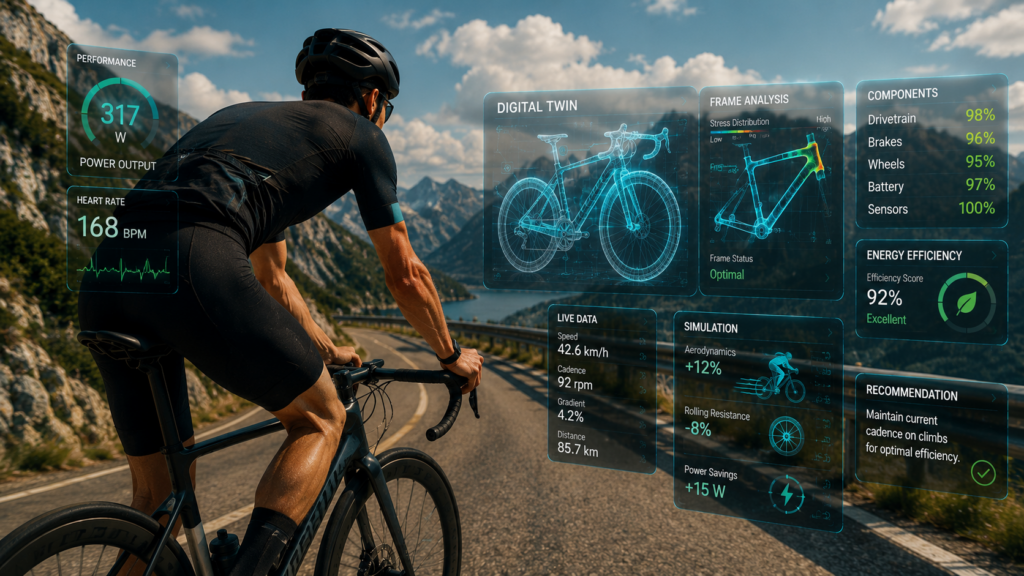
One of the biggest advantages of digital twin technology is performance simulation. Instead of testing every change on a physical bicycle, engineers and riders can analyze possible improvements through digital models.
A digital twin can simulate:
- Aerodynamic adjustments
- Frame stress changes
- Component upgrades
- Energy efficiency improvements
- Riding conditions
For example, engineers may analyze how a frame design responds to different forces before producing a physical prototype.
Predictive Maintenance Through Digital Models
Digital twins are also changing bicycle maintenance. Instead of relying only on mileage-based servicing, smart systems can analyze actual usage conditions.
A digital bicycle model may monitor:
- Chain wear
- Brake condition
- Battery health
- Frame stress
- Component performance
This allows cyclists to better understand when components may require attention.
This technology connects directly with our article about AI-Powered Bicycle Maintenance 2026.
Digital Twins and AI Cycling Performance
Artificial intelligence makes digital twins more powerful by analyzing large amounts of cycling data.
AI systems can evaluate:
- Power output trends
- Training patterns
- Energy efficiency
- Riding technique
- Component behavior
By combining digital twins with AI, bicycles can become more personalized to individual riders.
This connects with our article about AI-Powered Cycling Training 2026.
Applications for Different Cyclists
Professional Cyclists
Competitive riders can use digital twins to analyze equipment choices, optimize setups, and understand how changes affect performance.
Gravel and Adventure Riders
Adventure cyclists can monitor how terrain, impacts, and long-distance riding affect bicycle components.
E-Bike Riders
Digital twins can combine motor data, battery information, and energy usage to improve electric bicycle management.
Digital Twins and Smart E-Bikes
Electric bicycles are especially suitable for digital twin technology because they already contain electronic systems and sensors.
Future e-bike digital twins may monitor:
- Motor performance
- Battery efficiency
- Charging behavior
- Range prediction
- Energy consumption
This connects with our article about Self-Charging E-Bikes 2026.
The Role of Digital Twins in Bicycle Manufacturing
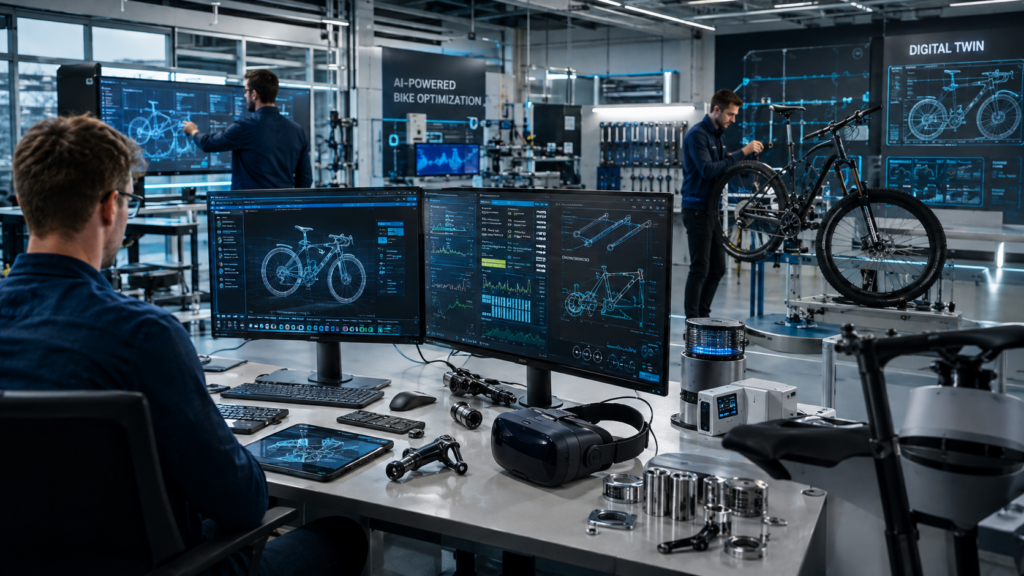
Manufacturers can use digital twins to improve bicycle development by testing designs digitally before physical production.
Benefits may include:
- Faster product development
- Improved component testing
- Better material analysis
- Reduced prototype requirements
AI and digital simulation are becoming increasingly important in modern product development and manufacturing processes.
The Future of Smart Bicycle Digital Twins
As bicycles become more connected, digital twins may become a standard feature in advanced cycling platforms.
Future developments may include:
- Real-time virtual bike monitoring
- AI-generated setup recommendations
- Automated maintenance scheduling
- Virtual testing environments
- Personalized bicycle optimization
The future cyclist may not only own a physical bicycle but also a continuously updated digital version of that bike.
Conclusion
Smart bicycle digital twins in 2026 represent a major step toward intelligent cycling systems. By combining sensors, artificial intelligence, and virtual modeling, digital twins provide deeper insights into bicycle performance, maintenance, and optimization.
As connected cycling technology continues evolving, digital twins may become one of the most important tools for creating safer, more efficient, and more personalized bicycles.