
Electric bicycles are becoming easier to ride, but understanding what is inside their batteries remains surprisingly difficult. Two packs with similar capacity may differ in chemistry, expected service life, repair information, and responsible end-of-life handling. A major European rule is about to change how that information is organized. Beginning February 18, 2027, qualifying new batteries placed on the European Union market must have a digital battery passport.
For cyclists, the e-bike battery passport is more than an unfamiliar regulatory term. It is a potential step toward clearer product information, better-informed purchases, and improved reuse and recycling. It does not, however, make every battery automatically safe, reveal every private technical detail to consumers, or impose the same rule on riders everywhere. Here is what the policy actually means as 2027 approaches.
What Is an E-Bike Battery Passport?
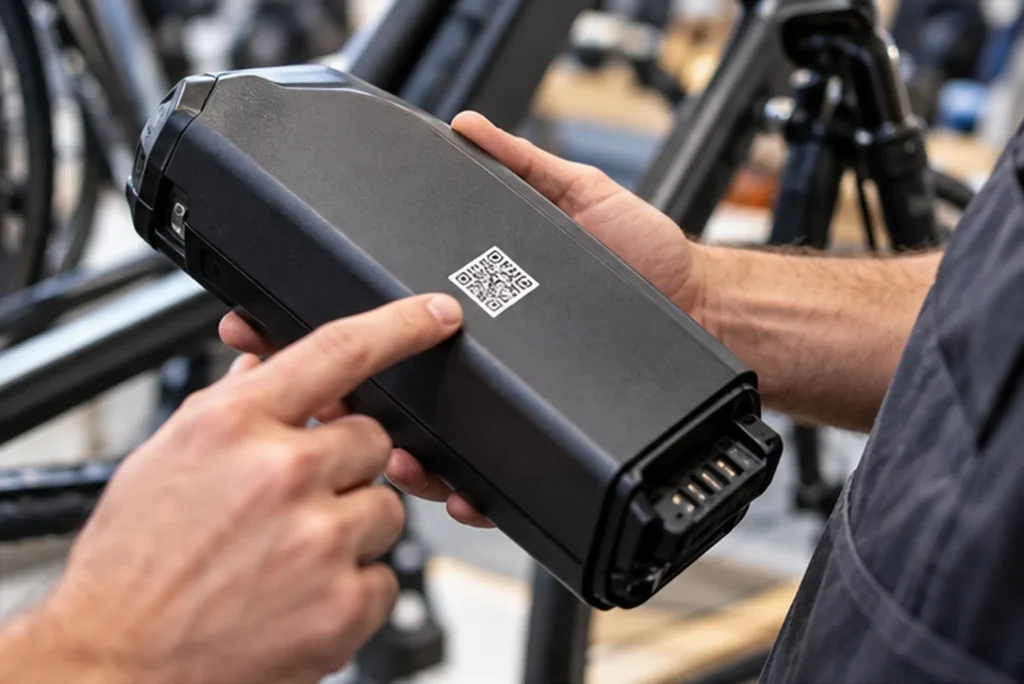
A battery passport is an electronic record connected to an individual qualifying battery. Under EU Regulation 2023/1542, Article 77, the record contains model-level details and specified information associated with the individual pack. A QR code and unique identifier provide access to the record, with different permissions for different kinds of information.
The rules apply to batteries for light means of transport (LMT), a category that includes many e-bike batteries, as well as specified industrial and electric-vehicle batteries. The EU timetable says the passport requirement begins February 18, 2027, for covered batteries newly placed on the EU market or put into service. This is not a blanket requirement to retrofit passports to every e-bike battery already owned.
Importantly, the passport is a digital information system, not a new battery design or a guarantee of quality. It aims to make relevant information easier to find throughout the battery’s working life.
What Information Could Riders Actually See?
Some passport information is meant to be publicly accessible. Depending on the applicable data requirements, this can include battery chemistry, rated capacity, voltage, expected cycle life, and certain durability information. Other entries, such as detailed dismantling instructions and some battery-specific operating data, may be limited to people with legitimate access, such as qualified repair or recycling businesses.
The European Commission’s battery-passport FAQ makes an important distinction: not every possible data field is mandatory for every battery on day one. Certain carbon-footprint, recycled-content, and due-diligence information requirements have separate application dates.
That means shoppers should not expect a universal dashboard containing every conceivable statistic in February 2027. The useful question will be whether the particular battery has a valid identifier and whether the required information can actually be accessed and understood.
Why This Is a Significant 2026 Cycling Story
The deadline has been on the books for some time, but the preparations are becoming more concrete. In August 2026, the European Commission released updated battery-passport implementation guidance covering 71 potential data points and explaining when they apply. Its digital product passport roadmap also identifies 2026 as an important period for the supporting registry and standards.
Manufacturers, importers, and software providers must decide how information will be collected, maintained, and presented. Bike shops may need to learn how to read records, and consumers may begin seeing QR codes or traceability details alongside ordinary battery specifications. For the wider industry, this is a move from isolated paper labels toward structured lifecycle information.
How Battery Passports Could Influence E-Bike Purchases
Most buyers already compare battery capacity in watt-hours. That remains helpful, but capacity alone cannot answer whether a pack will be convenient to maintain or replace in several years. A consistent digital record could make it easier to ask informed questions about the pack’s identity, specified performance, and support arrangements.
Before purchasing a new e-bike, ask the retailer who supplies its replacement battery, how much replacement is expected to cost, and whether the battery can be removed without specialist tools. Check the warranty terms, charger compatibility, and local service availability. Even in markets outside the EU, these are sensible ownership questions.
For a broader look at component development, see iBikeBlog’s guide to e-bike motor technology and power systems. Battery documentation may improve, but a bike is still only as maintainable as the hardware and support network behind it.
Could the Passport Make E-Bike Batteries Safer?
Better traceability and technical information may assist manufacturers, repairers, and waste handlers. But the battery passport should not be confused with an electrical safety certification. The existence of a QR code does not mean a battery has passed specific fire, electrical, or charging tests.
For safety, look separately at recognized standards and verified certification. UL Solutions explains how UL 2849 addresses the e-bike electrical system, while UL 2271 concerns batteries used in light electric vehicles. A seller’s unsupported claim that a battery was “tested” is not the same as independent certification.
The US Consumer Product Safety Commission recommends using only approved battery-and-charger combinations, following manufacturer charging instructions, and avoiding packs modified by unqualified individuals. It also advises staying present during charging rather than charging while asleep or away from home.
What Battery Passports Mean for Repairs
One of the more interesting features of the EU framework is the distinction between public information and technical material available to parties with a legitimate interest. Certain detailed component and dismantling data may help properly equipped repairers and recyclers work with a battery more responsibly.
That does not authorize owners to open a damaged lithium-ion pack at home. Battery cells can create serious fire and electrical hazards if mishandled. If your battery is swollen, leaking, unusually hot, visibly damaged, or behaving abnormally, stop using it and follow the manufacturer’s safety instructions. Do not charge it to see whether the problem goes away.
Resale, Second-Life Use, and Recycling
Secondhand e-bikes introduce a familiar problem: the buyer often cannot verify the age, history, or condition of the battery. A passport may help identify a qualifying pack and provide some relevant lifecycle context. However, certain condition and operating-history fields have restricted access, so a secondhand buyer should not assume they can view a complete health report.
The rules also address circumstances in which a battery is repurposed, reused, or remanufactured. The framework provides for a new passport linked to earlier records in defined situations. This is designed to preserve a traceable relationship as a battery changes hands or purpose.
At end of life, the most important instruction for owners is simple: never place lithium-ion e-bike batteries in household trash or ordinary curbside recycling. Follow local hazardous-waste and approved battery-collection procedures. These practical issues connect with iBikeBlog’s coverage of sustainable smart bicycles and circular cycling technology.

What About Riders Outside the European Union?
The passport requirement described here is an EU market rule. It does not directly mean that every battery sold in the United States, Canada, Australia, or elsewhere must have the same passport by February 2027. Rules vary by jurisdiction, and the details of global implementation will depend on where a product is placed on the market.
Even so, global bicycle brands frequently sell across multiple regions. Some may choose to develop common information systems for efficiency, while others may separate their EU and non-EU product documentation. Both are business possibilities, not confirmed outcomes for every manufacturer.
A Practical Battery-Purchase Checklist for 2027
- Check the market: Determine whether the EU passport rules apply to the battery being sold.
- Verify the record: Ask how the QR code or identifier can be accessed and what information is available.
- Confirm safety credentials: Look for applicable, independently verifiable certifications rather than marketing claims.
- Ask about replacement: Check the availability, price, and authorized service options for a future replacement pack.
- Keep documentation: Save the receipt, model number, serial number, warranty details, and charger specifications.
- Plan end-of-life handling: Find out where your local approved collection facility accepts lithium-ion batteries.
The Bottom Line
The 2027 e-bike battery passport marks a meaningful shift toward traceable battery information in Europe. For cyclists, its strongest promise is not a futuristic feature on the handlebars; it is better visibility into what they are buying, maintaining, and eventually disposing of.
As brands prepare during the final months of 2026, pay attention to official updates, ask retailers specific questions, and continue to prioritize sound charging habits and independently verified electrical safety. A more transparent battery is a useful improvement, but informed ownership remains essential.