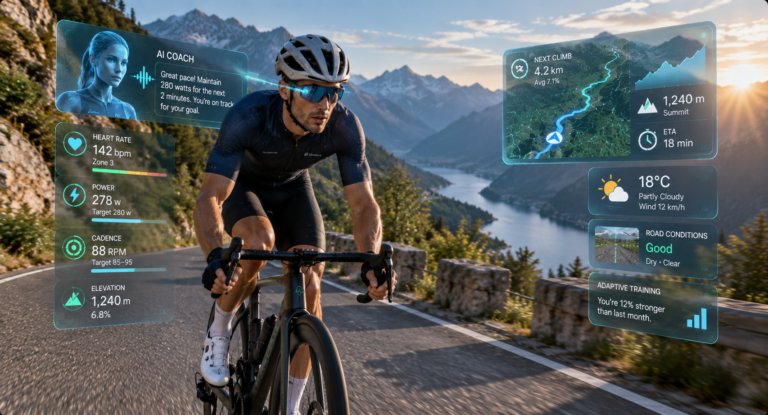
Cycling training is moving beyond fixed workout plans and basic performance tracking. In 2026, AI-powered cycling coaching 2026 is transforming how riders train by using artificial intelligence to provide real-time feedback, adaptive workouts, personalized recommendations, and virtual coaching experiences.
Instead of following the same training plan every week, cyclists may use AI systems that analyze their current condition and automatically adjust workouts based on performance, fatigue, recovery, and goals.
Connected cycling platforms are increasingly combining artificial intelligence, wearable sensors, smart trainers, and performance analytics to create more personalized training experiences.
The Evolution of Cycling Coaching Technology
Traditional cycling coaching relies heavily on structured training plans created by coaches or based on general fitness principles. While these methods remain valuable, they often require manual adjustments when a rider’s condition changes.
AI-powered coaching introduces a more flexible approach by continuously analyzing performance data and adapting recommendations.
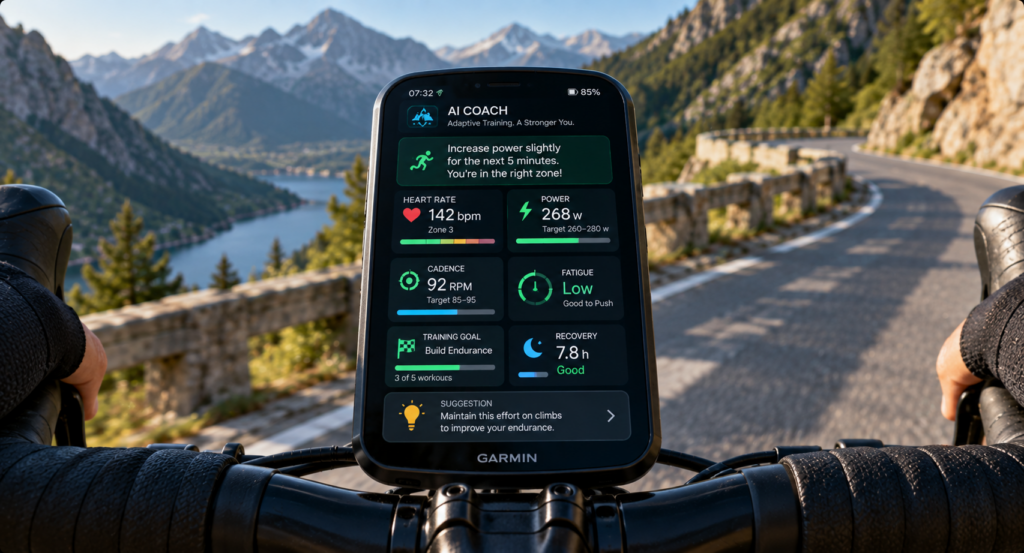
An AI cycling coach may evaluate:
- Power output
- Heart rate response
- Training history
- Recovery status
- Sleep quality
- Environmental conditions
This allows training programs to become more personalized and responsive.
This connects with our article about AI Cycling Performance Twins 2026.
How AI Virtual Coaches Analyze Riders
AI coaching systems work by collecting information from connected cycling devices and wearable technology.
Data sources may include:
- Cycling computers
- Power meters
- Heart rate monitors
- Smart watches
- Smart cycling clothing
- Indoor trainers
Artificial intelligence analyzes this information to understand how the cyclist responds to different training situations.
Over time, the AI system can learn individual patterns and create more accurate recommendations.
Real-Time Training Adjustments
One of the biggest advantages of AI cycling coaching is the ability to make decisions during a workout.
A virtual coach may adjust:
- Training intensity
- Power targets
- Recovery periods
- Cadence goals
- Workout duration
For example, if a rider shows signs of excessive fatigue, an AI system may recommend reducing intensity instead of continuing a planned session.
This creates a more intelligent approach compared with following a fixed workout without considering real-time conditions.
AI-Powered Personalized Training Plans
Every cyclist has different goals. A professional racer, endurance rider, commuter, and beginner cyclist require different approaches.
AI coaching platforms may create personalized plans based on:
- Fitness level
- Experience
- Available training time
- Performance goals
- Previous results
The system can continuously update the plan as the rider improves.
This connects with our article about AI Bicycle Personalization 2026.
Voice-Based AI Coaching During Rides
Voice interaction is becoming an important part of future cycling technology because riders cannot always look at screens while riding.
AI voice coaches may provide:
- Pacing instructions
- Motivation feedback
- Navigation guidance
- Training reminders
- Safety information
A cyclist could receive coaching naturally without stopping or checking multiple devices.
This connects with our article about AI Cycling Companions 2026.
AI Coaching and Indoor Cycling Platforms
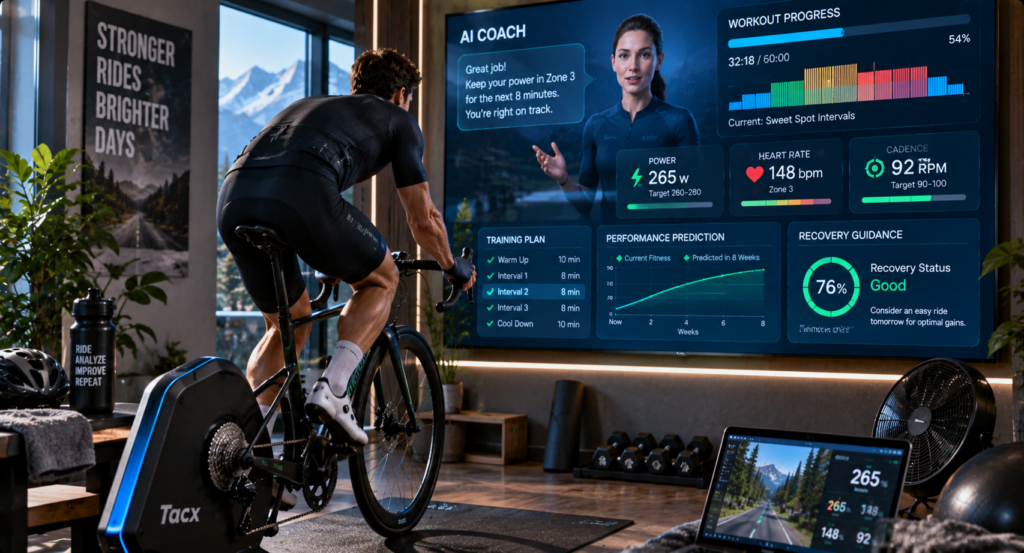
Indoor cycling is one of the areas where AI coaching may have the biggest impact. Smart trainers already collect large amounts of performance data, creating an ideal environment for adaptive coaching.
AI-powered indoor coaching may include:
- Dynamic workout changes
- Virtual race preparation
- Performance simulations
- Automatic resistance adjustments
- Fitness predictions
Connected platforms such as virtual cycling environments continue expanding interactive training experiences by combining smart trainers, digital routes, and performance analytics.
This connects with our article about Immersive Cycling Technology 2026.
AI Coaching for Recovery and Training Balance
Effective training requires balancing stress and recovery. AI systems can analyze whether a cyclist is ready for intense training or needs additional recovery.
AI recovery coaching may consider:
- Heart rate variability
- Sleep patterns
- Training load
- Fatigue indicators
- Previous workouts
This allows training recommendations to become more sustainable.
This connects with our article about AI Cycling Recovery Systems 2026.
AI Coaching and Performance Prediction
Future AI coaches may help riders understand future performance possibilities by simulating different training approaches.
A system may predict:
- Potential fitness improvements
- Race readiness
- Performance limitations
- Optimal training periods
This creates a more strategic approach to cycling improvement.
Benefits for Different Cyclists
Professional Cyclists
Competitive athletes can use AI coaching to optimize preparation, pacing, recovery, and race strategy.
Amateur Riders
Recreational cyclists can receive structured guidance without needing constant manual planning.
New Cyclists
Beginners can benefit from personalized recommendations that help them train safely and effectively.
The Future of AI Cycling Coaching
AI-powered cycling coaching is expected to become more advanced as sensors, artificial intelligence, and connected bicycles continue improving.
Future developments may include:
- Conversational AI coaches
- Real-time biomechanical feedback
- Automatic workout generation
- Virtual race preparation
- Complete rider performance management
The future cyclist may have access to a digital coach that understands their body, goals, and riding style.
Conclusion
AI-powered cycling coaching in 2026 represents a major evolution in training technology. By combining artificial intelligence, wearable sensors, smart trainers, and performance analytics, virtual coaches can provide more adaptive and personalized guidance.
As cycling technology continues advancing, AI coaching may become an essential tool for riders looking to improve performance, train smarter, and better understand their own capabilities.