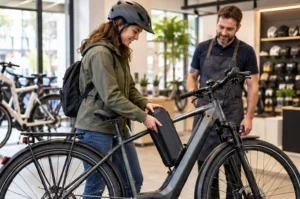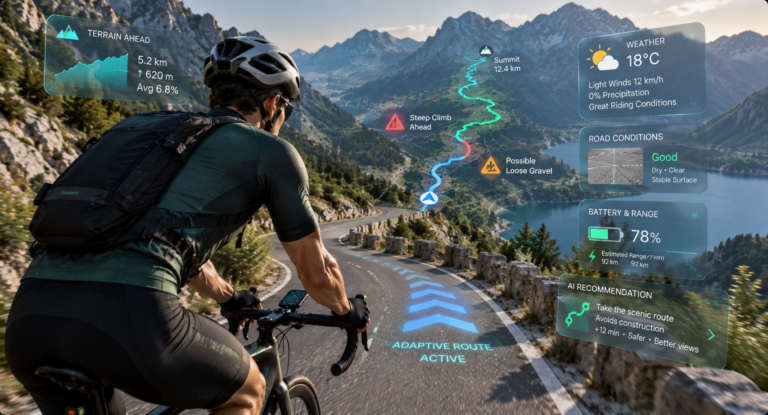
Cycling navigation is entering a new generation where artificial intelligence does more than provide directions. In 2026, AI cycling route intelligence 2026 is transforming navigation systems into smart decision-making platforms that analyze terrain, weather, traffic, rider ability, and energy consumption to create more personalized riding experiences.
Traditional GPS navigation follows predefined routes. Future AI-powered systems aim to understand the cyclist, the environment, and the conditions ahead to provide recommendations before challenges appear.
Modern cycling computers and connected navigation platforms are already expanding beyond basic mapping by integrating training data, safety information, and smart device connectivity.
The Evolution of Cycling Navigation Technology
For years, cycling navigation focused primarily on GPS positioning, distance tracking, and turn-by-turn directions. While these features remain valuable, artificial intelligence is changing how cyclists plan and experience rides.
AI route intelligence combines multiple data sources, including:
- GPS location information
- Elevation data
- Weather conditions
- Traffic patterns
- Road surfaces
- Rider performance history
By analyzing these factors together, AI systems can recommend routes that better match the cyclist’s goals.
This connects with our article about AI Navigation Systems for Cyclists 2026.
Predictive Route Planning With Artificial Intelligence
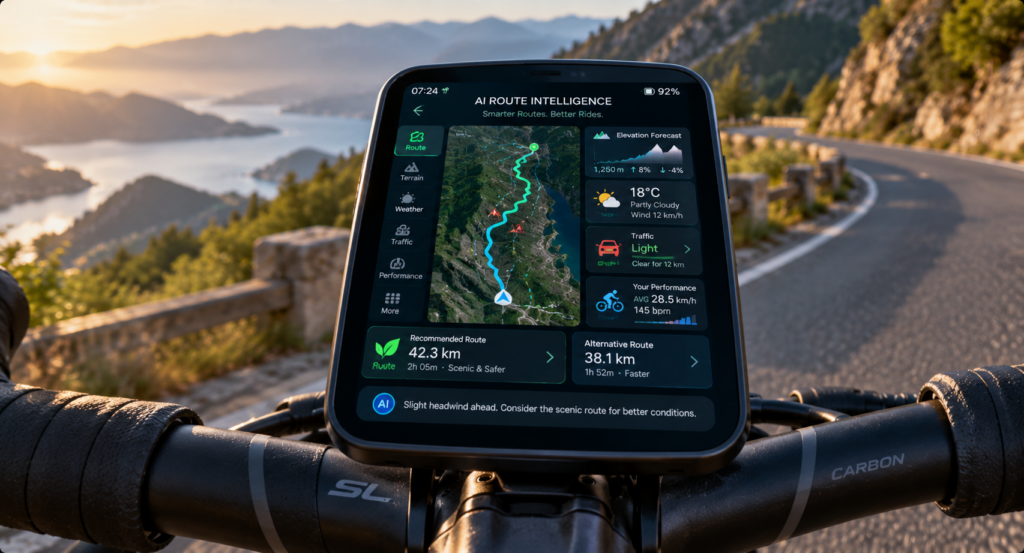
One of the biggest improvements from AI navigation is predictive planning. Instead of only showing where a cyclist is currently located, intelligent systems can analyze what may happen ahead.
A predictive cycling route system may identify:
- Upcoming steep climbs
- Heavy traffic areas
- Changing weather conditions
- Road construction zones
- Potential safety concerns
The system can then recommend adjustments before the cyclist reaches those areas.
For example, a rider approaching a difficult climb may receive a suggestion to conserve energy, while an electric cyclist may receive a recommendation to change assistance settings to protect battery range.
AI Terrain Intelligence for Smarter Riding
Terrain analysis is becoming one of the most valuable features in future cycling navigation. A route that looks short on a map may be challenging because of elevation, surface conditions, or weather.
AI terrain intelligence can analyze:
- Elevation profiles
- Gradient difficulty
- Trail conditions
- Road quality
- Distance versus effort requirements
This allows cyclists to choose routes based on effort rather than distance alone.
A professional rider preparing for training may prefer a high-intensity climbing route, while a recreational cyclist may receive a smoother and more comfortable alternative.
This connects with our article about AI Cycling Performance Twins 2026.
Weather Intelligence and Adaptive Routes
Weather conditions can significantly affect cycling performance and safety. Wind, rain, heat, and storms can change the difficulty of a route within minutes.
AI navigation systems may integrate weather intelligence to provide:
- Storm warnings
- Temperature predictions
- Wind direction analysis
- Road condition alerts
- Alternative route suggestions
Instead of discovering poor conditions during a ride, cyclists may receive recommendations before starting or while riding.
This creates a more adaptive navigation experience that responds to changing environments.
Personalized Routes Based on Rider Behavior
Future AI navigation will not treat every cyclist the same. Instead, systems may learn from previous rides and create routes based on individual preferences.
An AI system may learn whether a rider prefers:
- Quiet roads
- Challenging climbs
- Scenic routes
- Short commuting paths
- High-speed training sections
Over time, the navigation platform becomes more personalized as it understands the cyclist’s habits.
This connects with our article about AI Bicycle Personalization 2026.
Energy-Aware Navigation for Smart E-Bikes
Electric bicycles can benefit significantly from AI route intelligence because energy management is an important part of longer rides.
AI navigation systems may consider:
- Battery capacity
- Motor assistance level
- Elevation changes
- Rider effort
- Charging locations
Instead of simply selecting the shortest route, the system may choose the route that provides the best balance between distance and energy consumption.
This connects with our article about Smart E-Bike Energy Ecosystems 2026.
AI Navigation and Cycling Safety
Route intelligence is also becoming connected with cycling safety technology. AI systems can analyze road risks and recommend safer options.
Safety-focused navigation may include:
- Vehicle traffic analysis
- Hazard warnings
- Safer road suggestions
- Bike lane information
- Emergency access locations
Connected cycling systems are increasingly combining navigation, safety alerts, and real-time analytics into unified platforms.
This connects with our article about AI Bicycle Safety Systems 2026.
AI Route Intelligence for Adventure Cycling
Adventure cyclists and bikepackers may benefit significantly from intelligent route planning. Long-distance rides require careful preparation because riders often face unfamiliar terrain.
AI adventure navigation could analyze:
- Water availability
- Trail difficulty
- Elevation challenges
- Weather risks
- Emergency locations
This can make exploring new areas more manageable and predictable.
Connected Group Riding and Shared Routes
Future AI navigation platforms may also improve group cycling experiences.
Connected group features may include:
- Shared route updates
- Live rider locations
- Automatic regrouping
- Hazard notifications
- Emergency communication
This could make organized rides and cycling events safer and easier to manage.
The Future of AI Cycling Route Intelligence
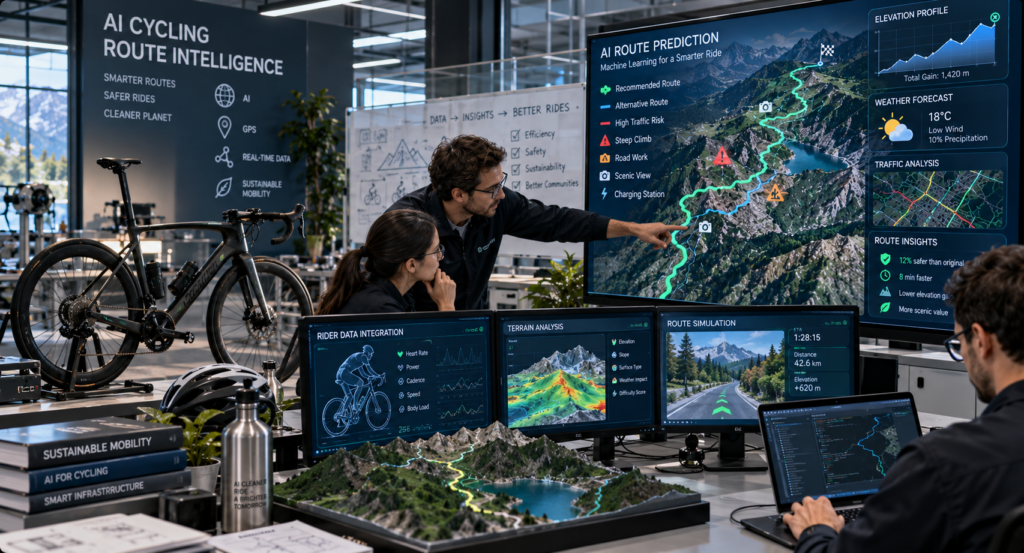
AI cycling route intelligence represents a shift from navigation tools to intelligent riding assistants.
Future developments may include:
- Augmented reality navigation displays
- Voice-controlled route planning
- Vehicle communication systems
- AI-generated training routes
- Fully adaptive ride planning
Future bicycles may not simply follow routes. They may understand the rider, analyze the environment, and help make better decisions throughout every journey.
Conclusion
AI cycling route intelligence in 2026 is transforming navigation into a smarter and more personalized experience. By combining artificial intelligence, environmental data, rider behavior, and connected bicycle systems, future navigation platforms can help cyclists ride more efficiently and safely.
As smart cycling technology continues developing, route planning may become less about finding a path and more about creating the ideal ride for every cyclist.